Watch Baby (2003) Online Free
The baby is a temporary floating population. He works diligently, from a small restaurant owner to a tea shop manager to a bar manager. This film records the survival state of children centered and gay comrades: trivial, messy, boring, and entertaining themselves. The camera calmly captures every bit of their daily life for more than two years, and as time goes by, the changes the baby presents are more ordinary. The film calmly explains the relationship between "comrades" and "society", and the various small details interpenetrated in the film also metaphorically reflect the changes of today's society
More Like This
We Sit In Silence At The Memorial Table
A silent film by Vietnamese director Truong Minh Quy in collaboration with Belgian director Nicolas Graux, was shot on the set of a film by Graux. We Sit in Silence at the Memorial Table is inspired by Educational Objectives, a poem written by Aleksey Garipov and translated to English by Nicolas Graux.
2022

News Feed on My...
I just watch the news of war in a distant country on my mobile. My fingers go back day by day to the day the war broke out and pose to see comments posted on the Facebook News Feed that I follow. Outside, I have friends who participated in anti-war rallies.
2022
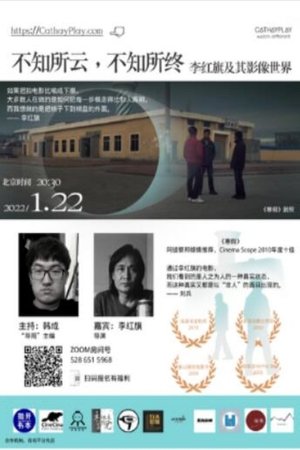
Talking Unknown, Ending Unknown: Li Hongqi And His Cinema World
In this talk, Li Hongqi reviewed his transition from fine art to cinema, and his aesthetic and philosophical exploration from his early 'So Much Rice' to recent 'The The'. Dir. Li Hongqi also shared his strong anxiety of his existence(born with melancholia), his thought on cinema art (actually, I don't think there's any movie worth making), his epistemology, his religious view, his consideration on contemporary cinema, and what he learned about living in seclusion.
2022
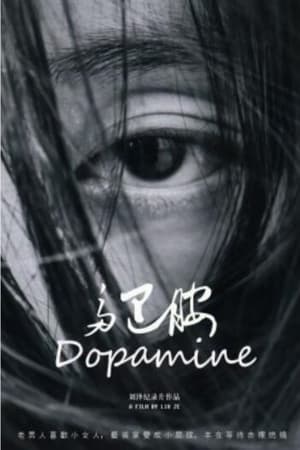
Dopamine
A bunch of indie filmmakers came to the grassland,everybody stayed in a tent, just open their mind and be sincere. They made conversations, which were about their confusion for life and be puzzle for artistic creation. Multifaceted sentiments were created. The goats were not vegetarian animal anymore,and the interlocutors were eating goats. An old man wanted to possess a young girl, the so-called artists were actually a tribe of infantile children. The goats were naked and waiting to be sparked…
2019
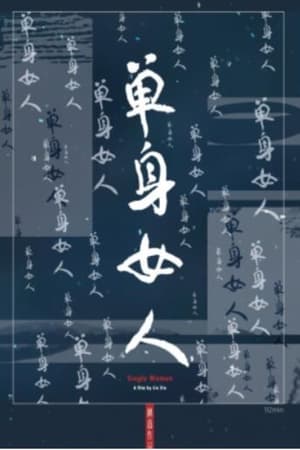
Single Woman
The film records the emotions and destinies of seven single women. Whether at a loss, confused, waiting in hope, disappointed, helpless, compromised, independent or defiant, they are closely bound up to this agitated and chaotic era. Through their different experiences they tell us about the failed marriages of middle-aged women, about life being single, and about a group of men who have not yet showed up but who appear vivid from a female perspective.
2019

WHO IS MY LORD
The story of a girl attempted suicide for love and finally returned to religion.
2017
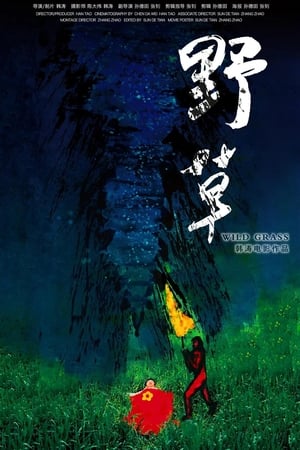
WILD GRASS
2017

MAGUEY
This story is about the group's marvellous life without money.The film tell this story from six points of view: the screenwriter, the recording, the photography, the art, the performer and the director.
2016
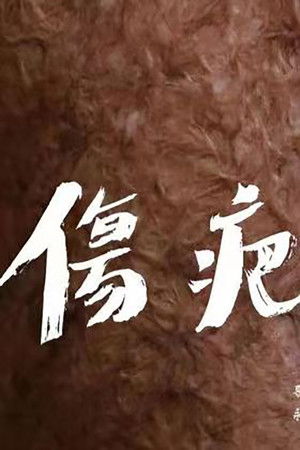
SCAR
Scars, which are unfortunate or unexpected results, are also signs of healing. This new connective tissue replaces the process of injured tissues, and at the same time it becomes a metaphor for the pain and frustration of life: the sadness of the body, the union of pain... In short, scars have become a proof, a proof of existence, a proof of alive, a proof of pain, and a proof of a certain age. Beginning in 1949, in this vast land, these various scars, these healing marks, patterns, sad shapes, bring personal memories, collective pains, the marks of history, and come together Gaze, the meaning of the record. This film is the first part of the "Scar" project, the story of 110 Chinese scars.
2015
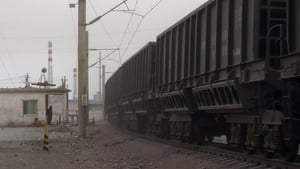
The Iron Ministry
Filmed over three years on China’s railways, The Iron Ministry traces the vast interiors of a country on the move: flesh and metal, clangs and squeals, light and dark, and language and gesture. Scores of rail journeys come together into one, capturing the thrills and anxieties of social and technological transformation. The Iron Ministry immerses audiences in fleeting relationships and uneasy encounters between humans and machines on what will soon be the world’s largest railway network.
2014

HOMECOMING
In a city that worships money, there is a group of people who still insist on living the philosophy of "people are not living on food alone." Instead of choosing to live in seclusion, they choose to actively enter the world, improve their hearts, and influence others through artistic creation. Their innovation has not only driven the art world in Hong Kong but more importantly, through their enthusiasm for creation, they have made us understand that as long as we have a "heart", no matter how difficult the environment is, we can persist in a "love".
2014
Village Diary
2013
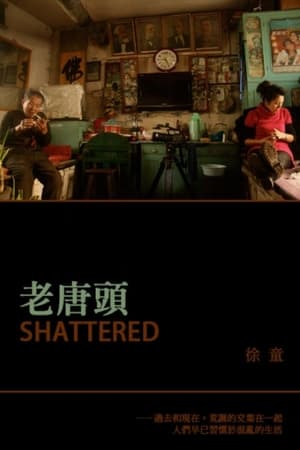
Shattered
A microcosm of China past and present flows through Xu Tong’s intimate docu “Shattered,” in which the maverick indie filmmaker continues to refine his techniques and concerns shown in his previous “Wheat Harvest” and “Fortune Teller.”
2011
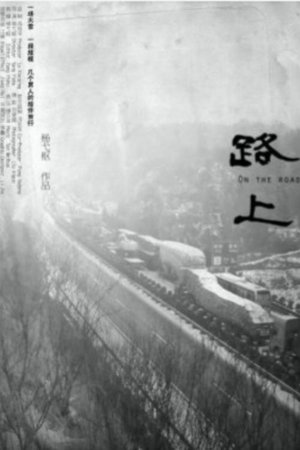
On the Road
Only a few days before the Spring Festival of 2008, several truck drivers set off from Nantong, Jiangsu Province, to Guizhou province to deliver goods. But what they didn't expect was that they ran into a big snowstorm not long after their departure. What would these drivers do after they got caught up in a snowstorm and coudn't do nothing about it but wait? How would they react to this unexpected halt? And what would happen to this convoy?
2010
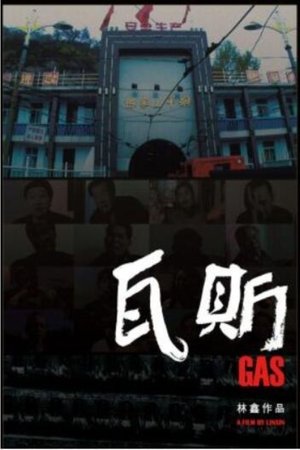
Gas
On April 6, 2001, a gas explosion occurred in the Chenjiashan Coal Mine of the Tongchuan Mining Bureau in Shaanxi Province, killing 38 people. On November 28, 2004, a gas explosion occurred in the Chenjiashan coal mine, and 166 people were killed. Five years later, Lin Xin, the son of the miners, filmed this film about mine disasters. Through the oral interviews of more than 20 people, such as miners and family members of the victims, and random interviews on the street, the film presents the real life of the miners and the cruel and complicated social reality behind the mine disaster from different angles. This film is the end of Lin Xin's "Trilogy of Survival".
2010
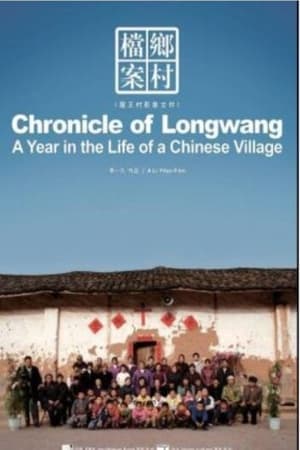
THE LONGWANG CHRONICLES: A YEAR OF LIFES IN A CHINESE VILLAGE
Unusually popular religions and extreme secular beliefs, unconstrained power and no authoritarian society, people work hard on the land and live thrifty but do not believe in the meaning of life at all. This is Longwang Village, an empty old farming society, the most essential reality of an ordinary western village. The film does not have a perpetual plot. The images are presented with the changing of the four seasons. There is no great joy or great sadness. Everything is recorded, and no results are produced. Strictly speaking, this is actually just a rural video file, a running account of ordinary western villages without all rhetoric.
2009
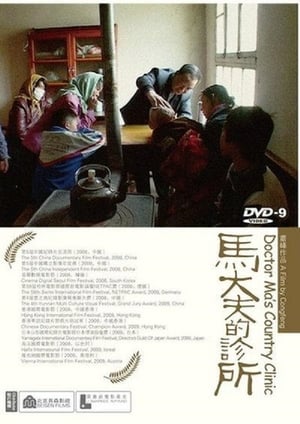
Doctor Ma's Country Clinic
"Huangyangchuan, Gansu province, China. It's an arid mountain area with poor roads. Ma Bingcheng is well-respected local doctor, so many patients (most of them farmers) come to see him every day. In his small clinic, people chat with each other about their lives, local conditions, or the people they know. The clinic seems to open up like a microcosm, the information and experiences of different people intertwine, revealing the conditions of typical Chinese farmers, and the typical fates of both young and old--"
2008
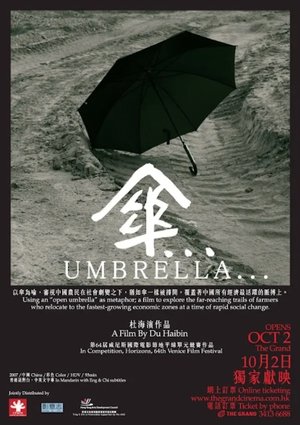
Umbrella
Workers, peasants, soldiers, students and merchants were five groups of Chinese society in the 1950s, after the so-called elimination of the exploited class. Borrowing this concept, the umbrella is taken as the clue to rediscover changes in various social classes after the economic reform, and to analyze the social problems in China. Workers making umbrellas, merchants selling umbrellas, students looking for jobs in the rain. Umbrella is used as a metaphor that can be seen everywhere. As the raindrop, what we see is sometimes clear, sometimes untraceable.
2007

Chen Lu
Painter Lin Xin tells the story of a thousand-year-old ceramic town in the hinterland of the Loess Plateau in this first experimental documentary "Chen Furnace". The film consists of a 360-degree panoramic prologue and three parts: "Self-Talk", "Bone Style" and "Style". "Fengqing" focuses on the unique scenery of the ancient town's folk customs, houses and famous-tank wall.The film consists of a 360-degree panoramic prologue and three parts: "Self-Talk", "Bone Style" and "Style".The charm and product production process of traditional ceramic crafts such as hand-drawn blanks and engravings are displayed; "Fengqing" focuses on the unique scenery of the ancient town's folk customs, houses and famous-tank wall. The whole film, with its gazing gaze and poetic language, tries to leave in the video the final scene of the "Furnace Never Ending" and the traditional Chen Fa gradually fading away.
2005
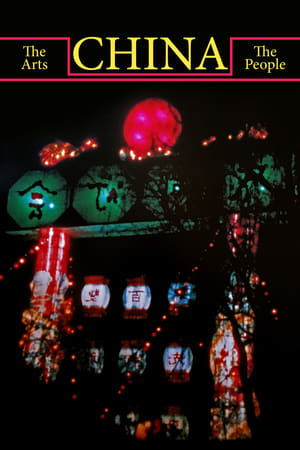
China. The Arts – The People
China marks the beginning of the extensive Asian theme in Ottinger’s filmography and is her first travelogue. Her observant eye is interested in anything from Sichuan opera and the Beijing Film Studio to the production of candy and sounds of bicycle bells.
1985