Watch Chernobyl.3828 (2011) Online Free
Military people call such places "FRONTLINE", liquidators who worked at the Chernobyl nuclear station called it "ROOF COATING". It was the most contaminated, and therefore the most dangerous, place in the zone. The remains of the roof coating of the 4th reactor. The operation on decontaminating the roof lasted more than five months. We will tell about only two days. About the most important two days in the life of an explorer - dosimetrist Valeriy Starodumov. He participated in this operation until it was over. He himself came out to the roof and led people there. He himself planted the "victory banner" at the level of 75 meters, as the signal for the zone: the roof coating has been decontaminated! Now, 25 years later, Valeriy Starodumov comes back to the zone. Now Chernobyl is a tourist object. But not for him...
More Like This
Father, Developed
After she discovers canisters of undeveloped film shot by her late father, Elene sets out on a journey to collaborate with him on a special project. Between the earth and the land of the dead, a darkroom becomes the only dimension where the paths of a father and a daughter can cross.
2024

Black Raven
Ukraine 1922. The Russian empire has already broken up, but a new state has not yet been formed. Many tried to create and consolidate their independence during this period, and this is the story of one of such people. This is the story of the life and love of one person - Ivan, nicknamed Raven ...
2019
Andrey Tarkovsky. A Cinema Prayer
An account of the life and work of Russian filmmaker Andrey Tarkovsky (1932-86) in his own words: his memories, his vision of art and his reflections on the fate of the artist and the meaning of human existence; through extremely rare audio recordings that allow a complete understanding of his inner life and the mysterious world existing behind his complex cinematic imagery.
2019

Once More Unto the Breach
July, 1941. After the beginning of the German invasion, an Italian soldier, a veteran of the colonial wars, is sent to the Soviet front. As he remembers the fairy tales his Russian mother used to tell him, the train he is travelling in crosses Europe on its way to the vast Ukrainian plains, where the enemy and a cruel winter await him… (Based on the experiences of several Italian soldiers.)
2019
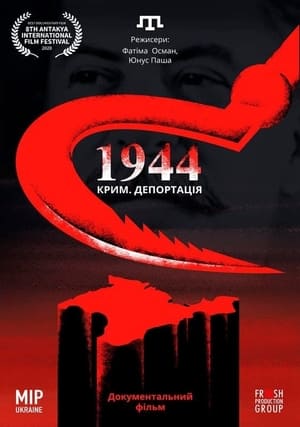
1944. Deportation
In 1944 Crimean Tatars has suffered a long road in exile. It was accompanied by famine, illness and loss. In the first years of exile, almost half of deported Crimean Tatars died. But those, who survived, dreamed of only one thing - to return to Crimea. The documentary 1944 tells about the tragedy of all Crimean Tatars through several separate life stories. They are cherished by each Crimean Tatar family and must be remembered by all generations to come.
2019
Revealing Ukraine
A sequel of Oliver Stone-produced conspiracy film "Ukraine on Fire", analyzing the current political backstage and its supposed dangerous potential for the world.
2019
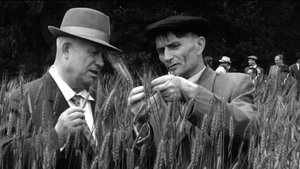
The Scientist, The Imposter and Stalin: How to Feed the People
The documentary tells two very different human fates in the 1920s Soviet Union. Nikolai Vavilov was a botanical genius, Trofim Lyssenko was an agronomist who made great promises and fake inventions. Each of them tried to solve the country's nutritional problem, but only one succeeded.
2018
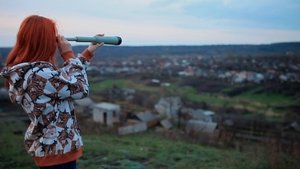
School Number 3
In the familiar surroundings of their everyday lives, they talk about things that matter to them, about experiences that move them, about first love and loss, hopes and fears. 13 adolescents from a school in Donbass which was destroyed during the war in Ukraine, and subsequently rebuilt, share themselves in front of the camera. 13 lives inhabiting an intermediary space, both emotionally and socially.
2017
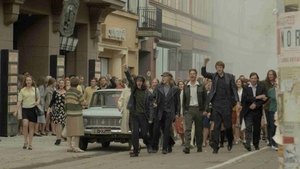
Emilia
Soviet Lithuania in 1972. A young theatre actress is trying to make a difference and tell the forbidden story of repression in a play.
2017

Inside Chernobyl's Mega Tomb
Documentary which follows the construction of a trailblazing 36,000-tonne steel structure to entomb the ruins of the nuclear power plant destroyed in the 1986 Chernobyl disaster.
2016
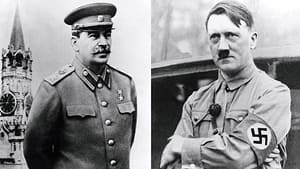
Hitler & Stalin: Portrait of Hostility
A double portrait of two dictators who were thousands of miles apart but were constantly fixated on each other.
2009
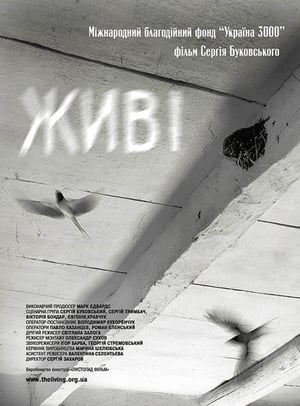
The Living
Tells the story of the tragic events in Ukraine in 1932-33, the genocidal Great Famine or the Holodomor, and one Welshman's attempts to tell the world what was happening.
2009
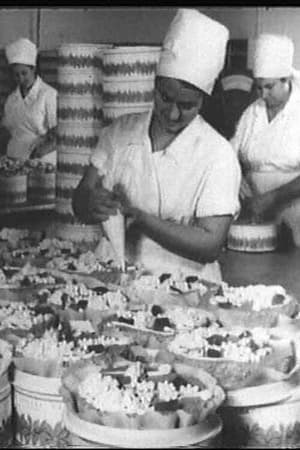
Charlie Marx and the Chocolate Factory
Charlie Marx and the Chocolate Factory started as an investigation of the link between politics and chocolate, at the Karl Marx Confectionary Factory in Kiev, Ukraine. Since access to the factory was denied, the project had to be re-considered, re-invented or re-enacted. Mostly made of archival footage and re-enacted performances based on the company's website, the film merges what was left of the initial idea with what has been collected and realized instead. It borrows from the genres of video art, 'Man on the street' interview, direct address, corporate film, essay, and music video, without legitimately belonging to any of them. The film unravels as a reflection on its own failure, and yet keeps on investigating what has always been at stake: the shift from public to private property (and from analog to digital technology), dialectics of permanence and change, language as a mirror of ideology, and post-Soviet oligarchy culture.
2009
Pripyat: Ghost City Chronicles
The word Chernobyl became known worldwide shortly after the 1986 blast. The small town Pripyat, situated just 3 km from the Chernobyl nuclear power plant, up to this day serves to remind about the extent of the tragedy. Pripyat used to be a lively little town, both a powerful nuclear centre and a conveniently planned city with schools and urban apartments. It is now a dead, lifeless stretch of land littered with scraps of the past.
2008
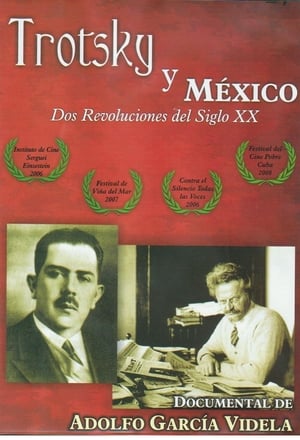
Trotsky y México. Dos revoluciones del siglo XX
"Trotsky and Mexico, two revolutions of the twentieth century" tells us of the famous Russian revolutionary asylum by President Lazaro Cardenas in Mexico.
2006
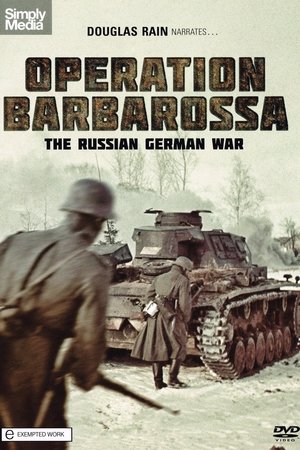
The Russian German War
This is a rare look at one of the worst horror stories in the long infamous history of warfare. This series features captured German and Russian film footage, much of which has never been seen before. For decades the Cold War prevented us from looking closely at what really happened between the Russians and the Germans on the Eastern Front during World War II. More than a struggle between nations, it pitted maniacal tyrant against maniacal tyrant, evil ideology against evil ideology. The lives of tens of millions of human beings were consumed by its raging hatreds and appalling indignities. One in every ten Russians died. One in every four Poles died. Whole divisions of Italians, Romanians, Hungarians disappeared with barely a trace. An average of 17,800 people died on every single day and this, the war on the Russian German Front, lasted for 1,400 days. This series features captured German and Russian film footage, much of which has never been seen before.
1995
MIGNOR
Showing Sergei Parajanov at the end of his life, the film depicts the suffering of a genius against the backdrop of general anxiety and carelessness.
1990
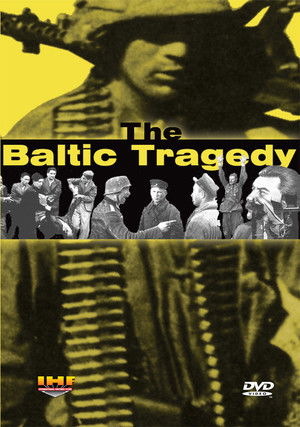
The Baltic Tragedy
Special care has been taken by International Historic Films to assemble this monumental documentary, which tells the story of what is left for a people after its land has been ravaged by war. Situated between the powerful antagonists Germany and the Soviet Union, the Baltic nations of Latvia, Lithuania, and Estonia bore witness to some of the most ferocious land battles of the Second World War.
1985
Invasion
Docu-drama surrounding the events leading to the Soviet Union's invasion of Czechoslovakia in 1968.
1980
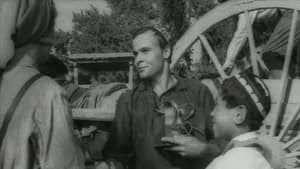
Hasan Arbakesh
A story about the clash of two cultures, two worlds - traditional Tajik culture and the new, invading and imperialist in its nature, Soviet culture, about the formation of self-awareness of the Tajik dekhkanin in the 1920s-1930s.... Poor Hasan thinks and experiences a lot before he is able to comprehend the changes in his life, to realize that old traditions and customs are no longer valued. Bent by need and disenfranchisement, he finds the strength to stand up against the Basmachi.
1966