Watch Carrier or Killer (1966) Online Free
This film shows the dangers of driving commercial trucks professionally as part of driver’s education. It displays various truck drivers; some cautious and others fatally dangerous.
More Like This

Nürburgring - 100 Jahre grüne Hölle
Race tracks are places of longing. But only the Nürburgring in the Eifel is truly spectacular and idyllic at the same time. Loved by fans, feared by drivers: Dozens of bends, many of them with illustrious names: Schwedenkreuz, Karussell, Fuchsröhre, Bergwerk, Brünnchen. To mark the 100th anniversary of the ground-breaking ceremony in 1925, this documentary tells the story of the ups and downs of the Nürburgring.
2025

The Missing Piece
They were 27 and 35 years old. They were both killed in the same spot, within the same month. The same botched work killed them. Eighteen people are called to provide an answer to a simple question: Why don't we do what we should? The answer might lie in the missing piece - the unknown story of the pothole, a trademark of Greek roads infrastructure.
2024

Queen of Trucks
Trucking is big business. Cashing in on the boom is Shannan’s trucker driving school. But can she pass her own HGV test?
2022

Long Haulers
Through experimentation, direct observational filmmaking, and performative play, filmmaker Amy Reid rides and films with women truckers who have fled domestic violence, the stigmas of being formerly incarcerated, and mental health issues. The three subjects -- Sandi, Lori, and Tracy -- each share how they started trucking and what keeps them trucking.
2020

Tell Me Who I Am
In this documentary, Alex trusts his twin, Marcus, to tell him about his past after he loses his memory. But Marcus is hiding a dark family secret.
2019
For My Son
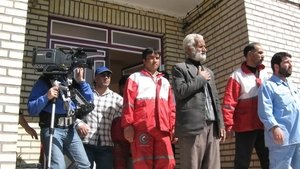
The most far spot of Iran desert. 'Habib o-llah Qolami', a poor and old farmer looses his young son in a car accident. Habib after his son's death takes a big decision. He spends all his has for making a medical help station in the road and gifts it to Red Crescent. From now no one dies of car accident.
2008
Drive and Deliver
Frequently misunderstood, long-haul truckers are a proud and spirited breed. In "Drive and Deliver," acclaimed director Brett Morgen journeys into their world and over far reaches of open road, where the realities of family, business and brotherhood converge into one unforgettable journey.
2008
Verständigung durch Zeichen
How can children communicate with other road users as pedestrians and cyclists? A pantomime also explains sign language.
1978
Chlorine and the Firefighter
This 1974 film is dedicated by the Chlorine Institute to the public interest. It is specifically intended to assist firefighters and other emergency services. The techniques demonstrated are appropriate for emergency use; different circumstances might require modified or additional procedure. The information is drawn from sources believed to be reliable. The Institute, its members any organizations cooperating in the development of this film, jointly or severally, cannot be responsible for how the information is used and must make this legal disclaimer. This is a 1960s era, color movie about Chlorine and emergency workers… specifically, firefighters. The film is intended to show firefighters what chlorine is, what a chlorine emergency might involve, how a company can plan ahead and how an emergency can be handled safely.
1974
Lifesaving and Water Safety: Special Equipment Rescues
Discusses essential scuba diving safety and rescue techniques. It highlights the importance of following safety rules, such as not diving alone and knowing how to use rescue equipment effectively. It demonstrates various rescue methods, including the removal of a weight belt, inflating life vests, and using paddleboards and rescue tubes. The film emphasizes that proper training and equipment can significantly enhance a rescuer's ability to save lives in emergencies.
1974
Decade of Death
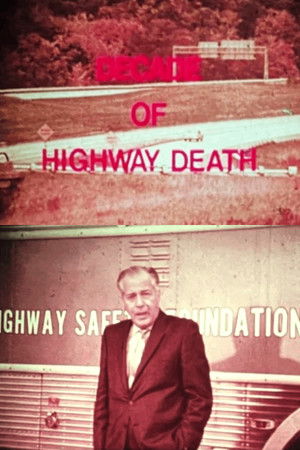
This highway scare film produced by the Highway Safety Foundation in 1971, "Decade of Death", is a retrospective of the organization's 10 years of gory, shocking social guidance films which aimed to promote traffic safety and driver responsibility through the display of bloody and horrific footage of traffic crashes.The Highway Safety Foundation made driver scare films such as "Signal 30," "Mechanized Death," and "Highways of Agony" that intended to encourage drivers to drive responsibly and with consideration of the risks and consequences. It was the organization's belief that crash footage, while horrific, was the best way to convey the importance of driving safely.
1971
Mob and Riot Control
This 1964 training film, “Mob and Riot Control,” was produced by Charles Cahill and Associates, Inc and presented by Federal Laboratories, Inc. illustrating police tactics and techniques for controlling civil disturbances. The film opens with unruly mobs shouting and overturning a car.
1964
Planning for Public Shelter Entry
The film features a meeting led by Dave Taylor, the shelter manager, discussing the protocols and responsibilities for staff members involved in managing a public shelter. Key participants, including operations deputy Harvey Johnson and health leader Mrs. Carter, outline their roles in ensuring a smooth entry for occupants during an emergency. The meeting emphasizes the importance of organization, communication, and the distribution of supplies. Staff members are encouraged to familiarize themselves with each other's duties and prepare for potential scenarios, including managing newcomers and ensuring safety and sanitation within the shelter.
1963

Suicide Trail
Shot with a big cowboy nod to the Western genre, this road safety film shows the danger of speeding on an unknown country road at night.
1960
Létání bez vidu podle systému OSP
1953
Electrical Injuries in Industry
A film about injury prevention. It shows how there is a risk of electrical injury when one fails to observe safety regulations. It presents examples of poor work practices and their associated risks. Then viewers are shown correct and safe work practices as well as exemplary workers who should become their role models.
1951
Teenicide
One in a series of traffic safety films made in 1950 by James S. Kemper for the Lumbermans Mutual Casualty Company, with the technical assistance of the LAPD, "Teenicide" addresses the alarming issue of teenage driving-related deaths. The film referrs to "teenocide" because as the police officer narrator states, there has been an 86% increase in the 15-24 age group over the past 25 years.
1950

It Happened Today
From feckless mothers pushing their prams across roads without looking, to a Dick Dastardly character in his sports car, we see the dangers of road accidents brought to life by the West Riding Constabulary just after the war in 1947, when drivers still used hand signals.
1947

Four Methods of Flush Riveting
Flush riveting is a way of connecting two pieces of sheet metal together, using rivets whose heads do not protrude above the surface of the metal. In aircraft construction, a flush rivet reduces drag, thus increasing aircraft performance. This World War II-era Walt Disney industrial-training film teaches four methods of flush-riveting aircraft aluminum sheet metal: the Countersink method, the Double Dimple method, the Pre-Dimple method, and the Combination Pre-Dimple and Countersink method. The choice of method to use is based upon the thicknesses of the top and bottom metal sheets.
1942
Stop That Tank!
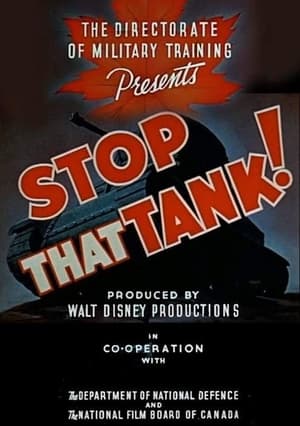
A Disney educational animated short instructing the use of the Boys MK.1 Anti-Tank rifle.
1942