Watch Decade of Death (1971) Online Free
This highway scare film produced by the Highway Safety Foundation in 1971, "Decade of Death", is a retrospective of the organization's 10 years of gory, shocking social guidance films which aimed to promote traffic safety and driver responsibility through the display of bloody and horrific footage of traffic crashes.The Highway Safety Foundation made driver scare films such as "Signal 30," "Mechanized Death," and "Highways of Agony" that intended to encourage drivers to drive responsibly and with consideration of the risks and consequences. It was the organization's belief that crash footage, while horrific, was the best way to convey the importance of driving safely.
More Like This

Nürburgring - 100 Jahre grüne Hölle
Race tracks are places of longing. But only the Nürburgring in the Eifel is truly spectacular and idyllic at the same time. Loved by fans, feared by drivers: Dozens of bends, many of them with illustrious names: Schwedenkreuz, Karussell, Fuchsröhre, Bergwerk, Brünnchen. To mark the 100th anniversary of the ground-breaking ceremony in 1925, this documentary tells the story of the ups and downs of the Nürburgring.
2025
101 Near Misses
From heart-stopping close shaves and averted disasters to incredible brushes with danger, this show counts up from 1 to 101 to feature some of the most unbelievable near misses of all time.
2020

Your Inbox Is Full
The 3rd installment in James A. Burkhalter's QUEER ROOTS trilogy: After years of his mother begging him to do it, James decides to finally review and erase 10 years' worth of phone messages. It tells the story of James' "roaring twenties," constructed solely through the voices of friends, family, and lovers.
2020
Possible Misfortunes on the Street
It’s been a long time since the incident. They realize that some of remnants of the past do not die out so easily. Two brothers head to the place where it all began.
2019
Mr. Death
An exclusive interview with Death as he goes about his everyday business.
2016

A & E: When Patients Attack
Hospital staff are reporting more violence and anti-social behaviour than ever before. In 2015, 8 staff were assaulted every hour – a new record high. At The Queen Elizabeth Hospital in Birmingham – one of the UK’s biggest hospitals – they think they have the answer. Here a private security force of 46 uniformed guards, and a sophisticated CCTV system, keep staff and patients safe. A colourful mixture of characters ranging from ex-soldiers, to bouncers, to former elite sportsmen, it’s the security team’s job to keep the hospital running smoothly. With more than 2 million visitors they have to deal with all aspects of crime and anti-social behaviour. All against a back drop of life changing and life saving procedures.
2015
For My Son
The most far spot of Iran desert. 'Habib o-llah Qolami', a poor and old farmer looses his young son in a car accident. Habib after his son's death takes a big decision. He spends all his has for making a medical help station in the road and gifts it to Red Crescent. From now no one dies of car accident.
2008
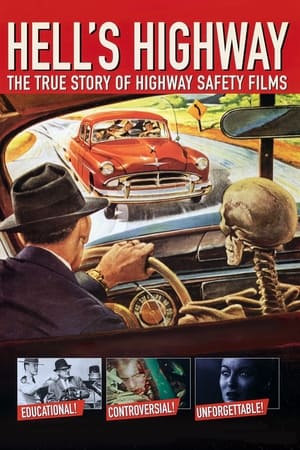
Hell's Highway: The True Story of Highway Safety Films
This film covers the early history of post World War II educational films, especially those involving traffic safety by the Highway Safety Foundation under direction of Richard Wayman. In the name of promoting safe driving in teenagers, these films became notorious for their gory depiction of accidents to shock their audiences to make their point. The film also covers the role of safety films of this era, their effect on North American teenage culture, the struggle between idealism and lurid exploitation and how they reflected the larger society concerns of the time that adults projected onto their youth.
2003
Cults: Saying No Under Pressure
Describes how to resist the deception and pressure used to recruit members into cults and keep them there. It also provides advice on how to resist these tactics. The video is designed for young people, parents, educators, counselors, clergy, law enforcement officials, and others.
1991
Faces of Death II
This film continues along the same lines as F.O.D. 1 with short scenes of material related to death. Mortuaries, accidents, police work are filmed by television equipment and domestic video cameras.
1981
Verständigung durch Zeichen
How can children communicate with other road users as pedestrians and cyclists? A pantomime also explains sign language.
1978
Life or Death - EMT First Responders
This somewhat bizarre film about Emergency Medical Technicians or EMTs was produced and distributed by Film Commutators in Hollywood, California. The film dates to a time when ambulance crews were being replaced by paramedics / EMTs, who had sufficient training to make medical decisions and give on-scene care. The film makes a strong argument to decision makers in favor of upgrading from mere ambulance drivers to EMTs.
1973
LSD-25
The dangers of LSD are driven home to teenagers in this classroom training film, which is "narrated" by an LSD tab. The "tab" tells kids that he is "a depth charge in the mind!" and various teenagers are shwn babbling about their LSD experiences. "Experts" are presented who warn that LSD makes kids "paint themselves green" and has various other horrible side effects, the most serious of which is that it gives users a police record, and that there is "no known way of getting your fingerprints out of a police file once they're in there."
1967
Operations in Public Shelters
A heavily dramatized Civil Defense film that demonstrates how a public fallout shelter is supposed to function after a nuclear attack. This scenario takes place in a fictional any town called "Middlebury". The film describes the situation in a public shelter in Middlebury following an attack on the United States.
1963
Planning For Emergence From Public Shelters
A training film for public shelter managers explaining when people should be allowed to leave the shelter after a disaster.
1963
Suicide Trail
Shot with a big cowboy nod to the Western genre, this road safety film shows the danger of speeding on an unknown country road at night.
1960
Okamih rozhoduje
1953
The Gambler
This late 1940s/early 1950s rather graphic color film about carelessness and safety operating heavy machinery is presented by Caterpillar.
1950
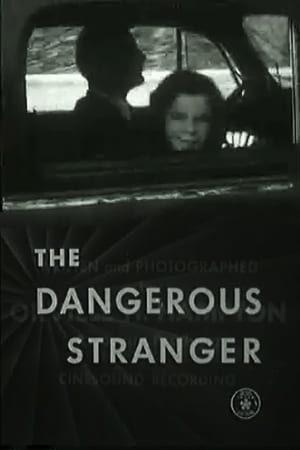
The Dangerous Stranger
In this film, a police officer tells children about the dangers of accepting rides or presents from strangers, and relates the unfortunate stories of several children who did and were never seen again.
1950
It Happened Today
From feckless mothers pushing their prams across roads without looking, to a Dick Dastardly character in his sports car, we see the dangers of road accidents brought to life by the West Riding Constabulary just after the war in 1947, when drivers still used hand signals.
1947