Watch Berlinized (2012) Online Free
The documentary BERLINIZED describes this very Berlin-specific attitude in a reflection on and a journey to mid-1990s' Berlin. Filmmaker Lucian Busse, an active protagonist of the period, documents the transformation of Berlin after the Wall. But Berlinized represents more than just the 1990s - it is a metaphor for this virally catching creative feeling, the slightly rough directness, spiced up with a big dash of typical Berlin humor. Berlinized lets the former protagonists reflect how that temporary feeling of freedom shaped their individual lives, and to what degree that freedom can still be found among the neat order of today's Berlin. These reflections are as diverse as the interviewees and as multifaceted as the changes in those times.
More Like This
Nothing Remains Nothing Disappears
A Berlin street corner is slowly changing: an aging supermarket turns into a construction site and finally a new building. People restock shelves, demolish walls, take breaks and count money. Those who work here participate in the making and unmaking of the place. How does it shape the conditions of their labor? Between supermarket aisles, construction scaffolding and exposed concrete, different versions begin to overlap. Repetitions appear like echoes between worlds, both playful and eerie.
2026
Sanssouci, Friedrichs Paradies
2025

Underground
Numerous people are on subway trains running up and down the city center endlessly. There are people who run this decent space “underground”. Under the noisy world today, we approach them to see what life is like underground.
2021

Animation Outlaws
Walt Disney said “We have created characters and animated them in the dimension of depth, revealing through them to our perturbed world that the things we have in common far outnumber and outweigh those that divide us.” Outside of Walt himself there are few people who have brought together and united more animators in the history of the genre than Craig "Spike" Decker and Mike Gribble, known to all as Spike & Mike. They created an animation festival that helped launch the careers of John Lasseter, Peter Lord, Will Vinton, Bill Plympton and Mike Judge to name just a few. Their Spike & Mike festival had an enormous impact on animation that was felt the world over. The festival was known as much for the breakthrough animation it presented as the outrageous antics of the founders.
2019
Olympia 1936. Der verratene Traum
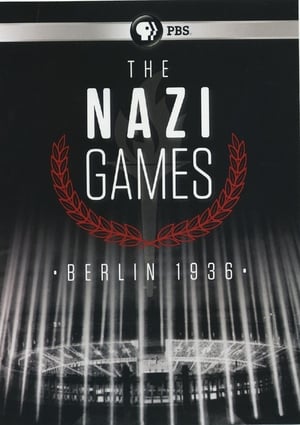
The film chronicles the story of how the Nazis and the IOC turned, to their mutual benefit, a small sports event into the modern Olympics. The grand themes and controversial issues from the 1936 Games have continued to this day: Monumentality, budget overruns, collusion with authoritarian regimes, corruption and sometimes even bribery.
2016

Destruction of the Berlin Wall
Filmed in Berlin, July 1990. Images of workers taking down the wall and street peddlers selling pieces of it to make a living.
2014
Auroville: L'esquisse d'un monde
2009
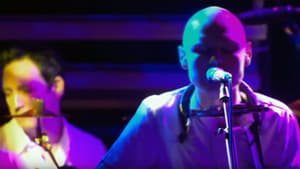
Smashing Pumpkins: If All Goes Wrong
In June of 2007, the re-united Smashing Pumpkins eschewed a traditional US tour and opted for an experimental art installation in the form of two residencies in Asheville, NC and San Francisco, CA. The documentary "If All Goes Wrong" traces the band over this period from the opening note to the final chord.
2008
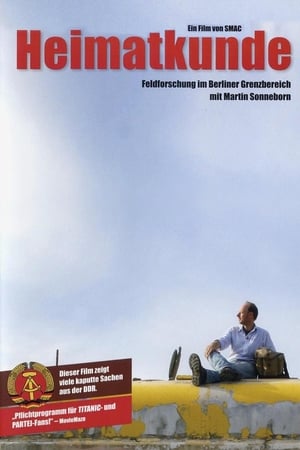
Heimatkunde
Former "Titanic" satire magazine editor Martin Sonneborn takes an undercover trip around Berlin and discovers the East-German mentality and what is left of the socialist German Democratic Republic.
2008
Ich will da sein - Jenny Gröllmann
The film accompanies Jenny Gröllmann, a German actress, during the last two years of her life.
2008

Trip to Asia: The Quest for Harmony
Journey with the musicians of the Berlin Philharmonic and their conductor Sir Simon Rattle on a breakneck concert tour of six metropolises across Asia: Beijing, Seoul, Shanghai, Hong Kong, Taipei and Tokyo. Their artistic triumph onstage belies a dynamic and dramatic life backstage. The orchestra is a closed society that observes its own laws and traditions, and in the words of one of its musicians is, “an island, a democratic microcosm – almost without precedent in the music world - whose social structure and cohesion is not only founded on a common love for music but also informed by competition, compulsion and the pressure to perform to a high pitch of excellence... .” Never before has the Berlin Philharmonic allowed such intimate and exclusive access into its private world.
2008

Prinzessinnenbad
A film about three teenagers - Klara, Mina and Tanutscha - from the Berlin district of Kreuzberg. The trio have known each other since Kindergarten and have plenty in common. The three 15-year-olds are the best of friends; they are spending the summer at Prinzenbad, a large open-air swimming pool at the heart of the district where they live. They're feeling pretty grown up, and are convinced they've now left their childhood behind.
2007
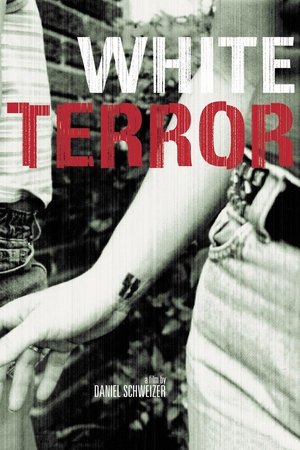
White Terror
A video about Neo-Nazis originating in Sweden provides the starting point of an investigation of extremists' networks in Europe, Russia, and North America. Their propaganda is a message of hatred, war, and segregation.
2005

Spirit of the Games
Documentary examines the history and evolution of the Olympic Games, taking a close look at the Olympic charter, oath and ideals. Also featured are rare home movies and interviews with Olympic athletes and the oldest known color footage of the Olympic Games from Berlin in 1936.
1996
Stille Nacht im fremden Land
By comparing the St. Nicholas celebrations in Islamic and Protestant communities in Berlin, the relationship between the religions is explored.
1986
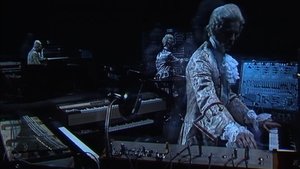
Tangerine Dream - Signals from the Schwäbischen Strasse
German TV film, also shown on Spanish TV in 1976, this is a film all about TD which includes informal interviews and concert/studio footage, most of which seems to have been done exclusively for the film. The interviews are in the German language. The street name in the title refers to where Edgar Froese used to live in Berlin (apparently Klaus Schulze lived on the same street at the time) and is now the site of the TDI offices.
1976
Das Märkische Viertel - Aussichten und Einblicke
Documentary about a district of Berlin
1973

Like It Is
This documentary on the "youth movement" of the late 1960s focuses on the hippie pot smoking/free love culture in the San Francisco Bay area.
1968
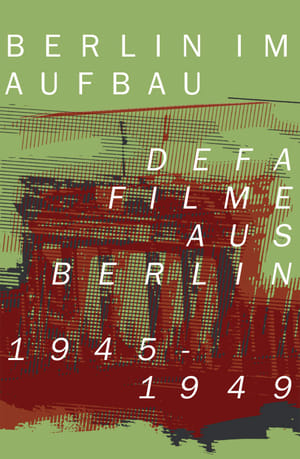
Berlin under Construction
Documentary short about the rebuilding of Berlin in 1946 from a Soviet perspective, showcasing the social changes that have taken place since the fall of Hitler and of Jews working side-by-side with non-Jewish counterparts.
1946
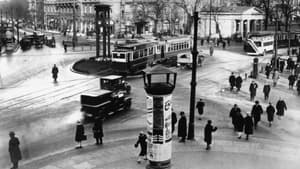
Berlin: Symphony of a Great City
A day in the city of Berlin, which experienced an industrial boom in the 1920s, and still provides an insight into the living and working conditions at that time. Germany had just recovered a little from the worst consequences of the First World War, the great economic crisis was still a few years away and Hitler was not yet an issue at the time.
1927