Watch Beethoven Piano Concertos 1-5 (1974) Online Free
These recordings, filmed in March and April 1974 for the BBC, occurred at the tail end of the old performance era and the very start of the new. Vladimir Ashkenazy was a graduate of the same Soviet school of piano playing that produced Sviatoslav Richter, Emil Gilels, Lazar Berman and a host of others of that era. There are simularities that unite them, including a broad romanticism, a degree of Lisztian showmanship coupled with periods of introspection, powerful technique that occasionally borders on pounding and an intellectual streak that produces some deeply insightful playing. Ashkenazy was younger than the others, more modern in his playing.
Cast
Vladimir Ashkenazy, Bernard Haitink, London Philharmonic Orchestra
More Like This
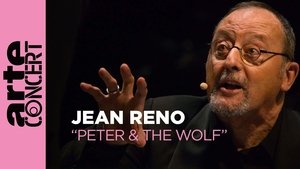
Pierre et le loup : Avec Jean Reno et Renaud Capuçon
For Peter and the Wolf, premiered in 1936, Prokofiev chose the form of a symphonic tale, featuring a narrator alongside the orchestra. A unique work in which each instrument embodies a character. Renaud Capuçon conducts the Orchestre de Chambre de Lausanne, while Jean Reno takes on the role of narrator.
2025

Igor Stravinsky's 'The Firebird' by The Royal Philharmonic Orchestra
On Air presents Igor Stravinsky's The Firebird, performed by the world-renowned Royal Philharmonic Orchestra, conducted by Peter Breiner, and recorded at BBC Television Centre. Expertly brought to life by some of the world's most sought-after classical musicians, The Firebird comprises 74 musicians: 51 string, 11 brass, 8 woodwind and 4 percussion. Available now to watch on demand in cinematic quality.
2022
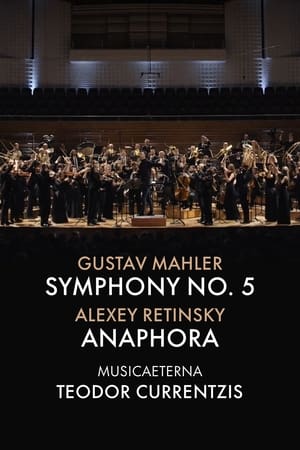
Mahler: Symphony No. 5
For Mahler, symphonies always were a means of interpreting the most convoluted philosophical problems that couldn’t be resolved verbally. The ambitious structure of the five-part Fifth Symphony spans from the Funeral March to the roaring finale. It is a forthright attempt to resolve the tragic conflict with the surrounding world. The brilliant fourth part of the symphony, Adagietto, resembles a beautifully mysterious flower that every conductor reimagines in their own style. As one of the twentieth century’s most influential maestros, Mahler redefined the conductor’s role. For him, the conductor is just as integral to his own musical works as they are to the composer. When a maestro steps onto the podium and opens the score, he recreates musical universes from scratch. Teodor Currentzis and the musicAeterna orchestra have performed Mahler’s symphonies around the world for many years. The Fifth Symphony has earned its place as one of the highlights of the cycle.
2021
Antonín Dvořák: Slovanské tance 1. řada, op. 46
Performed by the Czech Philharmonic Orchestra conducted by J. Bělohlávek. Slavonic Dances are among the most popular works by Antonín Dvořák and Czech Romantic music in general. The first series, originally composed for four-hand piano and later orchestrated for symphony orchestra, is inspired mainly by Czech folk dances. The orchestral version of Slavonic Dances is considered a groundbreaking work, thanks to which Dvořák attracted attention abroad and launched his international career. A television recording of this outstanding performance was made in 2014. The Czech Philharmonic Orchestra is conducted by Jiří Bělohlávek.
2015
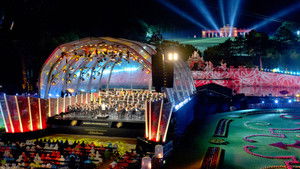
Summer Night Concert: 2014 - Vienna Philharmonic
The renowned orchestra presents the world's biggest annual classical open air concert live from their hometown Vienna, Austria on Thursday, May 29th, 2014. The Summer Night Concert with the Vienna Philharmonic is an annual open-air event that takes place in the magical setting of the Schönbrunn Palace Park in Vienna with the palace as a magnificent backdrop. Everyone is invited to come to this unique occasion with free admission. Each year up to 100,000 people can take up the invitation, or enjoy on radio and TV in over 60 countries.
2014
Beethovenova 9. symfonie – Koncert pro EU
A festive event marking the 10th anniversary of the Czech Republic's accession to the European Union, during which the Brno Philharmonic Orchestra will perform a live broadcast of L. van Beethoven's popular Symphony No. 9 in D minor, Op. 125, with Ode to Joy.
2014
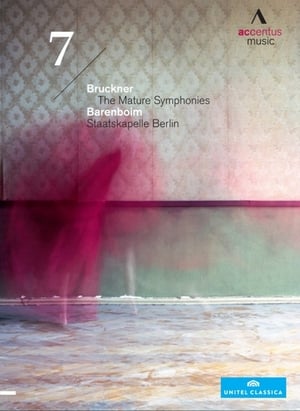
Bruckner: Symphony No. 7
In Anton Bruckner’s 7th Symphony, the listener encounters a music characterized by great spaciousness and profound solemnity, a music which speaks of grief and lamentation, but also of their transcendence. With its monumental architecture and intensity of sound, the symphony has moved listeners ever since its triumphal premiere in 1884. The Guardian calls Daniel Barenboim’s London interpretation “Tremendous … Barenboim and the Staatskapelle seem to have this work in their systems, and the overall impression was of music unfolding organically at its own pace rather than of a work being self-consciously interpreted or led.” Anton Bruckner Symphony No. 7 in E major (original version) Daniel Barenboim, conductor Staatskapelle Berlin Recorded live at the Philharmonie Berlin, 25 June 2010
2014
Tchaikovsky: Symphonies Nos. 4, 5 & 6 - Gergiev
Valery Gergiev is widely recognised as the greatest modern interpreter of Tchaikovsky’s music and the Mariinsky holds a peerless reputation in the repertoire. Together they deliver definitive interpretations of Tchaikovsky’s most popular symphonies. These acclaimed performances were filmed at Salle Pleyel in Paris during January 2010, directed by Andy Sommer. The themes of fate and death pervade Tchaikovsky’s final symphonies. The composition of the Fourth Symphony coincided with the breakdown of Tchaikovsky’s marriage and a failed suicide attempt, yet he considered it to be his greatest. In contrast he believed his Fifth to be flawed and uninviting, yet today this heartfelt work is widely regarded as one of his finest. The subject of fate is further instilled in the Sixth Symphony, premiered shortly before Tchaikovsky’s death. It was posthumously entitled ‘Pathétique’ by his brother and is a deeply melancholic work, full of dynamic extremes and an inherent sense of finality.
2011
Waldbühne 2011: Fellini, Jazz & Co
The Waldbühne in Berlin, one of the most appealing outdoor amphitheatres on the European continent, is the home of the Berliner Philharmoniker’s summer concerts. With audiences of more than 20,000, these are some of the most popular classical music concerts in the world. Riccardo Chailly is famous for having one of the broadest and most eclectic repertoires. Here, under his baton, the orchestra presents perennial favourites by Shostakovich, Rota and Respighi. Live recording from the Waldbühne, Berlin, 23 August 2011, directed by Kasten Henning, produced by Jan Bremme. TV Producer: Dorothea Diekmann, RBB. Repertoire Dmitry Shostakovich: Suite No. 2 for Jazz Orchestra (Suite for Variety Orchestra), Lady Macbeth of Mtsensk Suite – Allegretto; Nino Rota: ‘La Strada’ Ballet Suite; Ottorino Respighi: Fountains of Rome • Pines of Rome • Danza gueresca ‘Belkis’; Paul Lincke: Berliner Luft
2011

Waldbühne 2010 | An Evening with Renée Fleming
Repertoire Modest Mussorgsky: Night on Bald Mountain; Antonín Dvořák: Song to the Moon from “Rusalka”, Op. 114; Aram Chatschaturjan: Adagio from “Spartacus”; Richard Strauss: Final Scene from “Capriccio”, Op. 85; Richard Wagner: Overture to “Rienzi, der Letzte der Tribunen”; E. W. Korngold: Mariettas Lied from “Die tote Stadt”; Richard Strauss: Zueignung, Op. 10 No. 1; Sir Edward Elgar: Salut d’amour; Giacomo Puccini: Donde lieta uscì from “La bohème”; Tu che di gel sei cinta from “Turandot”; Ruggero Leoncavallo: Musette svaria sulla bocca viva from “La bohème”; Mimì Pinson, la biondinetta from “La bohème”; Piotr Tchaikovsky: “Romeo and Juliet” (Fantasy Overture)
2010
Ennio Morricone: Peace Notes - Live in Venice
From his impressive back catalogue as a cinematic composer, the illustrious Ennio Morricone conducts a moving and uplifting tribute to the victims of the 9/11 attacks and to all victims of unjust tragedies throughout history. Filmed in 2007 in high definition at the historic Piazza San Marco in Venice, this remarkable live performance features music from 'Cinema Paradiso', 'The Good The Bad and The Ugly', 'Once Upon a Time in America', 'Love Circle', 'The Mission' and many other timeless classics.
2007
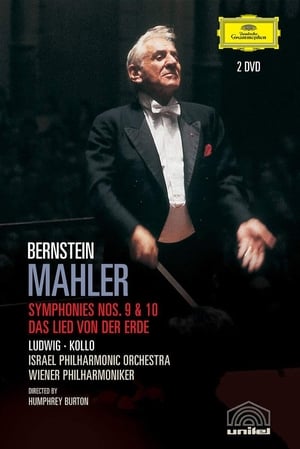
Mahler - Symphonies Nos. 9 & 10 / Das Lied von der Erde
Filmed on tour at Berlin's Philharmonie, this account of the valedictory Ninth Symphony is an intense interpretation, expressing Bernstein's conviction that modern man had at last caught up with the message encoded in Mahler's last completed work. Having made his famous 1966 studio recording of "Das Lied von der Erde" in Vienna, Bernstein re-recorded this in Israel with the same searing subjectivity. René Kollo draws on the voice of a great Wagner tenor, while Christa Ludwig, the greatest exponent of the contralto songs at the time, is unbearably poignant in the final movement's fusion of elation and sadness.
2005
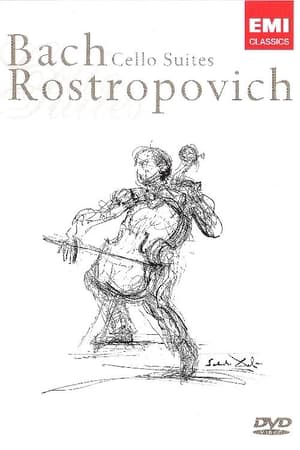
Mstislav Rostropovich - Bach Cello Suites
This is one of the most important recordings of the 20th century, both for its content (considered by many the greatest cello music of all time) and for the intense devotion, careful preparation, and towering technical skill that went into the project. It was a brilliant idea to make a video as well as an audio recording. Cellists will welcome the chance to study Rostropovich's bowing and fingering techniques, close up and at leisure. And music-lovers will welcome the visuals of the recording location, a French church whose architecture, statues, and flickering candles complement the music.
2004
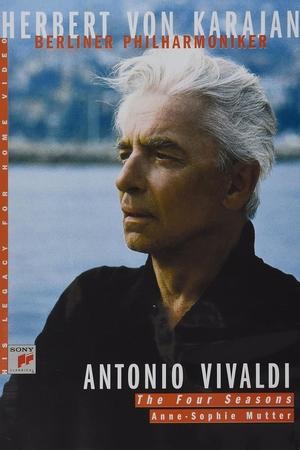
Vivaldi - The Four Seasons / Von Karajan, Mutter, Berlin Philharmonic
Famed conductor Herbert Von Karajan leads the Berlin Philharmonic in a performance of what may be Vivaldi's best-known composition -- "The Four Seasons" -- in this sparkling video. Recorded in 1987 at the Chamber Music Hall, this concert features Anne-Sophie Mutter as a guest violin soloist.
1990
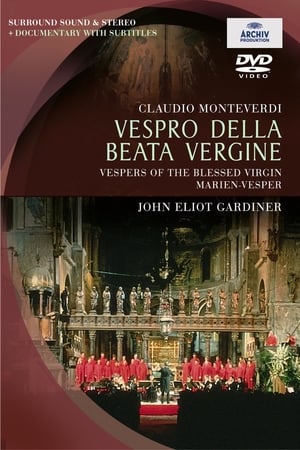
Vespro Della Beata Vergine
This large-scale live recording (Gardiner's second) was made in Venice's St Mark's Basilica. It captures the drama as well as the ceremonial aspect of the work, despite sometimes cloudy recorded sound.” Gramophone Classical Music Guide. “Gardiner's second [recording of the Vespers], spectacularly recorded live in St Mark's, has a punchy choral sound, near-operatic solo singing (Bryn Terfel and Alistair Miles are among the basses), emphatic enunciation, big contrasts and deliberate exploitation of the building's spaces. Its outright theatricality sets it apart from other performances.
1989
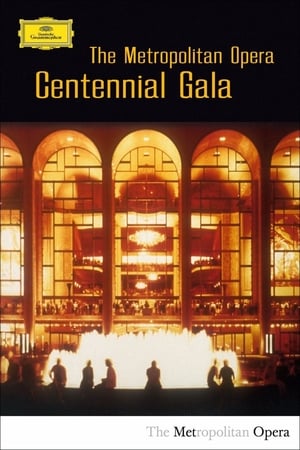
The Metropolitan Opera Centennial Gala
In celebration of its 100th anniversary in 1983, the Metropolitan Opera hosts a four-hour performance uniting some of the world's most spellbinding opera singers and conductors. The event includes a ballet from Samson et Dalila and boasts incredible classical performances from Kathleen Battle, Plácido Domingo, Jose Carerras, Leonard Bernstein, Marilyn Horne, Leona Mitchell, Luciano Pavarotti and many more.
1983
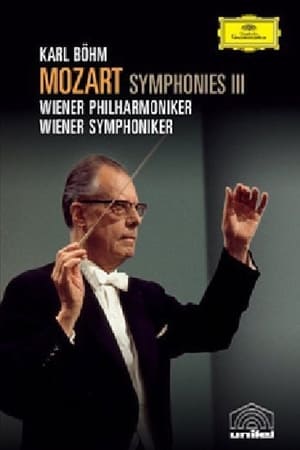
Mozart Symphonies Vol. III - Nos. 28, 33, 39, "Serenata Notturna" and Karl Böhm documentary
Almost any recording of a Mozart symphony by Austrian conductor Karl Bohm (1894-1981) is a sure thing: excellent sound, and sensible, solid, non-sentimental interpretation. This DVD has 3 Mozart Symphonies, all conducted by Bohm: Nos. 33 and 39 with the Vienna Symphony, recorded in Studio-Wien in 1969, and a live 1970 performance of Symphony 28 with the Vienna Philharmonic, filmed in the Musikvereinsalle in Vienna. All 3 symphonies have excellent film quality and sound, although some viewers may prefer Symphony 28, as the presence of a live audience really brings out the best in the Vienna Philharmonic.
1978
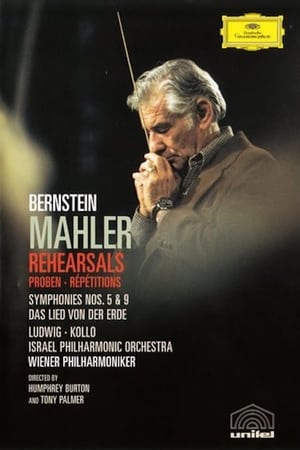
Bernstein Mahler Rehearsal
"Four Ways to Say Farewell" is a personal introduction to Mahler and his Ninth Symphony, during which Leonard Bernstein is seen and heard rehearsing the Vienna Philharmonic Orchestra. Filmed in 1971, this rehearsal was directed by Humphrey Burton,
1976
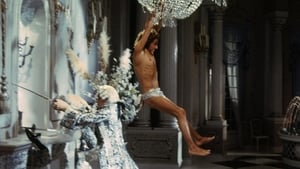
Lisztomania
In the 19th century, Romantic composer/pianist Franz Liszt tries to end his hedonistic ways but keeps getting sucked back in by his seductive fellow composer Richard Wagner.
1975
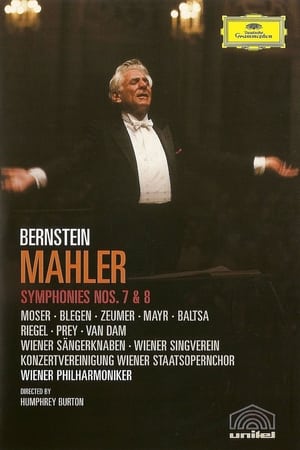
Mahler - Symphonies Nos. 7 & 8
Leonard Bernstein made these recordings during his wonderfully productive collaboration with the Wiener Philharmoniker in the mid-1970s when he was at the peak of his career. Humphrey Burton's direction is, as always, very fine, giving the viewer/listener both the larger picture and highlighting individual soloists, players or groups of musicians and, of course, the maestro. The video and audio tracks show their age, but are quite acceptable even for today's standards. Bernstein's Seventh is everything one could desire: dark and spooky, highly sensual, but also structurally strong and assertive where needed. Bernstein's reading does not gloss over breakdowns in tonality and the foreshadowing of later musical developments.
1975