Watch Mahler - Symphonies Nos. 9 & 10 / Das Lied von der Erde (2005) Online Free
Filmed on tour at Berlin's Philharmonie, this account of the valedictory Ninth Symphony is an intense interpretation, expressing Bernstein's conviction that modern man had at last caught up with the message encoded in Mahler's last completed work. Having made his famous 1966 studio recording of "Das Lied von der Erde" in Vienna, Bernstein re-recorded this in Israel with the same searing subjectivity. René Kollo draws on the voice of a great Wagner tenor, while Christa Ludwig, the greatest exponent of the contralto songs at the time, is unbearably poignant in the final movement's fusion of elation and sadness.
Cast
Leonard Bernstein, Israel Philharmonic Orchestra, Vienna Philharmonic
More Like This
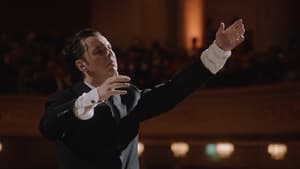
Teodor Currentzis: Utopia
Utopia, the new orchestra of conductor Teodor Currentzis, can be experienced for the first time in Vienna on its inaugural tour with the 1945 version of Igor Stravinsky’s ‘The Firebird’ and Maurice Ravel’s Suite No. 2 of ‘Daphnis et Chloé’, ‘La Valse’ and ‘Boléro’.
2022
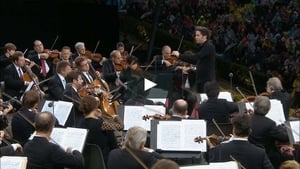
Waldbühne 2017 | Legends of the Rhine
For their annual season end concert, the Berliner Philharmoniker take the audience on a dreamy, magically journey through the river Rhine with Schumann’s beloved 3rd Symphony Rhenish. Pieces from Wagner’s Der Ring des Nibelungen under the baton of dynamic conductor Gustavo Dudamel complete this evening.
2017
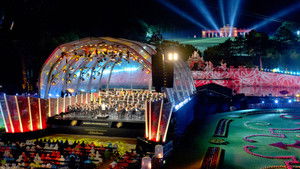
Summer Night Concert: 2014 - Vienna Philharmonic
The renowned orchestra presents the world's biggest annual classical open air concert live from their hometown Vienna, Austria on Thursday, May 29th, 2014. The Summer Night Concert with the Vienna Philharmonic is an annual open-air event that takes place in the magical setting of the Schönbrunn Palace Park in Vienna with the palace as a magnificent backdrop. Everyone is invited to come to this unique occasion with free admission. Each year up to 100,000 people can take up the invitation, or enjoy on radio and TV in over 60 countries.
2014
Beethovenova 9. symfonie – Koncert pro EU
A festive event marking the 10th anniversary of the Czech Republic's accession to the European Union, during which the Brno Philharmonic Orchestra will perform a live broadcast of L. van Beethoven's popular Symphony No. 9 in D minor, Op. 125, with Ode to Joy.
2014
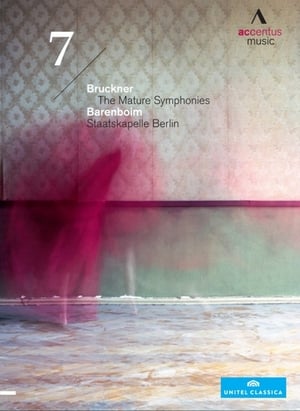
Bruckner: Symphony No. 7
In Anton Bruckner’s 7th Symphony, the listener encounters a music characterized by great spaciousness and profound solemnity, a music which speaks of grief and lamentation, but also of their transcendence. With its monumental architecture and intensity of sound, the symphony has moved listeners ever since its triumphal premiere in 1884. The Guardian calls Daniel Barenboim’s London interpretation “Tremendous … Barenboim and the Staatskapelle seem to have this work in their systems, and the overall impression was of music unfolding organically at its own pace rather than of a work being self-consciously interpreted or led.” Anton Bruckner Symphony No. 7 in E major (original version) Daniel Barenboim, conductor Staatskapelle Berlin Recorded live at the Philharmonie Berlin, 25 June 2010
2014
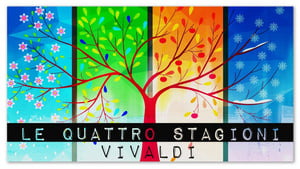
Vivaldi Le Quattro Stagioni
In April 1981 violinist Gidon Kremer performed Vivaldi's Four Seasons leading the English Chamber Orchestra recorded in the baroque library of the monastery in Polling, near Munich. It is, as one would expect from a master violinist, a superbly insightful performance. The sound is resonant and satisfying although surely not true 5.1, and those who wish to have this music on video might well investigate it.
2008
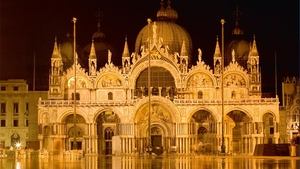
Verdi Requiem
The production itself is quite beautiful: recorded in the Basilica di San Marco in Venice in November 2007, it highlights the cathedral's splendor, the reverent audience, the soloists, orchestra and chorus with near-perfect cinematography. The soundtrack is also acceptable, which may have been quite a task to achieve, given the Basilica's over-reverberant acoustics. Alas, the performance itself does not rise to the occasion. Despite the occasional minor insecurity in ensemble and a visible lack of joy, the Symphonica Toscanini musicians play well, the Coro del Maggio Musicale Fiorentino members sing equally well, and the soloists are more than adequate, almost tangibly trying to excel.
2007
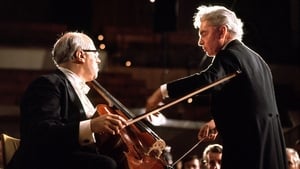
Rostropovich Life & Art
Released as a memorial for the great Russian cellist Mstislav Rostropovich, who passed away on 27 April 2007, this DVD contains one bonafide cello concerto, the Schumann Cello Concerto in A minor, and two tone poems with prominent cello parts, Ernest Bloch's Schelomo and Richard Strauss' Don Quixote. Rostropovich mastered the Schumann in several famous recordings. Here, conducted by Leonard Bernstein, he provides a splendid performance. Featuring his trademark powerful technique, smooth legato and crisp vibrato, the Romantic roots of the concerto are never hidden for long, despite the relatively cool playing of the Orchestre National de France.
2007
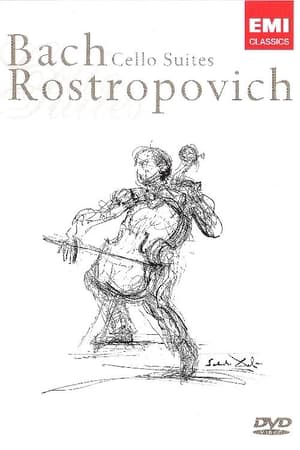
Mstislav Rostropovich - Bach Cello Suites
This is one of the most important recordings of the 20th century, both for its content (considered by many the greatest cello music of all time) and for the intense devotion, careful preparation, and towering technical skill that went into the project. It was a brilliant idea to make a video as well as an audio recording. Cellists will welcome the chance to study Rostropovich's bowing and fingering techniques, close up and at leisure. And music-lovers will welcome the visuals of the recording location, a French church whose architecture, statues, and flickering candles complement the music.
2004
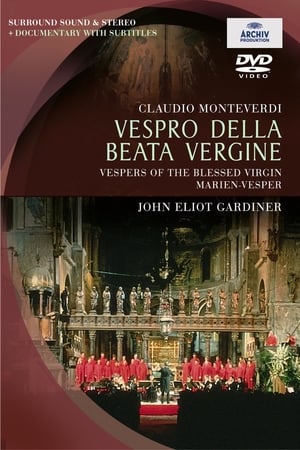
Vespro Della Beata Vergine
This large-scale live recording (Gardiner's second) was made in Venice's St Mark's Basilica. It captures the drama as well as the ceremonial aspect of the work, despite sometimes cloudy recorded sound.” Gramophone Classical Music Guide. “Gardiner's second [recording of the Vespers], spectacularly recorded live in St Mark's, has a punchy choral sound, near-operatic solo singing (Bryn Terfel and Alistair Miles are among the basses), emphatic enunciation, big contrasts and deliberate exploitation of the building's spaces. Its outright theatricality sets it apart from other performances.
1989
The Metropolitan Opera Centennial Gala
In celebration of its 100th anniversary in 1983, the Metropolitan Opera hosts a four-hour performance uniting some of the world's most spellbinding opera singers and conductors. The event includes a ballet from Samson et Dalila and boasts incredible classical performances from Kathleen Battle, Plácido Domingo, Jose Carerras, Leonard Bernstein, Marilyn Horne, Leona Mitchell, Luciano Pavarotti and many more.
1983
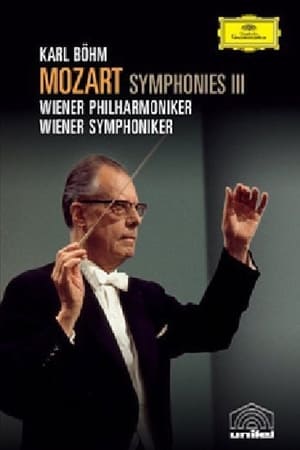
Mozart Symphonies Vol. III - Nos. 28, 33, 39, "Serenata Notturna" and Karl Böhm documentary
Almost any recording of a Mozart symphony by Austrian conductor Karl Bohm (1894-1981) is a sure thing: excellent sound, and sensible, solid, non-sentimental interpretation. This DVD has 3 Mozart Symphonies, all conducted by Bohm: Nos. 33 and 39 with the Vienna Symphony, recorded in Studio-Wien in 1969, and a live 1970 performance of Symphony 28 with the Vienna Philharmonic, filmed in the Musikvereinsalle in Vienna. All 3 symphonies have excellent film quality and sound, although some viewers may prefer Symphony 28, as the presence of a live audience really brings out the best in the Vienna Philharmonic.
1978
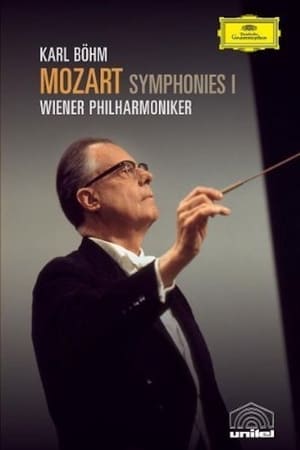
Mozart Symphonies Vol. I - Nos. 29,34,35,40,41 and Minuet K.409
There are only a couple of DVD recordings of Mozart's Symphony No. 40. Fortunately, this one by Karl Bohm, recorded live in Vienna's Musikvereinssaal, is excellent, as are the other Mozart symphonies on this DVD. Since this disc offers three of the big six last symphonies of Mozart, Nos. 35 (Haffner), 40, and 41 (Jupiter), plus two more, it is an outstanding value. Despite the age of the recordings (1973-74), both the sound and the video are quite good.
1978
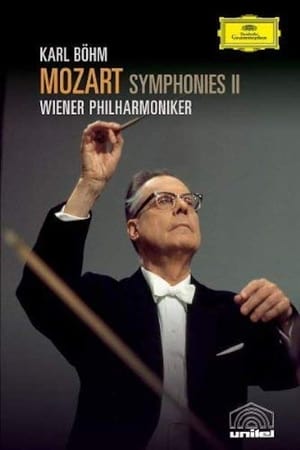
Mozart Symphonies Vol. II - Nos. 1,25,31,36,38 and "Eine Kleine Nachtmusik"
In the 1960s Karl Böhm (1894–1981) had made his mark as interpreter of Mozart with the the Berlin Philharmonic. Yet his recordings with the Vienna Symphony demonstrate a mutual sympathy and deep love for this timeless music. The musicians are razor-sharp in attack, harmony, and release. Böhm's style is minimalist: a firm downbeat, a ruffled hand here and there, a slight sway, no mugging. Occasionally, when quite excited, he gives a little hop but immediately pulls himself on a tight leash.
1978
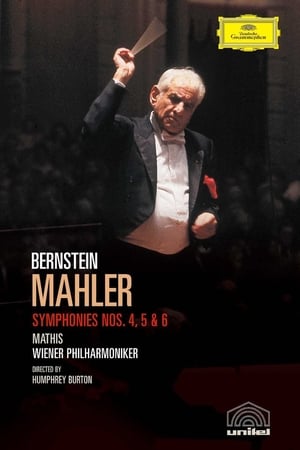
Mahler - Symphonies Nos. 4, 5 & 6
For Mahlerites, his symphonies are much more than musical performances--they can be an emotional or spiritual journey through the struggles, fears, and triumphs of life. This Sixth Symphony is a 1976 performance in the Vienna Musikvereinssaal with PCM stereo and DTS 5.1. The 2 dvd set also includes the 4th and 5th symphonies, which are performed as magnificently as the Sixth.
1976
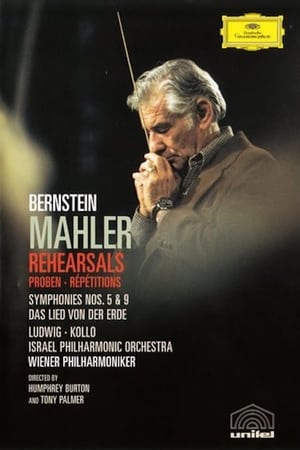
Bernstein Mahler Rehearsal
"Four Ways to Say Farewell" is a personal introduction to Mahler and his Ninth Symphony, during which Leonard Bernstein is seen and heard rehearsing the Vienna Philharmonic Orchestra. Filmed in 1971, this rehearsal was directed by Humphrey Burton,
1976
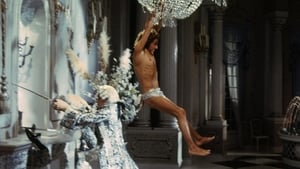
Lisztomania
In the 19th century, Romantic composer/pianist Franz Liszt tries to end his hedonistic ways but keeps getting sucked back in by his seductive fellow composer Richard Wagner.
1975
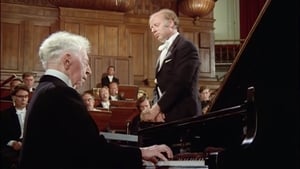
Rubinstein in Concert
Live 1973 concert performances by celebrated Polish-American virtuoso concert pianist Arthur Rubinstein, with the Concertgebouw Orchestra under conductor Bernard Haitink. Filmed in August 1973 at the Concertgebouw in Amsterdam, the performances include Beethoven's Third Piano Concerto, in C minor, op. 37; and Brahms's First Piano Concerto, in D minor, op. 15. These are followed by four short pieces for solo piano, by Schubert, Brahms, and Chopin. The 2008 DVD release by Deutsche Grammophon also includes a short documentary, "Rubinstein at 90", an interview with Robert MacNeil, filmed at Rubinstein's home in Paris in 1977.
1973
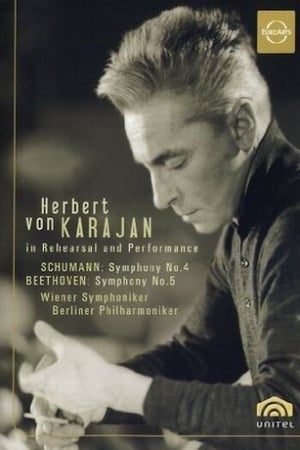
Karajan in Rehearsal
Karajan conducts rehearsal and performance of Schubert's Symphony No. 4 with the Vienna Symphony in Vienna, Nov. 1965, and Beethoven's Symphony No. 5 with the Berlin Philharmonic, January 1966. Henri-Georges Clouzot directs.
1965
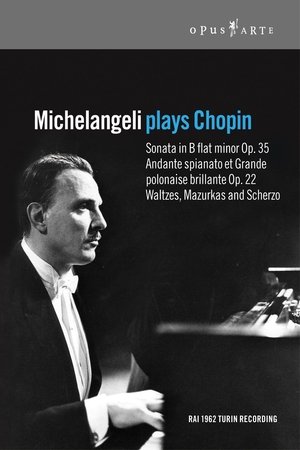
Michelangeli Plays Chopin
The legendary Italian pianist Arturo Benedetti Michelangeli (1920 - 1995), playing at the height of his powers, performs Chopin's Sonata in B flat minor and other music by one of the instrument's most brilliant and idiomatic writers, in the famously rare 1962 RAI television recording, newly restored and remastered for this release. Michelangeli's fine control and perfect clarity - always present in his playing - have positioned him among the most outstanding recording artists of any generation. ""His fingers can no more hit a wrong note or smudge a passage than a bullet can be veered off course once it has been fired...""
1962