Watch (be)longing (2007) Online Free
Loading Cinehub...
A group of inspiring African teenagers brought illegally or trafficked into the UK overcome desperate situations and build new lives for themselves in London. The girls face deportation on their 18th birthdays under current Home Office rules. This film asks them what they long for and where they feel they belong.
Cast
Nguwasen Grace Agera, Sheila Baluku, Saudatu Hassan, Rebecca Isiko, Samantha Kamara
More Like This
Je vais tuer Hitler
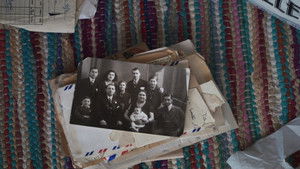
One day, in Savigny, an 18-year-old boy left his house in the middle of the war, saying: "I'm leaving, I'm going to kill Hitler." His name was Joseph, he was Jewish, he was my great-uncle. He disappeared during the night of the Occupation, and his existence became a family secret. He disappeared from history, the small as well as the big: he is not on any deportation list, and the only archive where he appears is a family photo of him as a child. It disappeared like a stone at the bottom of the water, instead of going up in smoke in the sky of Poland. What did he become? And why didn't anyone mention his name anymore?
2023

Little Sahara
Those who do not know the Sahara think there is only sand in the desert. But in the desert there are children who play and draw and make movies, and who would like to not have to think about the war. In the desert there's a European colony, an occupied country called Western Sahara, where there are thousands of Sahrawi refugees living a hard life in exile. "Little Sahara" tells their story, the story of a supportive, resilient people who try to thrive and grow in the Hamada, where everything has a hard time growing.
2023

Homebound
Through first person narration, Tari reveals personal stories related to her decision to work in Taiwan, her strained family relationships, the risks involved in working abroad and the traps she has fallen into.
2022
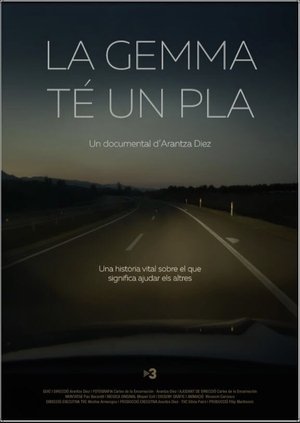
La Gemma té un pla
2021

The Unwanted: The Secret Windrush Files
David Olusoga opens secret government files to show how the Windrush scandal and the ‘hostile environment’ for black British immigrants has been 70 years in the making.
2019
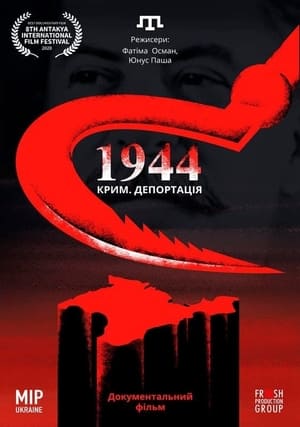
1944. Deportation
In 1944 Crimean Tatars has suffered a long road in exile. It was accompanied by famine, illness and loss. In the first years of exile, almost half of deported Crimean Tatars died. But those, who survived, dreamed of only one thing - to return to Crimea. The documentary 1944 tells about the tragedy of all Crimean Tatars through several separate life stories. They are cherished by each Crimean Tatar family and must be remembered by all generations to come.
2019

The Deported
The Deported follows four long term residents of the United States, each with an Order of Deportation over their head, and their families as they have to make critical decisions that will either keep their family together and separate them. Their choices are: 1. to self-deport. 2. To take sanctuary in a church. 3. To fight back legally. 4. To fall into denial and do nothing.
2019
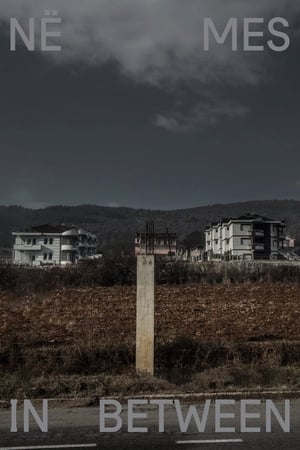
In Between
In rural Kosovo, identical houses are built for family members working abroad, in the hope that they will one day return to settle in their old homeland.
2019
A 3 Minute Hug
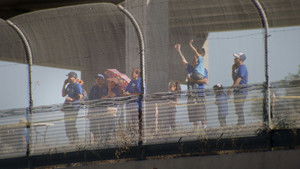
As daylight breaks between the border cities of El Paso, Texas, and Juarez, Mexico, undocumented migrants and their relatives, divided by a wall, prepare to participate in an activist event. For three minutes, they’ll embrace in no man’s land for the briefest and sweetest of reunions.
2018
2017 Oscar Nominated Short Films: Documentary
2017
Viacrucis Migrante
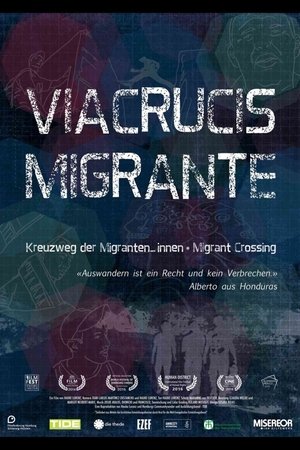
A documentary film about men, women, and children fleeing northward from the existential threats in their home countries of Honduras, El Salvador, and Guatemala. They embark on a perilous journey with an uncertain outcome. Shortly after crossing the southern Mexican border, they find shelter with people who want to help them survive the ordeal of the at least 1,700-kilometer journey to the US.
2017
Death by Rescue: The Lethal Effects of Non-Assistance at Sea
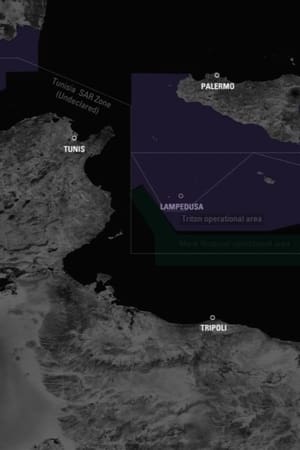
In April 2015, two shipwrecks in the central Mediterranean resulted in over a thousand deaths. The first, on 12 April, occurred when an overcrowded boat was approached by a large commercial vessel. Less than a week later, on 18 April 2015, a similar incident led to over eight hundred deaths after an overcrowded vessel collided with a cargo ship that had approached to rescue its passengers. Both incidents are in part the result of changing EU policies toward at-sea rescue, particularly the retreat of state rescue operations and a resulting onus on commercial vessels to fill the ‘rescue gap’.
2016
The Wildebeest Migration: Nature's Greatest Journey
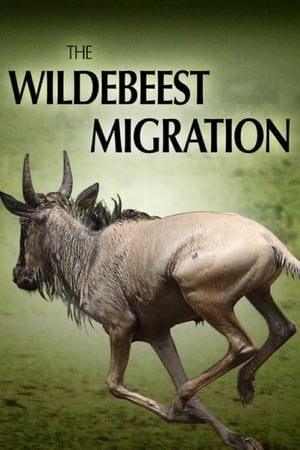
Every year, on the steppes of the Serengeti, the most spectacular migration of animals on our planet: Around two million wildebeest, Burchell's zebra and Thomson's gazelles begin their tour of nearly 2,000 miles across the almost treeless savannah. For the first time, a documentary captures stunning footage in the midst of this demanding journey. The documentary starts at the beginning of the year, when more than two million animals gather in the shadow of the volcanoes on the southern edge of the Serengeti in order to birth their offspring. In just two weeks, the animal herd's population has increased by one third, and after only two days, the calves can already run as fast as the adults The young wildebeest in this phase of their life are the most vulnerable to attacks by lions, cheetahs, leopards or hyenas. The film then follows the survivors of these attacks through the next three months on their incredible journey, a trip so long that 200,000 wildebeest will not reach the end.
2012

Special Flight
Switzerland still carries out special flights, where passengers, dressed in diapers and helmets, are chained to their seats for 40 hours at worst. They are accompanied by police officers and immigration officials. The passengers are flown to their native countries, where they haven't set foot in in up to twenty years, and where their lives might be in danger. Children, wives and work are left behind in Switzerland. Near Geneva, in Frambois prison, live 25 illegal immigrants waiting for deportation. They are offered an opportunity to say goodbye to their families and return to their native countries on a regular flight, escorted by plain-clothes police officers. If they refuse this offer, the special flight is arranged fast and unexpectedly. The stories behind the locked cells are truly heartbreaking.
2011
Straight Stories, Part 1
Somewhere between documentary and fiction, this is an essay on questions of territory and human displacements made during an excursion from southern Spain to northern Morocco. Travelling on the Mediterranean rim, we hear immigrants tell their stories.
2006

2 or 3 Things I Know About Him
What would your family reminiscences about dad sound like if he had been an early supporter of Hitler’s, a leader of the notorious SA and the Third Reich’s minister in charge of Slovakia, including its Final Solution? Executed as a war criminal in 1947, Hanns Ludin left behind a grieving widow and six young children, the youngest of whom became a filmmaker. It's a fascinating, maddening, sometimes even humorous look at what the director calls "a typical German story." (Film Forum)
2005
Winged Migration
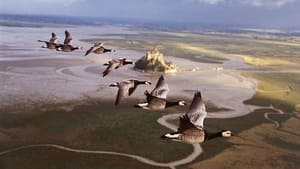
This documentary follows various migratory bird species on their long journeys from their summer homes to the equator and back, covering thousands of miles and navigating by the stars. These arduous treks are crucial for survival, seeking hospitable climates and food sources. Birds face numerous challenges, including crossing oceans and evading predators, illness, and injury. Although migrations are undertaken as a community, birds disperse into family units once they reach their destinations, and every continent is affected by these migrations, hosting migratory bird species at least part of the year.
2001

The Acadian Connection
National Film Board of Canada documentary of stories of Acadians (French Canadians from the eastern Maritime provinces). Hundreds of thousands of Acadians emigrated to Louisiana following deportation by the British during the Acadian Expulsion of the mid-18th century, hence the term 'Cajun.'
1995

Viramundo
Viramundo shows the saga of the northeastern migrants that arrive in São Paulo, beginning with a train arriving and ending with a train leaving São Paulo in a cycle repeated every day. Viramundo's aim was to question why the military coup d'état in Brazil happened without any popular resistance or revolution or reaction of the society.
1965
Business as Usual - Documentary
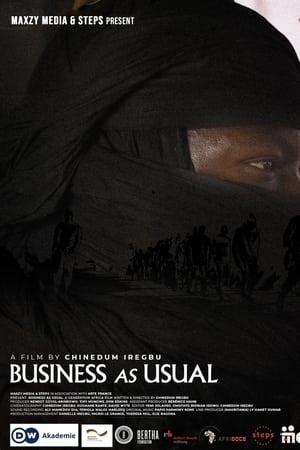
Following the dealings of Mauritanian fixers ferrying migrants by sea, this film shows the human cost of irregular migration in West Africa. Interrogating the role of fixers as facilitators of the voyage across the sea as well as the casualties that occur, this asks if they are very different from 16th century slave catchers.