Watch Backs to the Blast: An Australian Nuclear Story (1981) Online Free
A document of Australia's nuclear industrial history, from uranium mining and its toxic legacy to the nuclear weapons tests conducted at Maralinga in South Australia.
Cast
Martin Vaughan
More Like This
Chernobyl: 48 Hours To Escape
Witnesses, survivors and front-line heroes recall the first days of the Chernobyl disaster of April 1986. Featuring rare archive footage of the world's worst ever nuclear accident.
2026

Path of the Plume
Nuclear weapons are instruments of mass destruction that exact a devastating toll on human life. In the heart of rural Utah, the Lovell family recounts the harrowing tale of nuclear testing’s shadowy legacy and impact on innocent civilians
2025

The Conqueror: Hollywood Fallout
The story of one of the great environmental disasters to befall the United States, and the terrible movie that helped bring the catastrophe to light.
2024
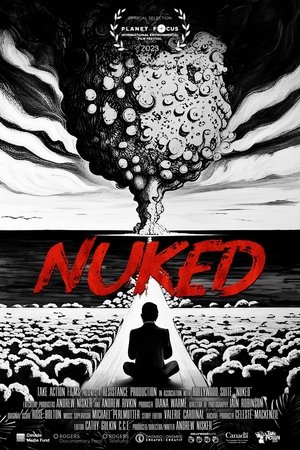
NUKED
The US detonated 67 nuclear weapons over the Bikini Atoll in the Marshall Islands during the Cold War, the consequences of which still reverberate down four generations to today. "NUKED," is a timely new feature documentary focussing on the human victims of the nuclear arms race, tracing the displaced Bikinian's ongoing struggle for justice and survival even as climate change poses a new existential threat. Using carefully restored archival footage to resurrect contemporaneous islanders’ voices and juxtaposing these with the full, awesome fury of the nuclear detonations, NUKED starkly contrasts the official record with the lived experience of the Bikinians themselves, serving as an important counterpoint to this summer’s Oppenheimer.
2023
Under the Cloud
An investigation into the unfolding history of nuclear testing, uranium mining, and nuclear waste disposal on indigenous lands in the US. It raises the voices of those who witnessed and experienced the consequences of nuclear colonialism and those who still resist.
2023
Nuclear Now
With unprecedented access to the nuclear industry in France, Russia, and the United States, Nuclear Now explores the possibility for the global community to overcome the challenges of climate change and energy poverty to reach a brighter future through the power of nuclear energy. Beneath our feet, Uranium atoms in the Earth’s crust hold incredibly concentrated energy. Science unlocked this energy in the mid-20th century, first for bombs and then to power submarines. The United States led the effort to generate electricity from this new source. Yet in the mid-20th century as societies began the transition to nuclear power and away from fossil fuels, a long-term PR campaign to scare the public began, funded in part by coal and oil interests.
2023
Rainbow Warrior
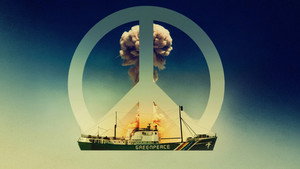
The Rainbow Warrior was a Greenpeace ship that was bombed by operatives of the French government, in New Zealand in 1985, while heading to a protest against nuclear testing, tragically taking the life of photographer Fernando Pereira. Edward McGurn’s enlightening and exciting documentary uncovers a tangled tale of nuclear weapons, geopolitical coverups, and attempts to take action against impending environmental collapse. Was Pereira’s death an accident or part of a larger political plot?
2022

Loxton Basketball: 70 Years
In 1949, a solitary picture in an American sports periodical inspired a cluster of Loxton residents to decode the mechanics of basketball. Originating from these modest roots, the Loxton Basketball Association was established.
2021
Burning Sky
2020
Azure Dust - Inside Chernobyl's Exclusion Zone
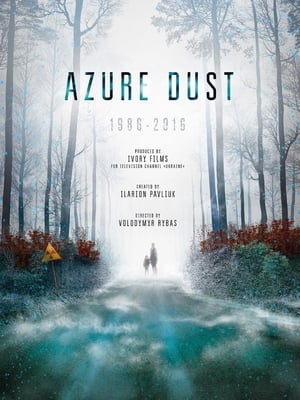
The story about Chornobyl area, all around the world we know of the disaster in 1986. The film may be called a guide to the Exclusion Zone. Thanks to the unique footage from the place of the tragedy, that the crew succeeded to capture, the viewers will have a chance for a full immersion into the atmosphere of the events and, along with the heroes of the film, feel the dreadful and amazing air that reigns where one of the major anthropogenic disasters took place.
2016

Hidden Exposure: The Truth About the H-Bomb Tests
In 1954, the United States tested 6 hydrogen bombs on Bikini Atoll in the Pacific Ocean. Numerous Japanese fishing boats were operating in surrounding waters, and their crews were exposed to radioactive fallout. But the Japanese government has acknowledged the cases of just 23 crewmembers. Now, scientists from Hiroshima have shed light on facts that had been buried for 60 years.
2014
Silent Bombs: All for the Motherland
In the remote region of Semipalatinsk in North-Eastern Kazakhstan live the victims of hundreds of Soviet nuclear tests carried out from 1949 through 1989.
2010
The Boat and the Bomb
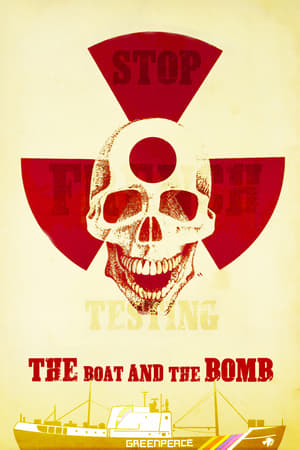
In Aukland Harbour, New Zealand, on July 10th 1985, French navy combat frogmen placed two mines against the hull of the Greenpeace flagship Rainbow Warrior, sinking the ship and killing photographer Fernando Pereira.
2006
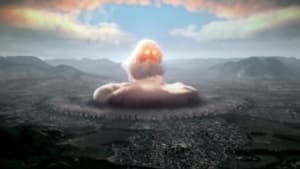
Hiroshima
The documentary recounts the world's first nuclear attack and examines the alarming repercussions. Covering a three-week period from the Trinity test to the atomic bombing of Hiroshima, the program chronicles America's political gamble and the planning for the momentous event. Archival film, dramatizations, and special effects feature what occurred aboard the Enola Gay (the aircraft that dropped the bomb) and inside the exploding bomb.
2005
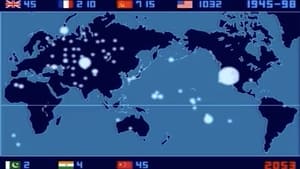
1945-1998
"2053" - This is the number of nuclear explosions conducted in various parts of the globe. "This piece of work is a bird's eye view of the history by scaling down a month length of time into one second. No letter is used for equal messaging to all viewers without language barrier. The blinking light, sound and the numbers on the world map show when, where and how many experiments each country have conducted. I created this work for the means of an interface to the people who are yet to know of the extremely grave, but present problem of the world."
2003
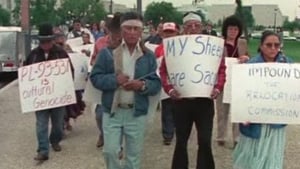
Broken Rainbow
Documentary chronicling the government relocation of 10,000 Navajo Indians in Arizona.
1985
The Four Corners: A National Sacrifice Area?
Documents the cultural and ecological impacts of coal stripmining, uranium mining, and oil shale development in Utah, Colorado, New Mexico, and Arizona – homeland of the Hopi and Navajo.
1983

We Are the Guinea Pigs
Farmers and parents of young children, who live in the Harrisburg, Pa., area, discuss their fears of radioactive contamination from the Three Mile Island nuclear reactor accident in 1979. Scientists and physicians also expound on the lethal dangers of nuclear power and the risks in containment processes.
1980
Life in Australia: Mount Gambier
Made by the Department of Immigration to entice immigrants from Great Britain, this film shows an idyllic picture of life in the South Australian regional town of Mount Gambier in the mid 1960s.
1964
Test of a clean hydrogen bomb with a yield of 50 megatons
Documentary movie about testing of the largest nuclear weapon in history, the Tsar Bomba. Declassified and made available to the public in 2020.
1961