Watch Atomic Energy in Canada (1967) Online Free
A look at what has been happening of late in Canada's nuclear laboratories where new uses of atomic energy are being pioneered. The film shows the earlier reactors at Chalk River and the reactions that take place between heavy water and natural uranium. Here, too, is seen the production of radioactive isotopes for use in medicine, agriculture, industry. At the Douglas Point prototype power station, the film explains how nuclear energy makes electricity. A film for science student or layman. Produced by Crawley Films Ltd. for Atomic Energy of Canada Limited.
More Like This
Radioactive: The Women of Three Mile Island
In this thrilling documentary, indomitable women fight back against the nuclear industry to expose one of the biggest cover-ups in US history: the 1979 Three Mile Island meltdown and its aftermath. The film reveals the never-before-told stories of four intrepid homemakers who take their case all the way to the Supreme Court, and a young female journalist who's caught in the radioactive crossfire.
2024

Nuclear Now
With unprecedented access to the nuclear industry in France, Russia, and the United States, Nuclear Now explores the possibility for the global community to overcome the challenges of climate change and energy poverty to reach a brighter future through the power of nuclear energy. Beneath our feet, Uranium atoms in the Earth’s crust hold incredibly concentrated energy. Science unlocked this energy in the mid-20th century, first for bombs and then to power submarines. The United States led the effort to generate electricity from this new source. Yet in the mid-20th century as societies began the transition to nuclear power and away from fossil fuels, a long-term PR campaign to scare the public began, funded in part by coal and oil interests.
2023
Wolsong: Vanishing Town
2019
Th (Part 11: Dr. Helen Caldicott)
Dr. Helen Caldicott is the most prominent anti-nuclear activist in the world. She's been featured on CNN, 60 Minutes, CBC and Democracy Now. In the 80s, Helen Caldicott campaigned against nuclear weapons testing in the pacific (still responsible today for the majority of tritium we're exposed to), and against the notion of a winnable nuclear war. She was nominated for a Nobel Peace Prize for her efforts. She has always made inaccurate statements regarding civilian nuclear power. But, since the Fukushima-Diachii radiation release has caused (and is projected to cause) zero fatalities... http://www.unis.unvienna.org/unis/en/... ...her tone has changed when speaking to supporters. This has not been acknowledged by prime-time media, as they continue to use her as a source. Any person or media outlet should check Caldicott's history of statements (on any subject) against a domain expert before using her as a source.
2014
Uranium Drive-In
A new uranium mill -- the first in the U.S. in 30 years -- would re-connect the economically devastated rural mining community of Naturita, Colorado, to its proud history supplying the material for the first atomic bomb. Some view it as a greener energy source freeing America from its dependence on foreign oil, while others worry about the severe health and environmental consequences of the last uranium boom.
2013
The Battle of Chernobyl
On April 26, 1986, a 1,000 feet high flame rises into the sky of the Ukraine. The fourth reactor of the Chernobyl nuclear power plant just exploded. A battle begins in which 500,000 men are engaged throughout the Soviet Union to "liquidate" the radioactivity, build the "sarcophagus" of the damaged reactor and save the world from a second explosion that would have destroyed half of Europe. Become a reference film, this documentary combines testimonials and unseen footage, tells for the first time the Battle of Chernobyl.
2007
Elektro-Lähmung - Ein Film gegen die politische Ohnmacht
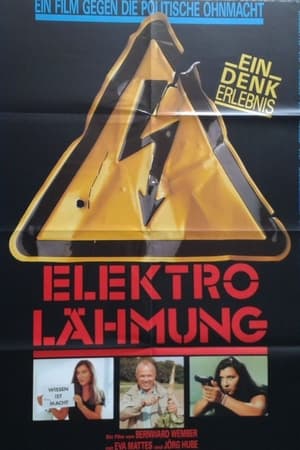
An initiative discusses a videotape in which a group of activists portrays themselves and their work against the "nuclear power mafia." After argumentatively and polemically confronting the economic and political power of the energy industry, the activists call for the shutdown of escalators to counteract people's electro-paralysis.
1989
Nuclear Fuel Waste Management
A narrated account of Atomic Energy of Canada's plan to construct permanent nuclear waste storage facilities in the geological formations of the Canadian Shield. Commissioned to Westminster Films Limited by the National Film Board for Atomic Energy of Canada Limited, Whiteshell Nuclear Research Establishment.
1979

Seabrook 1977
In April 1977, the small coastal town of Seabrook, New Hampshire became an international symbol in the battle over atomic energy. Concerned about the dangers of potential radioactive accidents, over 2,000 members of the Clamshell Alliance, a coalition of environmental groups, attempted to block construction of a nuclear power plant. 1,414 people were arrested in that civil disobedience protest and jailed en masse in National Guard armories for two weeks.
1978
This Nuclear Age
Since the first film was made explaining the power of the atom, nuclear technology has made great advances. This film is an up-to-date account of the many areas of nuclear research and recent developments in Canada. It was filmed at the long-functioning atomic reactors at Chalk River and Rolphton, and at the latest and largest atomic power station at Pickering, as well as at laboratories across the land where experimentation is carried out in both pure and applied nuclear science. Produced for the NFB by Crawley Films Ltd. for Atomic Energy of Canada Limited.
1973
Nuclear Power Reactor - Pickering
East of Toronto on the shore of Lake Ontario, is the Pickering Generating Station, one of the world's largest nuclear power stations. Here it is used to explain how a nuclear power station works, showing the fuel bundles, calandria, fuelling machines, boilers, control room, turbine-generator and spent fuel bay. Part of the multimedia kit The Energy Crisis?. Produced by the NFB for Energy, Mines and Resources Canada.
1973
Reconstruction of the NRX Reactor 1970
This film shows the exacting procedures used during the 1970 replacement of the calandria in the NRX nuclear reactor at Chalk River. Produced by the NFB for Atomic Energy of Canada Ltd.
1973
On Power Refuelling
An outstanding factor in the efficiency of the CANDU reactor employed in Canadian nuclear power stations is that its construction allows for refuelling while the plant remains in operation, with no necessity for periodic shut-downs. Filmed at the Pickering, Ontario, station, this film clearly illustrates the processes and the advantages of this Canadian feature. Cutaway models and animated drawings are used in the demonstration.
1971
On the Critical Path
Nuclear power plants are not exactly sold on the same scale as wheat, but that they can be manufactured as an exportable commodity is well illustrated in this film. For those familiar with nuclear power generation, and even for the lay audience, this is a lucid exposition of how a nuclear power plant is put together. The film shows the machining and assembly of principal components, and the "on power" operation of the Canadian plant at Pickering, Ontario. Produced by the NFB for Atomic Energy of Canada Limited.
1971
U 111 Dryout Experiment
A new system devised by Canadians whereby the dryout process in fuel bundles for a nuclear reactor can be completely checked, thereby preventing uneconomical burnup. Produced by the NFB for Atomic Energy of Canada.
1971
Douglas Point Nuclear Power Station: Design and Construction
A comprehensive treatment of technical and engineering aspects of Canada's first large nuclear electric power plant at Douglas Point, Ontario. The film shows the design, machining and assembly of component parts, and the special properties of the materials that went into the construction, as well as some of the exhaustive tests that were made before the station went "on power." Produced for the NFB by Crawley Films Ltd. for Atomic Energy of Canada Limited.
1969
Douglas Point Nuclear Power Station
The success of this first full-scale nuclear power station on the shores of Lake Huron has shown the way for the economic large-scale production of electricity from uranium. This film describes the plant at Douglas Point, Ontario, and the process by which the uranium atom is split, employing heavy water with a special property, deuterium, giving the name CANDU (Canada Deuterium Uranium) to the Canadian system of atomic energy production. Produced for the NFB by Crawley Films Ltd. for Atomic Energy of Canada Limited.
1968
Nuclear Power Demonstration
An account of the building and bringing into operation of Canada's pioneer nuclear power plant - the Nuclear Power Demonstration Station (NPD), built in northern Ontario as a prototype for larger plants. The film explains the principle of nuclear fission. Produced by Crawley Films Ltd. for Atomic Energy of Canada Limited, Ontario Hydro and Canadian General Electric Company Limited.
1963
The Atom - Servant of Man
The focus of this film is on Canada's nuclear research centre at Chalk River, Ontario. Key to atomic progress are the radioactive isotopes. The insertion and handling of these isotopes in the deadly interior of the reactor are shown in detail. Also shown are the applications of radioactive isotopes in various fields of endeavor, particularly medicine, agriculture, and manufacturing industries. Co-produced by the NFB and Crawley Films Ltd. with the assistance of Atomic Energy of Canada Limited.
1959
Inside The Atom
This short documentary offers a look at Canada’s Chalk River Project in the late 1940s. While humanity pondered the ultimate threat or promise of atomic energy, Chalk River scientists worked on the first set of experiments that attempted to apply atomic energy to medical and biological uses. Inside the Atom examines this frontier of science and assesses its value in terms of human progress.
1948