Watch Art City 3 A Ruling Passion (2002) Online Free
Many artists use the pain, exhilaration and resolution of private desires to express themselves. Art City: A Ruling Passion focuses on intense personalities who’ve used their art to explore the emotional impact of psychological truths. Everything that Louise Bourgeois creates - whether in marble, fabric or bronze - comes from memory. Michael Ray Charles investigates the marketing of black memorabilia, using early American advertising imagery. Elizabeth Peyton reinvents portraiture, using her friends as subjects, as well as pop culture royalty. Ed Ruscha’s literary landscapes burst from the physical world "right outside the window." The comic spirit of Lari Pittman contrasts with his graphic declarations. In a landmark house, Richmond Burton remembers his dreams to build "psychic fields" of abstraction. The arrays of featureless faces by David Deutsch are stimulated by sub-conscious sensations.
More Like This
Ouroboros
Ouroboros delicately captures Highgate Cemetery’s gothic architecture, ivy-draped tombs, and nature-reclaimed landscapes, drawing on staff perspectives to reconsider ideas of death, remembrance and everyday work there.
2026
The Artist
2025

Existential Action Thriller
A short documentary about Heidi Schwegler, a wildly imaginative artist who faced a crisis in her practice, went on a journey, and was then profoundly affected by a surprising flip in perception.
2024
Hermitage: The Power of Art
2019
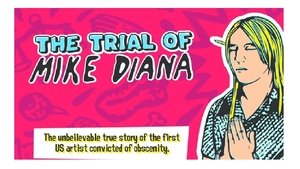
Boiled Angels: The Trial of Mike Diana
Florida, 1994. Artist Mike Diana is convicted on an obscenity charge in the wake of an undercover police officer purchasing his limited edition zine Boiled Angel. Here is the very unusual story of what led to this First Amendment debacle happening for the first time in the United States.
2018
21 rue la Boétie
2017
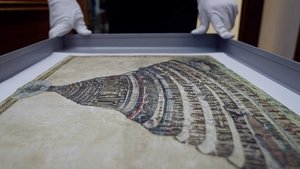
Botticelli – Inferno
The Renaissance master Botticelli spent over a decade painting and drawing hell as the poet Dante described it. The film takes us on a journey through hell with fascinating and exciting insights into Botticelli's art and its hidden story.
2016
This Week’s Poster - A Klocumentary
A short documentary about Dave Kloc's weekly poster-making process for The Meltdown with Jonah and Kumail. Filmed during the week of June 24th, 2015.
2015
The Glass
2015
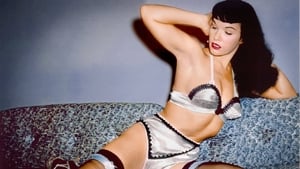
Bettie Page Reveals All
The world's greatest pin-up model and cult icon, Bettie Page, recounts the true story of how her free expression overcame government witch-hunts to help launch America's sexual revolution. When she saw the film The Notorious Bettie Page, produced by HBO in 2006, the main person concerned reacted unequivocally: “Lies! Lies!” In a long interview recorded shortly before her death, the woman who entered the collective unconscious as the ultimate pin-up gave her version of events to director Mark Mori. In a gravelly voice, Bettie Page tells her own story and lifts the veil on areas often hidden by images that have made so many men and women fantasize since the 1950s: her abused childhood, an eclipse that lasted forty years, her mental illness. Through testimonies and unpublished archives, this documentary brings back to life a body and a face endlessly declined before our eyes, just as Bettie wanted: “I would like people to remember me as I was in the photos.”
2013
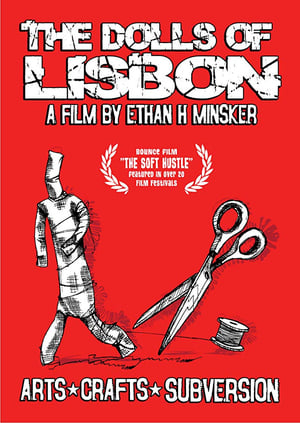
The Dolls of Lisbon
The Dolls of Lisbon is NYC's Antagonist Art Movement's latest exploit inspired by the Zapatista Dolls of Mexico, a souvenir that traveled the world symbolizing a rebellion against the legacy of Andy Warhol's commodification of art.
2011
Nova the Film
An inspiring 75min DIY documentary film on new art and the young artists behind it. It was all filmed on the heat of live action of the first NOVA Contemporary Culture Festival, July and August 2010 in São Paulo, Brazil.
2011
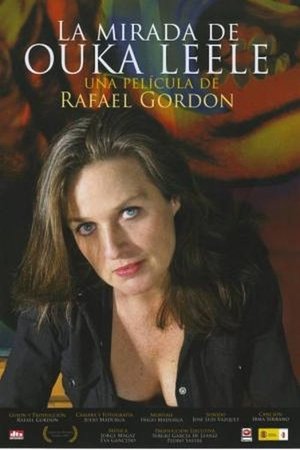
La mirada de Ouka Leele
Shot over five years. A unique document of the creative work of the most representative artist of her generation. She is a painter (she creates a 240 m mural in the film), and a photographer of icons, which reflect everything human that the spirit contains. Life and thought of an essential artist, creator over three decades of an internationally recognized work and deserving of the National Photography Award. “The Look of Ouka Lele” is the story of how the creativity of a genius develops, his passion and his struggle in thought, painting and photography. Art and existence, united by the effort, talent and beauty of a creator in eternal struggle.
2010

Koenig's Sphere
Adlon recounts the making of the sculpture, "Kugelkaryatide" the sphere that stood in the center of Tobin Plaza between the two towers of the World Trade Center. The film follows the sculpture from its creation as the largest bronze sculpture of recent times to the aftermath, where it now stands, heavily scarred, in Battery Park.
2002
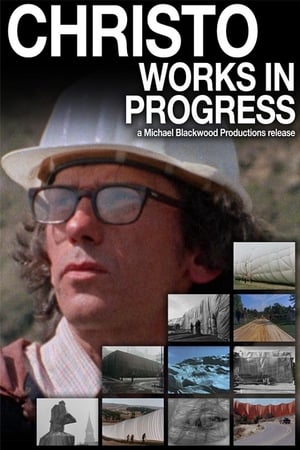
Christo: Works in Progress
“Christo: Works in Progress” takes us around the world on a showcase of the artist’s grand environmental installations. With both critique and praise from members of the communities that have hosted Christo and his works, the film takes a deep look into the process and outcome of pieces such as Wrapped Coast, Running Fence, and Wrapped Walkways. While discussing his inspirations and motives, Christo states, “The work of art is not the fabric, steel poles and cable, the work of art is the hills and the ocean, the sky, the gates, the rocks, the people, the light- this is the work of art.” (Christo Vladimirov Javacheff) Though his work may appear to be visually distracting from the landscapes he creates in, Christo’s aim is to bring attention to the land itself and encourage people to take note of their surroundings.
1974
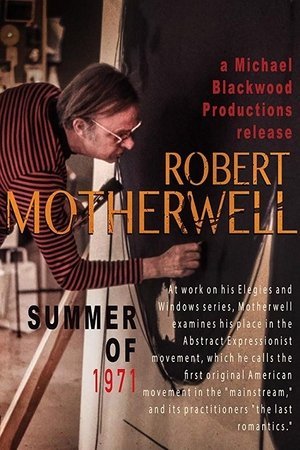
Robert Motherwell: Summer of 1971
At work on his Elegies and Windows series, Motherwell examines his place in the Abstract Expressionist movement, which he calls the first original American movement in the "mainstream," and its practitioners "the last romantics." He distinguishes between his large paintings and his intimate papier collée. Motherwell recollects the state of American art in the 1940s and the impact of European emigré painters on the younger generation of emerging artists. He discusses the significance of collage, or papier collée, as an artist's medium and explains how he first became involved with this process. Motherwell offers his interpretations of earlier directions in art and his response to the object oriented painting that emerged in America in the 1960s. A unique document of one of the founding members of the New York School. He died in 1991.
1972
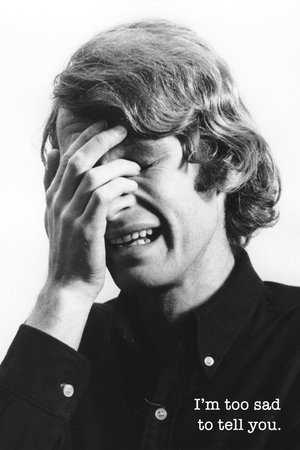
I'm Too Sad to Tell You
This short film is part of a mixed media artwork of the same name, which also included postcards of Ader crying, sent to friends of his, with the title of the work as a caption. The film was initially ten minutes long, and included Ader rubbing his eyes to produce the tears, but was cut down to three and a half minutes. This shorter version captures Ader at his most anguished. His face is framed closely. There is no introduction or conclusion, no reason given and no relief from the anguish that is presented.
1971
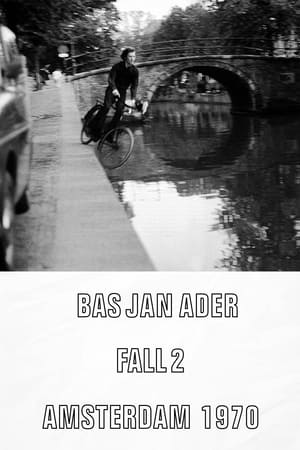
Fall 2
Bas Jan Ader rides his bike into a canal in Amsterdam.
1970
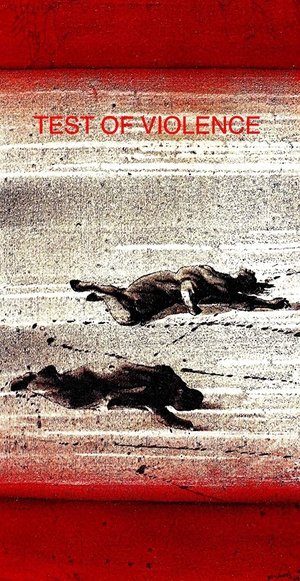
A Test of Violence
Stuart Cooper's short about the work of Spanish artist Juan Genovés is an inspired introduction to the works of this extraordinary artist, exploring its minimalist aesthetic and storytelling qualities through a variety of cinematic techniques, including rostrum, animation, news footage and live action recreations.
1969

Pop Goes the Easel
Pop Goes the Easel was Ken Russell’s first full-length documentary for the BBC’s arts series Monitor. It focused on 4 British Pop Artists - Peter Blake, Peter Philips, Pauline Boty and Derek Boshier.
1962