Watch Arab Movie (2015) Online Free
So many Israelis still wax nostalgic about that old Friday afternoon ritual, back in the times when television had just one channel. Everyone would watch the Arab movie of the week, but did anybody ever wonder how Israel’s official TV station was able to transcend hostile boundaries to obtain these films, and why it insisted on showing movies made by “the enemy”? The Arabic-language movie from Egypt let some of us escape back to our original homeland, and let others peek out from our “villa in the jungle” and catch a glimpse of our neighbors across the border. But most of us didn’t really want to see the people whose culture, anguish, and aspirations were reflected on our screens. “Arab Movie” brings us the stars and the songs, the convoluted plots, and that fleeting moment when we shared the same cultural heroes as everyone else in the Middle East. But this film about the richness and intensity of Egyptian cinema also raises some disturbing questions.
More Like This
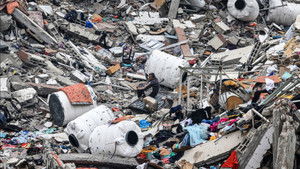
Inside Gaza
Free access to the Gaza Strip has remained closed to international journalists since the war began on October 7, 2023. AFP's permanent reporters are among the few professional witnesses to have experienced this conflict from the inside. They have watched, filmed, photographed, testified, all whilst struggling to ensure their own survival. From their exile, they recount this war, which is the deadliest ever recorded for members of the press.
2025

UNraveling UNRWA
Following the October 7th massacre and allegations that UNRWA staff were involved in the kidnappings, the agency made headlines around the world. Israel enacted legislation to suspend cooperation with UNRWA, despite the ongoing humanitarian crisis in Gaza. The film presents a historical examination of UNRWA’s role—a temporary agency, initially mandated to resolve the refugee crisis following the 1948 war, which has never ceased its operations and, after 75 years, continues to perpetuate generations of refugees
2025
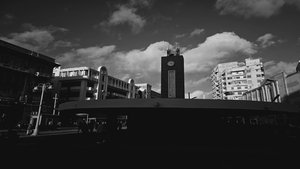
Raml Station
Raml Station is one of the most famous places in all of Alexandria. This documentary captures the beauty of Raml Station.
2024
La mer n'oublie pas
Saud now lives in Paris, caring with devotion and tenderness for his two young children while closely following the drama in Gaza. “It's hard to be far away.” He speaks sadly of his situation as a Palestinian citizen of Israel. When he accompanies his daughter to school, they both stick up placards for the liberation of Palestine...
2024
Patterns of Evidence: The Israel Dilemma – Ancient Prophecies
The conflict in Israel today is often linked to the belief that the Bible serves as the Israelis' claim to the land, based on God's covenant with Abraham, Moses, and the Israelites. Filmmaker Timothy Mahoney investigates this by exploring ancient prophecies made by Moses, which predicted Israel’s rise as a kingdom, its fall due to breaking the covenant, the scattering of its people, their persecution, and eventual return to the land. Using archaeological evidence and expert insights, Mahoney delves into these events, raising deeper questions about Israel's suffering, their chosen status, and its relevance today. "The Israel Dilemma – Ancient Prophecies" is part one of a two-part film series exploring these themes.
2024

Handbook of Movie Theaters' History
Handbook of Movie Theaters' History is a documentary about the history, the development in the present days and the future of movie theaters in the city of Turin, Italy. It mixes the documentary language with comedy and fiction, and is enriched by interviews to some of the most important voices of Turin cinematography. The film follows the evolution of movie theaters by enlightening its main milestones: the pre-cinema experiences in the late 19th Century, the colossals and the movie cathedrals of the silent era, the arthouse theaters, the National Museum of Cinema, the Torino Film Festival, the movie theaters system today and the main hypothesis about its future. The mission of Handbook of Movie Theaters' History is to explore and give back to the audience a deep reflection about the identity and the value of movie theater, in its social and anthropological role and as a mass media, and to analyze the experience of the viewer.
2021
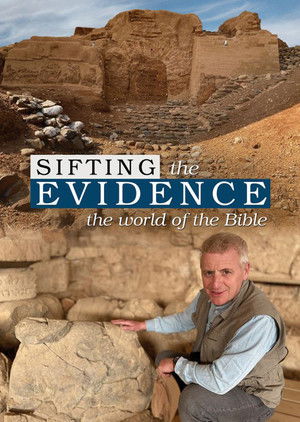
Sifting the Evidence: The World of the Bible
Dr. Chris Sinkinson presents in a thoughtful, accessible and engaging manner, demonstrating through on site location and interviews with experts, that archaeology affirms that the Bible is reliable and fits with important events that occurred in the ancient world. He cites Jerome who considered Israel the “fifth gospel” and his avid interest and expertise in the land and history is clearly evident. Indeed if we visit and study Israel, that will illumine and enrich our understanding of the Bible. Interestingly and additionally, when Blaise Pascal was asked by Louis XIV for evidence for the existence of God, he simply similarly responded, “The Jews, your majesty, the Jews.”
2020
Watch the Tempo
On 18th of December 2017, the Filarmonica Teatro Regio Torino, directed by Timothy Brock, presented "The Gold Rush" by Charles Chaplin, with live performance of the soundtrack. But let's go back a few days: this short film takes us in the backstage of the concert!
2018
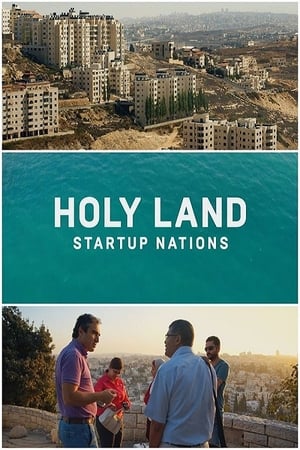
Holy Land: Startup Nations
With the most tech startups and venture capital per capita in the world, Israel has long been hailed as The Startup Nation. WIRED’s feature-length documentary looks beyond Tel Aviv’s vibrant, liberal tech epicenter to the wider Holy Land region – the Palestinian territories, where a parallel Startup Nation story is emerging in East Jerusalem, Nazareth, Ramallah and other parts of the West Bank, as well as in the Israeli cybersecurity hub of Be’er Sheva. And we will learn how the fertile innovation ecosystem of Silicon Wadi has evolved as a result of its unique political, geographical and cultural situation and explore the future challenges – and solutions – these nations are facing.
2017
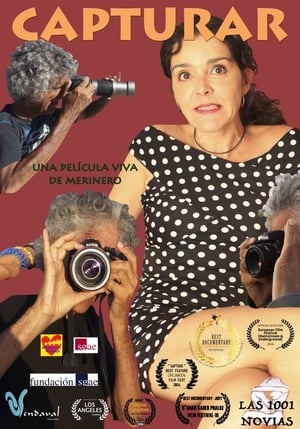
Capturar (Las 1001 novias)
2017
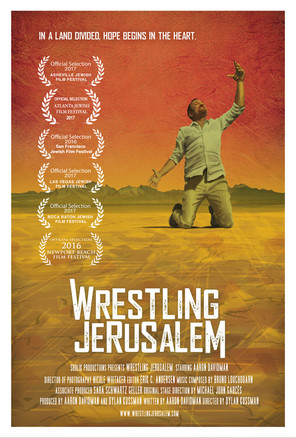
Wrestling Jerusalem
Writer-actor Aaron Davidman embodies seventeen different characters in and around the sacred city of Jerusalem as he takes us on an eye-opening journey into the heart of the Israeli-Palestinian story. Exploring universal questions of identity and human connection, the film is about one man's effort to embrace a multiplicity of conflicting viewpoints, chronicling a brave exploration of the complex humanity at the heart of one of the world's most troubling conflicts.
2016
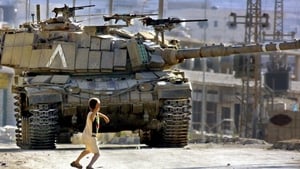
The Occupation of the American Mind
Over the past few years, Israel's ongoing military occupation of Palestinian territory and repeated invasions of the Gaza strip have triggered a fierce backlash against Israeli policies virtually everywhere in the world—except the United States. This documentary takes an eye-opening look at this critical exception, zeroing in on pro-Israel public relations efforts within the U.S.
2016
Patterns of Evidence: The Israel Dilemma – Part 2
The conflict in Israel today is often linked to the belief that the Bible serves as the Israelis' claim to the land, based on God's covenant with Abraham, Moses, and the Israelites. Filmmaker Timothy Mahoney investigates this by exploring ancient prophecies made by Moses, which predicted Israel’s rise as a kingdom, its fall due to breaking the covenant, the scattering of its people, their persecution, and eventual return to the land. Using archaeological evidence and expert insights, Mahoney delves into these events, raising deeper questions about Israel's suffering, their chosen status, and its relevance today. Part two of a two-part film series exploring these themes.
Cairo from 5 to 7
A short documentary film that captures the city (Cairo) in its most tranquil and calm state, from 5 am to 7 am.
2013
Disney: Through the Looking Glass
Tito del Amo, a passionate 72-year-old researcher, takes the final step to unravel the enigma about the alleged Spanish origin of the American cartoonist Walt Disney, making the same journey that his supposed mother made to give him up for adoption in Chicago. A journey that begins in Mojácar, Almería, Spain, and ends in New York. An exciting adventure, like Alicia's through the looking glass, to discover what is truth and what is not, with an unexpected result.
2010
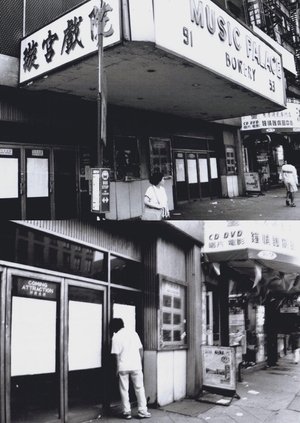
Music Palace
Previously a central part of communal life, the movie palaces of New York’s Chinatown are now extinct. This documentary short takes us inside the title theater located on the Bowery, as it’s about to close its doors, with its caretakers ruefully looking back at the life that once was. Eric Lin’s poignant first film serves as a glimpse into the usually private—and, according to the Music Palace’s projectionist, “lonely”—operations of a theater, and mourns the loss of a once-vital movie-going locale.
2005
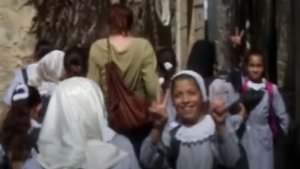
Visit Palestine
What drives a young, well-educated Westerner to volunteer as a “peace activist” in the Middle East? Caiomhe Butterly is one of a growing number of volunteers who risk their own safety to intervene in the long-running and bloody conflict between Israel and Palestine. Several internationals, including her, have now been injured. Some have died. In this film, she describes witnessing the aftermath of the attack on Jenin in April 2002. The film follows her work, the main emphasis being “the accompaniment of communities at risk”. Despite being threatened, shot in the leg and deported later that year, she is determined to go back.
2005
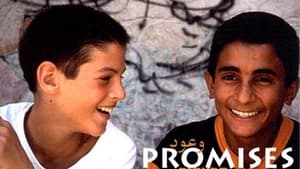
Promises
Documentarians Justine Shapiro and B.Z. Goldberg traveled to Israel to interview Palestinian and Israeli kids ages 11 to 13, assembling their views on living in a society afflicted with violence, separatism and religious and political extremism. This 2002 Oscar nominee for Best Feature Documentary culminates in an astonishing day in which two Israeli children meet Palestinian youngsters at a refugee camp.
2001
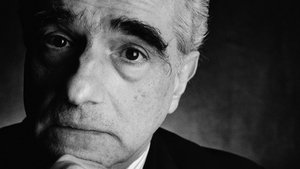
My Voyage to Italy
World-renowned director Martin Scorsese narrates this journey through his favorites in Italian cinema.
1999

Grisha
An up-close look into the life of the often misunderstood movie director Grigori Kromanov through the lens of old friends and colleagues.
1996