Watch Antarctica: Ice & Sky (2015) Online Free
Documentary about the work of Claude Lorius, who began studying Antarctic ice in 1957, and, in 1965, was the first scientist to be concerned about global warming.
Cast
Claude Lorius, Michel Papineschi
More Like This
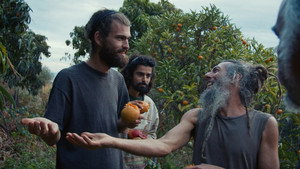
Sintrópica- Semillas de cambio
Jaime Otero, a passionate Galician farmer, and his companions Sérgio and Diogo, embark on an odyssey across the Iberian Peninsula, carrying with them the revolutionary philosophy of syntropic farming. This practice is inspired by the forest to produce food while regenerating ecosystems. Their adventure takes them through regions as diverse as Galicia to the sea of plastics in Almería, confronting us with the severe environmental crisis that conventional agricultural practices are leading us towards. The collection and dispersal of seeds becomes the main tool for regeneration and the backbone of this road movie,in which countless people who are also looking for a paradigm shift are immersed in. . Full of passion and hope, these three pioneers invite us to relearn and to look at nature with new eyes. Ultimately, they show us that our ability to transform our current reality will require a steady and collective effort.
2024

The Route of the Conquerors
In times of global ecological crisis, Costa Rica seems to be an oasis for its rich biodiversity. Nacho traces a route to learn about agroecological projects, discovering what the indigenous communities call "good living" Could this be the solution?
2024

Untenable Pantanal
Luciano Candisani, award-winning Brazilian photographer, returns to the Pantanal, the world’s largest floodplain, to document its biodiversity and raise awareness about severe environmental threats. The region faces drastic water flow changes and unprecedented fires, yet Candisani finds hope and resilience amidst the challenges.
2024

The Storm Petrel's Nest
During their first flight between the Atacama Desert and the Pacific Ocean, thousands of ringed storm petrels have fallen victim to light pollution caused by the city and industry. Biologist Jorge Páez is dedicated to the rescue and conservation of this species in the city of Antofagasta. He will face the greatest mystery surrounding this species: despite the hundreds of specimens that fall in the city each year, nobody knows for certain the nesting sites of the species, lost in the vastness of the desert.
2024

Lago Escondido- Soberanía en juego
A group of Argentines try to reach Lago Escondido, in the south of their own country, where the British billionaire Joe Lewis has created a fiefdom of twelve thousand hectares that functions as a parallel state. This documentary narrates the Seventh March to Lago Escondido in 2023, with a camera that records the events directly, but also investigates dark geopolitical interests, business/judicial lobbies and the complicity of some sectors of Argentine politics with foreign interests.
2024
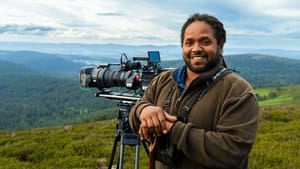
Hamza: Strictly Birds of Prey
Hamza Yassin’s true passion is for nature, and he regularly roams the outdoors to capture its beauty on film as a wildlife cameraman. In this special film for BBC One and iPlayer, he is on a quest to film his favourite birds of prey – and no corner of the UK is too remote for him to find them.
2023
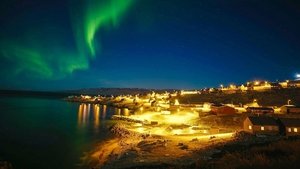
Greenland: in the Glare of Ice
Greenland is the largest island in the world and the landmass closest to the North Pole. 80% of the country is covered by a layer of ice up to 3000 meters thick. Through the eyes of locals we get to know the authentic Greenland.
2020
Tadpoles: The Big Little Migration
Short documentary, shot over fours years, showing the incredible daily migration of the western toad tadpoles, a designated indicator species on Vancouver Island, British Columbia.
2020
Sharks of the Bermuda Triangle
Marine biologist Dr. Austin Gallagher searches for the holy grail of shark research -- the secret breeding grounds of tiger sharks.
2020
L'école d'Arthur
2019
Long Gone Wild
Long Gone Wild focuses on the plight of captive orcas, picking up where the acclaimed documentary Blackfish left off while telling a uniquely new and different story...
2019
Wonderful World 3D
Our world is the home of millions of plant as well as animal species and provides several territories, each with its own geological and climatic conditions: steep mountains, deep forests, wide oceans and arctic ice deserts. The inhabitants have adapted to its different conditions and are still developing new strategies to survive. “Wonderful World 3D” not only takes a look at the interesting creatures of our planet, but also highlights cosmological circumstances, which made our world unique, diversified and above all so adorable.
2014
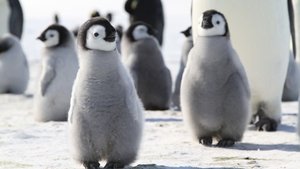
Pengi and Sommi
Baby Emperor Penguin Pengi and Sommi's Ultimate Challenge Begins! At 60 degrees below zero, winter has come to the South Pole, the coldest glacial region in the world. Abandoned due to its bitter coldness, the South Pole is greeted by the real natives of this place, the Emperor Penguins, who have come to welcome new lives. Through the indescribable love and care given by mom and dad, baby Emperor Penguins Pengi and Sommi awake from their egg shells. Gluttonous Pengi, the number one trouble maker in the South Pole, and cutie Sommi, who loves daddy's embrace the best, become great friends. Then one day, Sommi’s dad goes out to the sea to seek her out. Sommi left all alone, cold and starving to the brink of death, and Pengi desperately tires to help Sommi through her troubles. Could Pengi and Sommi possibly overcome numerous hardships and become beautiful full-grown Emperor Penguins?
2012

Orca Killing School
2009
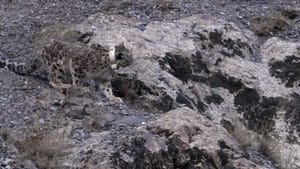
Snow Leopard: Beyond the Myth
BBC The Natural World. In 2004, a team from the Planet Earth series captured the first ever film of a wild snow leopard in the mountains of Pakistan. For Nisar Malik, who led the expedition, these images sparked a passion that compelled him to return. With cameraman Mark Smith, he spent two years documenting the snow leopard's daily life, finally lifting the veil on the most elusive of all cats.
2008
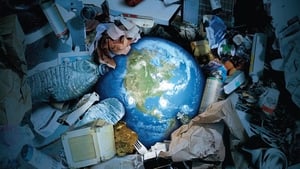
The 11th Hour
A look at the state of the global environment including visionary and practical solutions for restoring the planet's ecosystems. Featuring ongoing dialogues of experts from all over the world, including former Soviet Prime Minister Mikhail Gorbachev, renowned scientist Stephen Hawking, former head of the CIA R. James Woolse
2007
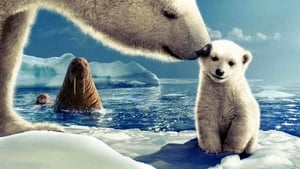
Arctic Tale
Arctic Tale is a 2007 documentary film from the National Geographic Society about the life cycle of a walrus and her calf, and a polar bear and her cubs, in a similar vein to the 2005 hit production March of the Penguins, also from National Geographic.
2007

Wir Weltmeister – ein Fußballmärchen
2006
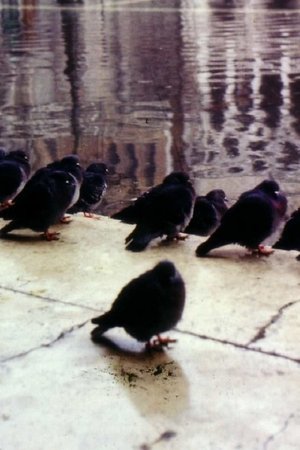
City by the Sea, or how to survive in Venice
Yannick Bellon's documentary paints a portrait of a city torn between the problem of unsanitary housing, pollution corroding walls and statues, and the recurring and increasing floods—all consequences of human activity. Faced with job shortages and rampant speculation, the overarching question arises of how industries can coexist with the city of Venice. Allowing them to develop risks destroying it; driving them out risks turning it into a museum, causing its inhabitants, and thus its soul, to leave.
1970
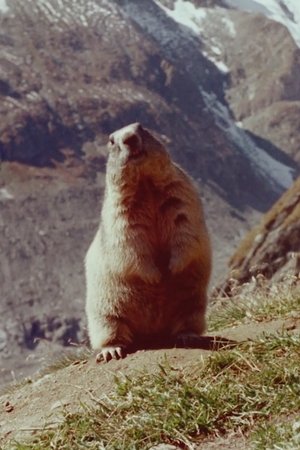
Marmot
A wildlife documentary about marmot.
1966