Watch Antártica: O Continente dos Extremos (2021) Online Free
More Like This
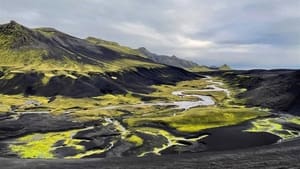
Great natural monuments - Iceland
The fascinating landscape formations of Iceland in the North Atlantic bear witness to the beauty and primal power of nature. They were created through the interaction of powerful volcanic, geological and biological processes that have been changing the face of the earth for billions of years. This is what the Earth might have looked like four billion years ago. Iceland is the realm of ice and fire. Nowhere else is there such a high density of volcanoes. The landscapes, which are continually reshaped by eruptions, make the island a natural laboratory full of clues about the formation and development of the earth. The documentary follows a group of scientists through the most active areas of Iceland, along a mountain range that has emerged from the ocean. On the slopes of the volcanoes, in the fog of the fumaroles and on streams and rivers, the three researchers explore how the first forms of life populated the earth's surface and in what evolutionary steps they took over the earth.
2023
Voyages au centre de la Terre : Dans les pas de Jules Verne
2023
Is Genesis History? Mountains After the Flood
In this fascinating sequel to "Is Genesis History?", watch a team of scientists discover new evidence for the global Flood. By the time the journey is over, you'll understand exactly how modern science connects to the book of Genesis.
2023
Bancoco
A New Yorker journeys to the jungle in the Darien Gap of Panama to reconnect with an indigenous tribe he met and photographed 20 years ago. Their reunion highlights the profound power of photos and the human connection that transcends cultural barriers.
2023
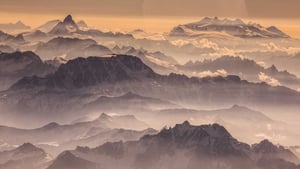
Mountain
An epic cinematic and musical collaboration between SHERPA filmmaker Jennifer Peedom and the Australian Chamber Orchestra, that explores humankind's fascination with high places.
2017
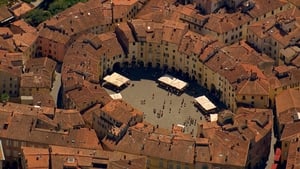
Un jour en Italie
2017
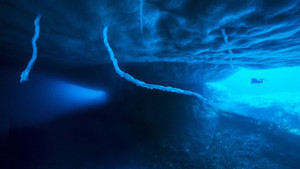
Antarctica, in the footsteps of the Emperor
Gombessa Expedition 3 Protected by an international treaty Antarctica has been spared the effects of hunting and fishing. But signs in ice’s cyclical patterns and its biodiversity have become worrying. Connected to the planet’s global ecosystem via atmospheric circulation and ocean currents, this white haven is suffering the effects of human activities. To document and explain what is unfolding in Antarctica, photographer, diver, and marine biologist Laurent Ballesta and photographer of extreme environments Vincent Munier will be blending their artistic perspectives of a rapidly changing continent. Laurent will tackle technical and human prowess below the ice to bear witness to its remarkable underwater life. His photographs will advance knowledge on Antarctica’s unique and little-known biodiversity. On land, his eye riveted to the lens of his camera, Vincent captures snapshots of life in an Emperor Penguin colony.
2016
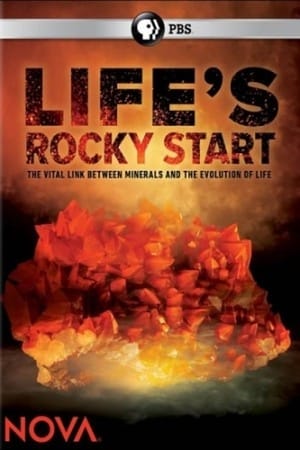
NOVA: Life's Rocky Start
Four and a half billion years ago, the young Earth was a hellish place-a seething chaos of meteorite impacts, volcanoes belching noxious gases, and lightning flashing through a thin, torrid...
2016
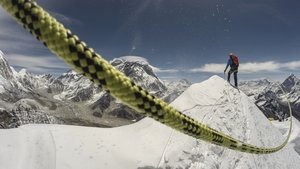
Sherpa
In 2013, the world's media reported on a shocking mountain-high brawl as European climbers fled a mob of angry Sherpas. Director Jennifer Peedom and her team set out to uncover the cause of this altercation, intending to film the 2014 climbing season from the Sherpa's point-of-view. Instead, they captured Everest's greatest tragedy, when a huge block of ice crashed down onto the climbing route...
2015
Sambesi - Quelle des Lebens
Although it crosses six countries and is over 3,500 kilometers long, the Zambezi is one of the least known rivers in the world. So it's time to take to the water and discover this mystical, ever-changing river, whose mood changes from day to day, kilometer to kilometer, and which is the very essence of life for millions of animals and people in this often drought-stricken, water-scarce region!
2010
The Journey of Man: A Genetic Odyssey
Many geneticists and archaeologists have long surmised that human life began in Africa. Dr. Spencer Wells, one of a group of scientists studying the origin of human life, offers evidence and theories to support such a thesis in this PBS special. He claims that Africa was populated by only a few thousand people that some deserted their homeland in a conquest that has resulted in global domination.
2003
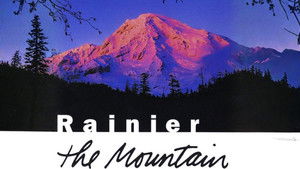
Rainier: The Mountain
In this retrospective tribute, acclaimed filmmaker Jean Walkinshaw hails the 100th anniversary of Mount Rainier National Park in Washington by talking to those who know it best: the scientists, naturalists, mountain climbers and artists whose lives have been touched by the peak's far-reaching shadow. The result is a harmonious blend of archival material and high-definition footage celebrating an icon of the Pacific Northwest.
1999
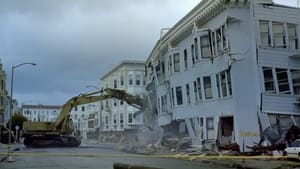
Ring of Fire
Ring of Fire is about the immense natural force of the great circle of volcanoes and seismic activity that rings the Pacific Ocean and the varied people and cultures who coexist with them. Spectacular volcanic eruptions are featured, including Mount St. Helens, Navidad in Chile, Sakurajima in Japan, and Mount Merapi in Indonesia.
1991
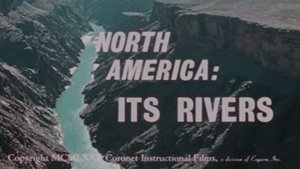
North America: Its Rivers
Explores the distinctive features of the major rivers of the continent, and discusses their contributions to the farming, recreation, transportation and hydroelectric power of North America.
1971

North America: Its Plains and Plateaus
This documentary shows the characteristics and location of major plains and plateaus of North America, and discusses some of the ways in which they have affected man's use of the land.
1971
Od severu k jihu
1959
Země jihu – Vietnam
1957
Za poklady země
1954
Píseň jižních Čech
1951

Hatay
1939