Watch Za poklady země (1954) Online Free
More Like This

What If We Run Out of Stones?
At first glance, what could be more inanimate – and therefore anti-cinematic – than the mineral kingdom? Nora Štrbová challenges this declaration, turning it on its head and making stones into a highly kinetic subject. In this humorous essay film shot in 35 mm, stones are finally given a voice as they observe us, judge us and, above all… put up with us.
2025
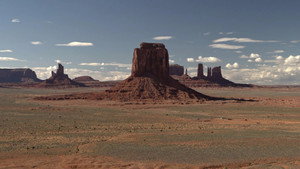
Great natural monuments - Grand Canyon
The Grand Canyon is a breathtaking natural monument. It's one of the planet’s best-known landscapes, yet we often forget that it tells two billion years of the Earth's history. Geologists Karl Karlström and Laurie Crossey are the leading experts on this. Over the course of 8 days, they descend the Colorado river and tackle hundreds of rapids to unveil the mysteries held in the Grand Canyon, and the place that humans occupy within it.
2025
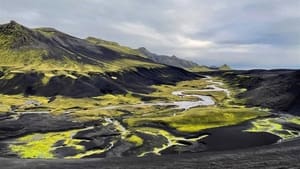
Great natural monuments - Iceland
The fascinating landscape formations of Iceland in the North Atlantic bear witness to the beauty and primal power of nature. They were created through the interaction of powerful volcanic, geological and biological processes that have been changing the face of the earth for billions of years. This is what the Earth might have looked like four billion years ago. Iceland is the realm of ice and fire. Nowhere else is there such a high density of volcanoes. The landscapes, which are continually reshaped by eruptions, make the island a natural laboratory full of clues about the formation and development of the earth. The documentary follows a group of scientists through the most active areas of Iceland, along a mountain range that has emerged from the ocean. On the slopes of the volcanoes, in the fog of the fumaroles and on streams and rivers, the three researchers explore how the first forms of life populated the earth's surface and in what evolutionary steps they took over the earth.
2023
Voyages au centre de la Terre : Dans les pas de Jules Verne
2023
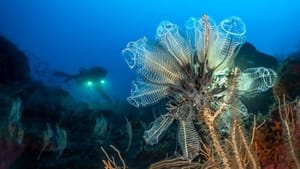
Méditerranée : la face immergée des volcans
With the help of diver and biologist Laurent Ballesta, a scientific expedition explores three sunken Italian volcanic sites in the Mediterranean.
2023

Les Îles Canaries, nées du feu et bercées par l'océan
2023
A Day in the Life of Earth
Presenter Hannah Fry reveals how much our planet can change in just a single day and how these daily changes are essential to our existence.
2018

Anthropocene: The Human Epoch
Documentary on psychedelic potash mines, expansive concrete seawalls, mammoth industrial machines, and other examples of humanity’s massive, destructive reengineering of the planet.
2018
Mountain
An epic cinematic and musical collaboration between SHERPA filmmaker Jennifer Peedom and the Australian Chamber Orchestra, that explores humankind's fascination with high places.
2017
Scotland's First Oil Rush
Documentary telling the story of the shale oil industry and its lasting impact on the community of West Lothian. Presented by geologist Professor Iain Stewart.
2016
NOVA: Life's Rocky Start
Four and a half billion years ago, the young Earth was a hellish place-a seething chaos of meteorite impacts, volcanoes belching noxious gases, and lightning flashing through a thin, torrid...
2016
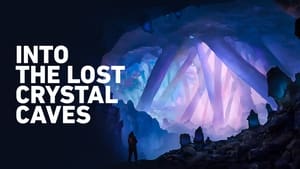
Into the Lost Crystal Caves
NGC goes inside one of the greatest natural marvels on the planet - a giant crystal cave described as Superman's fortress, with magnificent crystals up to 36 feet long and weighing 55 tons. A team of experts venture into the cavern, enduring scorching-hot temperatures that could kill a human after just 15 minutes of exposure. They'll push the boundaries of physical limitation to explore a crevasse that could lead to another - and perhaps more spectacular - crystal cave.
2010
Mystery of the Megaflood
The Channeled Scablands in Washington state defied conventional explanations for their formation for decades. Little by little evidence mounted for an old theory that was rejected by the scientific establishment. It involved glaciers, volcanoes, a relatively minor river and a prodigious amount of water. Originally aired as an episide of NOVA.
2005
Minnesota: A History of the Land
Minnesota: A History of the Land vividly brings to life the epic story of the people and landscapes of Minnesota. From the retreat of the last ice sheets to the growth of today’s suburbs – the series seeks to entertain as it enriches our understanding of Minnesota’s past, present, and future. A visually stunning and groundbreaking 4-part documentary series featuring nature videography from across the state, never before seen historic images, state-of-the-art animations and historic recreations. Original soundtrack by award-winning composer, Peter Ostroushko.
2005
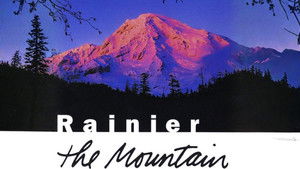
Rainier: The Mountain
In this retrospective tribute, acclaimed filmmaker Jean Walkinshaw hails the 100th anniversary of Mount Rainier National Park in Washington by talking to those who know it best: the scientists, naturalists, mountain climbers and artists whose lives have been touched by the peak's far-reaching shadow. The result is a harmonious blend of archival material and high-definition footage celebrating an icon of the Pacific Northwest.
1999
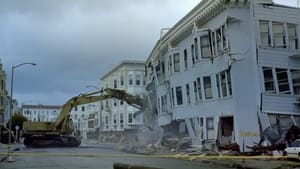
Ring of Fire
Ring of Fire is about the immense natural force of the great circle of volcanoes and seismic activity that rings the Pacific Ocean and the varied people and cultures who coexist with them. Spectacular volcanic eruptions are featured, including Mount St. Helens, Navidad in Chile, Sakurajima in Japan, and Mount Merapi in Indonesia.
1991
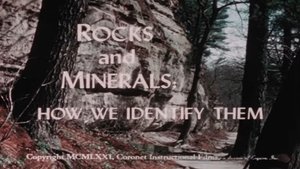
Rocks and Minerals: How We Identify Them
Shows how common rocks and minerals can be identified by color, texture, hardness, streak and other standard procedures.
1971

Rocks: Where They Come From
Follows Don as he sees different kinds of rocks at a granite quarry, sandstone cliff and museum. Demonstrates the effects of water, heat and pressure in the formation of rocks.
1963
Geologická činnosť vody
1955
Time and Terrain
Millions of years scroll by in 10 minutes, illustrated by ingenious designers: this is the geological history of Canada.
1948