Watch Andrea Bocelli - A Night in Tuscany (1997) Online Free
A Night in Tuscany is the first DVD released by Italian singer Andrea Bocelli of a concert held in his native Tuscany, in 1997, highlighting the unique blend of Classical, Pop, and traditional Italian songs that made him a crossover success as an internationally acclaimed tenor. The concert takes place at the Piazza dei Cavalieri in Pisa. Bocelli performs two opera duets with soprano Nuccia Focile during the concert, before singing Miserere with Italian rock star Zucchero, who discovered him, and Time To Say Goodbye with English soprano Sarah Brightman
Cast
Andrea Bocelli, Sarah Brightman
More Like This

Abrahamsen: The Snow Queen
The Snow Queen is Hans Abrahamsen's first opera, composed to a self-penned libretto, based on Hans Christian Andersen's eponymous fairy tale. Following an in-depth study of the topic of snow and a life-long obsession with Andersen's fairy tales, Abrahamsen composed the opera between 2014 and 2018. Hans Abrahamsen's music, with it's smooth transitions and subtly modified repeats, lends the lyrics both depth and lightness. He is keen to point out the range of avenues for interpretation available. " It's possible to read the fairy tale in a variety of ways. It contains many mysteries which are open to numerous interpretations." Accompanying Barbara Hannigan is a top-class ensemble of singers, including Peter Rose, Katarinya Dalayman and Rachael Wilson. Cornelius Meister is the musical director, currently general music director at the Staatsoper Stuttgart.
2022

Massenet - Thais
With the “Méditation”, Jules Massenet probably wrote one of the most famous melodies of our time. It originates from his comédie-lyrique Thaïs, which – unlike Massenet's operas Werther or Manon – never made it into the international opera repertoire. Presumably because the two main roles of Thaïs and Athanaël demand something almost superhuman from the singers. In the new production by Peter Konwitschny at the Theater an der Wien, the American soprano Nicole Chevalier is one of the most exciting singers currently on stage in the title role. At her side, the young Austrian bass-baritone Josef Wagner celebrates his house debut. This is a fascinating and musically excellent performance of a timeless classic of the opera repertoire.
2021
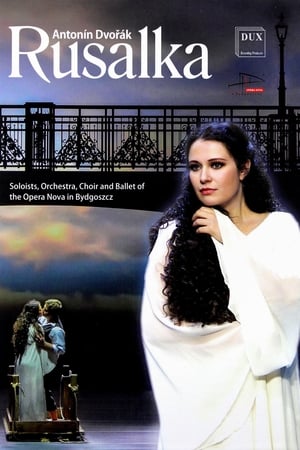
Rusalka
2017
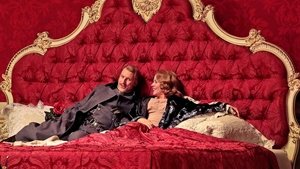
Der Rosenkavalier
In his new production, Robert Carsen places the action at the end of the Habsburg Empire, underscoring the opera’s subtext of class and conflict against a rich backdrop of gilt and red damask
2017
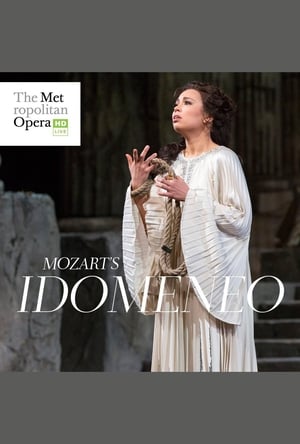
The Metropolitan Opera: Idomeneo
Mozart’s early masterpiece returned to the Met for the first time in more than a decade with Music Director Emeritus James Levine, who led the work’s company premiere in 1982, again on the podium. Tenor Matthew Polenzani brings both steely resolve and compassionate warmth to the title king of Crete, who is faced with an impossible decision. With her rich mezzo-soprano, Alice Coote sings the trouser role of Idomeneo’s son Idamante, who loves the Trojan princess Ilia, sung with delicate lyricism by Nadine Sierra. Elza van den Heever gives a thrillingly unhinged portrayal of the jealous Elettra. Jean Pierre-Ponnelle’s timeless production blends the grandeur of ancient myth with the elegance of Enlightenment ideals.
2017

Puccini - Madama Butterfly
Madama Butterfly is, with Bohème, the most loved and staged of Puccini’s works. This Blu-ray production was staged at the 2007 Puccini Festival in Italy’s Torre del Lago, Puccini’s home town. Starring as Cio Cio San is the Russian soprano Elmira Veda. This version is only available as Blu-ray.
2012
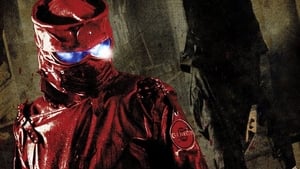
Repo! The Genetic Opera
By the year 2056, an epidemic of organ failures has devastated the planet. The megacorporation GeneCo provides organ transplants on a payment plan — and those unable to fulfill their plans have their organs repossessed. In the midst of this, a sickly teenager discovers a shocking secret about herself, her father, and their connection to GeneCo.
2008
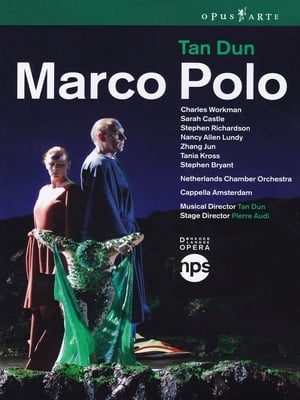
Marco Polo (An Opera Within an Opera)
Tan Dun portrays the Venetian explorer's travels to the Far East as a journey of both inner and physical discovery, a voyage depicting spiritual experiences as well as a geographical expedition. Pierre Audi's mythical staging and Jean Kalman's fabulous set design complement the composer's own musical direction, forging the dazzlingly versatile soloists, the Netherlands Chamber Orchestra and Cappella Amsterdam to a stunning symbiosis of elements across time and space, a true testimony to cultures intertwined in globalization.
2008
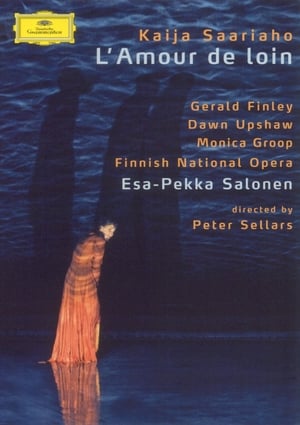
Saariaho: L'Amour de Loin
This is the 2004 version of Kaija Saariaho's opera performed by the Finnish National Opera and conducted by Esa-Pekka Salonen.
2004
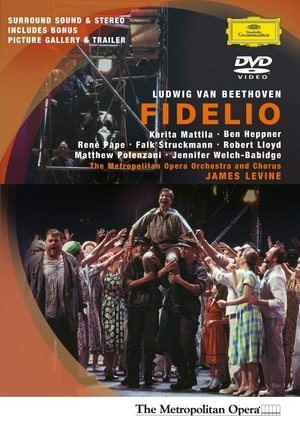
Ludwig van Beethoven: Fidelio
Two years prior to the opening scene, the nobleman Florestan has exposed or attempted to expose certain crimes of the nobleman Pizarro. In revenge, Pizarro has secretly imprisoned Florestan in the prison over which Pizarro is governor. The jailer of the prison, Rocco, has a daughter, Marzelline, and a servant (or assistant), Jaquino. Florestan’s wife, Leonore, came to Rocco’s door dressed as a boy seeking employment, and Rocco hired her. On orders, Rocco has been giving Florestan diminishing rations until he is nearly starved to death. Place: A Spanish state prison, a few miles from Seville; Time: Late 18th century.
2003
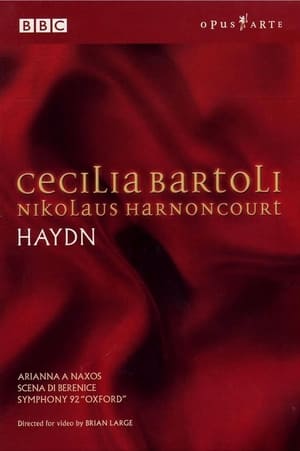
Cecilia Bartoli Sings Haydn
From the Styriarte Festival in Graz Austria, the acclaimed mezzo-soprano Cecilia Bartoli and Maestro Nikolaus Harnoncourt with his orchestra Concentus Musicu Wien, present a concert on Haydn arias and Symphony No.92, the "Oxford". The singing virtuosity of "Scena di Berenice" is sublime as is the performance of The "Oxford" Symphony from the ensemble renown for its specialty in early music and playing on period instruments. A unique concert.
2001
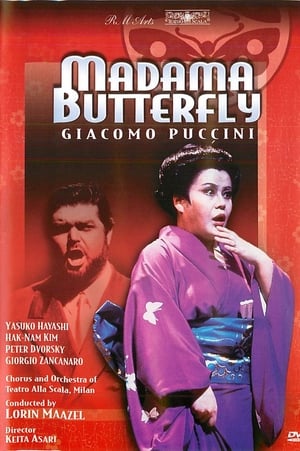
Madama Butterfly
Opera at La Scala Milan
1986
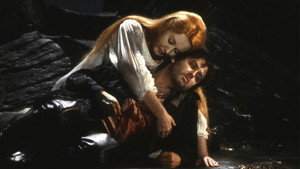
Tristan und Isolde
Take a perfect cast, a great conductor and a groundbreaking staging in-out makes a 'Tristan' for eternity. The 1983 performance in Bayreuth was a great moment for the world of opera. The ensemble performance of René Kollo, Johanna Meier and Matti Salminen with, then as now the Wagner admirer, Daniel Barenboim conducting the Bayreuth orchestra inspired singers and instrumentalists to peak performance. Jean-Pierre Ponnelle created a dream-beautiful stage.
1983
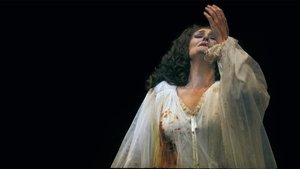
Lucia di Lammermoor
This telecast offers a rare opportunity to see the legendary Joan Sutherland in the role that first catapulted her to international stardom. She drove audiences wild by the way her opulent voice caressed the music’s long phrases and sprinted effortlessly through the fiendish runs, trills, embellishments and stratospheric high notes. One of the glories of the operatic world, her portrayal of Donizetti’s hapless heroine is a multifaceted and moving characterization. The incomparable tenor Alfredo Kraus is Edgardo, the man Lucia loves but cannot have. (Performance taped November 13, 1982. Broadcasted September 28, 1983.)
1983
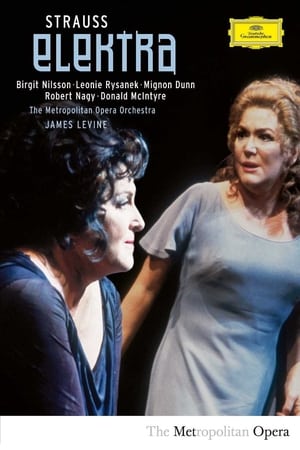
Strauss: Elektra
It's hard to imagine confirmed Straussians not wanting this starry Metropolitan Opera performance of Elektra. Strauss and his librettist, Hugo von Hofmannstahl, transformed Sophocles' take on Homer's tale into a harrowing opera noir. Elektra lives for one reason, to kill her mother, Klytämnestra, and her stepfather, Aegisth, the murderers of her father, Agamemnon. In contrast to Elektra's vengeful obsession, her sister Chrysothemis desires to get on with life. When their long-missing brother, Orestes, returns to do the deed, Elektra celebrates with a dance of death and, her sole purpose in life fulfilled, dies. Strauss joined the hermetic plot to music of the utmost opulence, violent and yearning by turns, evoking the cardinal principles of Greek tragedy - pity and terror.
1980
Die Zauberflöte
Wolfgang Amadeus Mozart's Magic Flute is undoubtedly one of the most multi-layered, profound, complicated, and therefore also most difficult to stage works in the entire opera repertoire. In terms of genre, it can only be understood if it is seen as a mixture of four things: a philosophically profound drama of ideas with countless encryptions, a naïve fairy tale, a bawdy comedy, and a crude Punch and Judy show. It is based on the intersection of the traditions of Baroque magic opera, Italian buffa, and Viennese Singspiel, where all manner of wonders are conceivable and permissible. Peter Ustinov's production appeals to all those who love a primarily fairy-tale-like interpretation; the atmosphere is traditional and conventional. An outstanding ensemble of singers has been assembled.
1971
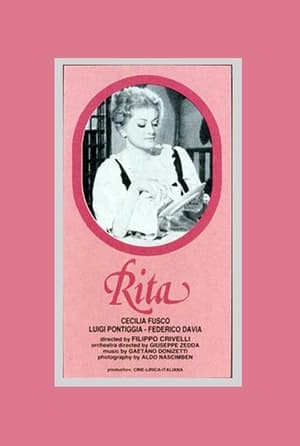
Rita
a film opera; music by: Gaetano Donizetti (Philharmonic Orchestra of Rome) Directed by Giuseppe Zedda.
1962

Alcina
Like Handel’s Orlando (1732) and Ariodante (1734), Alcina derives from the narrative material in Ariosto’s Orlando furioso. The story of the sorceress Alcina, an initially hedonistic, manipulative woman who later finds herself a victim of love, fits into the genre of the ‘magical opera’ with numerous magical elements, but Handel achieved considerable emotional authenticity in his characterisations. This makes Alcina one of the most deeply felt and multifaceted operas. ‘You may despise what you like ; but you cannot contradict Handel,’ said the Irish playwright George Bernard Shaw. As in Tamerlano, Pierre Audi based this production on the stage at the baroque theatre at Drottningholm, for which he originally developed the directing concept. His set is thus based on the principles of perspective, with wings in the form of painted panels. The result is marvellous modern musical theatre in a historizing frame.
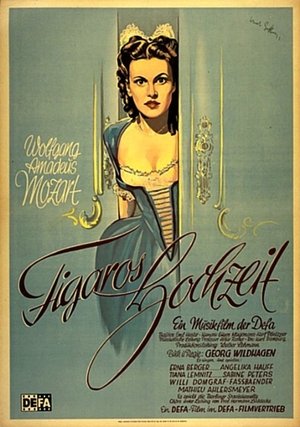
Marriage of Figaro
Shortly after WWII, the DEFA Studios produced a series of operas and operettas which belonged to the classical German musical heritage. This enchanting film, the very first opera production of DEFA, stands out because of its lavish decor and costumes, its outstanding actors and their masterful voices of that time.
1949
Operette
A musician is offered a job in Vienna as stage director, but his disagreements with the aristocratic opera manager end in abrupt firing in spite of a mutual attraction. He's quickly engaged by another theatre and becomes famous for his lavish stage productions and fine acting, which begins their golden age with Suppé and Strauss.
1940