Watch And yet they were there (2021) Online Free
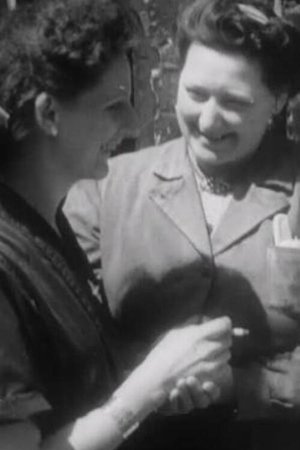
Dominique, Suzanne, and Annette: three women who participated in the adventure of the Medvedkine groups (Besançon, Sochaux, 1967-1974). In those same years, the lives of our grandmothers and mothers experienced decisive changes: they worked outside the home and revolutionized customs. A group of Besançon students are investigating those events and questioning their own family memory.
More Like This
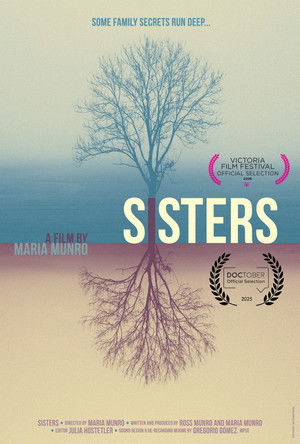
Sisters
“Sisters” is a deeply personal story about my journey back to my home country of Venezuela to investigate the possibility of a long lost sister.
2026
The cats, the sea, and everything in between.
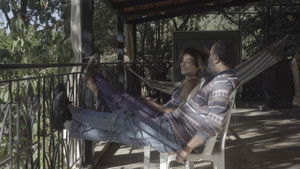
In 2022, when the economic crisis in her native country was at its peak, she decided to visit her family there. She turned her short trip into a collage-like diary in which she reflects on her relationship with her homeland, which is in a state of protracted decay. The film is composed of spontaneous snapshots capturing the author's stay, interspersed with inserted captions serving as personal, often poetically formulated comments and observations. As a result, the film does not hide its strongly subjective perspective, but at the same time builds on it to make an important statement that shows the transformation of Lebanese society in everyday details such as the appearance of the city itself or in the intimate sphere of the author's family life.
2025

Diagnosed: Overdramatic
What causes women all over the world to be told that they are hysteric or overreacting when seeking for medical help? Why are so many women diagnosed: Overdramatic? The female body has only recently started to be researched, which lead to a big lack of information on women's physical and mental health. This documentary relies on the knowledge of Dorte Rytter (researcher) and Stine Sophie (medicine student) to tell us how this issue affects women everyday and in what ways.
2025

Prüdes Hollywood - Laster, Lust und Leidenschaft im Film
In recent years, Hollywood productions have turned away from sensuality. Is the sex scene on the verge of extinction or reinvention? Alongside film professionals and researchers, this documentary deciphers a trend that speaks volumes about the evolution of the industry and our societies.
2025

Exergo
Departing from peripheral details of some paintings of the Bilbao Fine Arts Museum, a female narrator unravels several stories related to the economic, social and psychological conditions of past and current artists.
2024
Suite Tortilla #59: The Celluloid Women
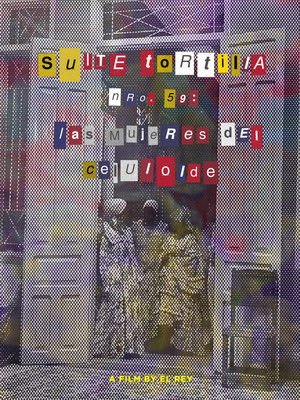
An American lesbian in Cuba explores gender through dance and film, blending personal experiences and cultural symbols with music and Revolutionary cinema and questions how lesbians fit into Cuban cinema.
2024

Wallpaper
2023

How to Be a Candid Woman
To produce speech, a set of mechanisms must be brought together. What is the normal articulation for speech? How to produce the sounds that make it up in the correct way? A physiological analysis of the aspects of speech shows us how: the jaw must move in a certain way; the air must be expelled from the lungs in another. Based on the concepts stated in the film "Normal Speech Articulation" (1965), produced by the University of Iowa (USA), we intend to reflect on the way women have been represented, and consequently educated, over the years, both in film and in the media. Largely composed of archival footage, this film intends to make evident, through a montage inspired by Structuralist movements, the violence of this education.
2022
Brainwashed: Sex-Camera-Power
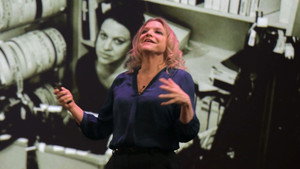
Investigates the politics of cinematic shot design, and how this meta-level of filmmaking intersects with the twin epidemics of sexual abuse/assault and employment discrimination against women, with over 80 movie clips from 1896 - 2020.
2022

$avvy
$avy investigates the historical, cultural, and societal norms around women and money.
2021

The Woman and the Car
Artist Kate Blackmore looks at motherhood and mobility, film and feminism through the prism of Margaret Dodd's 1982 classic short film 'This Woman is not a Car.'
2018

The Judge
A verité legal drama about Judge Kholoud Al-Faqih, the first woman appointed to a Shari'a court in the Middle East, whose career provides rare insights into both Islamic law and gendered justice.
2017

Welcome to my Darkside: Women in Horror
The horror film genre’s most iconic Scream Queens are featured in this documentary about women’s roles and triumphs, both on-camera and off.
2010
Let It Be (1970-1974)
Chapter 15 of the series 18 decades of life in Mexico in the twentieth century. Images of the cultural, social and political life in Mexico from 1970 to 1974. During the presidential term of Luis Echeverria Alvarez fantasies of prosperous and modern country it dissolves; Mexico live in political crisis. It is a time of omnipotence, barbarism, and violence intervention: the world seeks new ways. In Mexico, it held the World Cup, unionism is strengthened and inflation responds to the continuing economic imbalances.
1993
Bright Nights
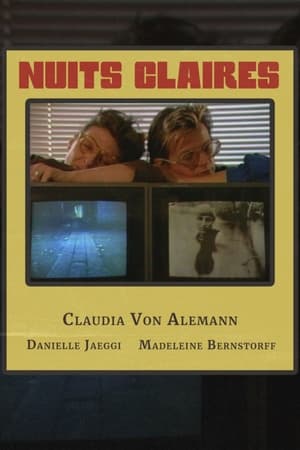
In an experimentally compiled film review, Danielle Jaeggi, Paule Baillargeon and Claudia von Alemann reflect on their work as filmmakers and life as mothers. Just as the title is based on Michel Leiris' book of poems Bright Nights and Many a Dark Day, the film has its own poetry, which is also evident in shots of everyday activities, such as hands washing dishes. “Just the hair or the relationship of the hands to each other or gestures, and then words come in between and film clips that we talk about, and we were amazed to find that the women we portray in the films always have a lot of trouble with theirs Identity, their search for something, for lost people or lost things. “They are usually looking for something that has been lost, forgotten or gone,” said Claudia von Alemann in the 1992 interview conducted by Renate Fischetti, A Pioneer of Female Film Language. An essay about desire, doubt, contradictions. (fib)
1990
I Am an Ox, I Am a Horse, I Am a Man, I Am a Woman
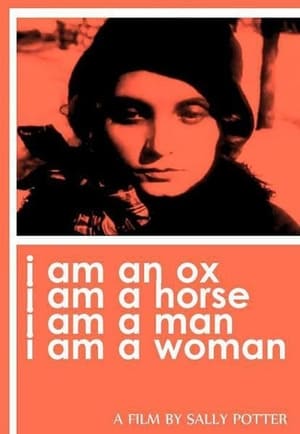
This glasnost-era documentary, which incorporates footage from films from the 1920s through the 1980s, looks at the history of women in Russian cinema through the eyes of Russian women directors, actors, and scriptwriters. The film’s title refers to a WWII slogan about women doing the work of absent men in the fields and at home. Featuring Kira Muratova, Natalia Ryazantseva, Inna Churikova, Nonna Mordyukova, and others.
1988

Écoutez May Picqueray
"Well, I believe in anarchy! And I believe it will come true one day." That's what "May the Rebel," a union activist, anti-militarist, and anarchist, always ready to denounce oppression and defend victims, affirms at 85. Born in Brittany, she earned her living at age 10 delivering butter. In Paris, at 20, she became involved with the Anarchist Union. Sébastien Faure became her mentor. She used a grenade to trigger the Sacco-Vanzetti affair. A union delegate in Moscow in 1922, she sang "Hymn to Anarchy" before Trotsky. Children during the Spanish Civil War, Jews during the Second World War, conscientious objectors alongside Louis Lecoin during the Algerian War, and later, through her newspaper Le Réfractaire, the Larzac, Plogoff, and Creys-Malville protests—all these were battlegrounds for May Picqueray. To the very end, she remained true to her commitment to defending peace and individual liberties.
1984
A Film for Discussion
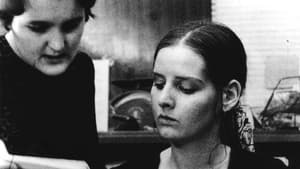
A docu-drama shot in 1970, but not completed until 1973, the film sought to encapsulate in an experimental form issues that were under discussion within the Women’s Liberation Movement at this time and to thus contribute to action for change. In its numerous community screenings, active debate was encouraged as part of the viewing experience.
1973

At the Lőrinc Spinnery
A candid portrait of the women working at the Lőrinc spinning mill. As with so many of Mészáros’ shorts, this work has foundations in autobiography, and she would later return to this particular world in one of her fiction features.
1972
Women in Industry
The Ministry of Labour exhorts women to return to industry – the post-war production drive depends on them.
1948