Watch Alltagsgeschichte – Treffpunkt U-Bahn (1993) Online Free
Ignaz Wuzel and Gerhard Jeschko are regulars at the espresso in the Südtiroler Platz underground station. Warden Leopold Prinz knows the problems of the children from Karlsplatz. In 1993, Elizabeth T. Spira filmed people on the Vienna subway network. Above all, it is the desperate, the lost and the forgotten who find refuge and a home in and around the subway.
Cast
Ignaz Wuzel, Gerhard Jeschko, Elizabeth T. Spira, Hermann Schmid
More Like This
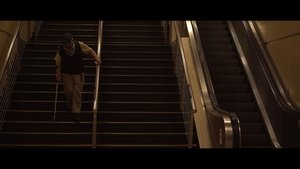
Código Sigma
Four voices intertwine in a testimonial journey through the Santiago subway, confronting what society prefers to keep underground in its stations. A journey of reconstruction — from memory and experience — that explores the invisible trace these events have left on their lives.
2025

The Last Common Hamsters
For almost three years, nature filmmaker and ecologist David Cebulla has been observing wild Common hamsters. He not only tries to learn more about the species, but also documents why hamsters are globally threatened with extinction. David travels from the western border of the distribution area in France via Germany, Poland, Austria and Hungary to the eastern border of the distribution area in the Kazakh steppe. In the process, he manages to capture some unique and fantastic images. But during the project, it becomes increasingly difficult to find animals living in the wild.
2025
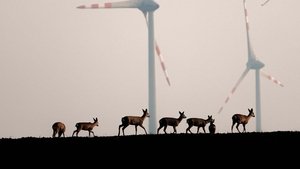
Wildnis 2.0 - Die Tierwelt auf Umwegen
2024
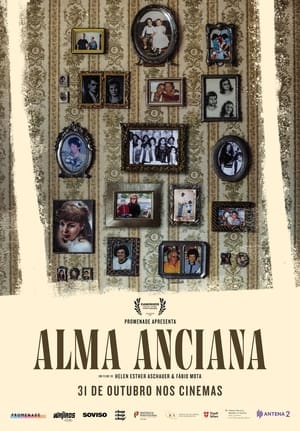
Alma Anciana
Three juxtaposing stories taking place in Portugal, Austria and Cuba create an intimate and poetic portrait of the daily lives and struggles of the elderly in an unstable world, seen through the eyes of their grandchildren.
2024
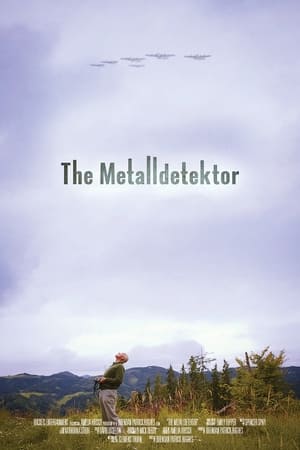
The Metal Detector
Georg is an Austrian retiree whose mother witnessed the crash of an Allied B-17 near their home during World War II. When he takes up metal detecting to find the wreckage, a growing fascination leads him to embark on a heartfelt mission, not only to research the backgrounds of the American crewmembers who parachuted off the plane into enemy territory, but to locate their descendants, to bring them to his Austrian town on the 75th anniversary of the crash, to introduce them to the townspeople who helped their fathers, and to unite his town in remembrance. It’s a story of empathy, resilience, and the enduring power of human connection.
2023
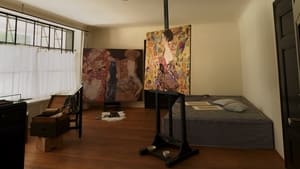
Klimt & The Kiss
The Kiss by Gustav Klimt is one of the most recognised and reproduced paintings in the world. It is perhaps the most popular poster on student dorm walls from Beijing to Boston. Painted in Vienna around 1908, the evocative image of an unknown embracing couple has captivated viewers with its mystery, sensuality and dazzling materials ever since it was created. But just what lies behind the appeal of the painting – and just who was the artist that created it? Delving into the details of real gold, decorative designs, symbolism and simmering erotica, a close study of the painting takes us to the remarkable turn of the century Vienna when a new world was battling with the old.
2023
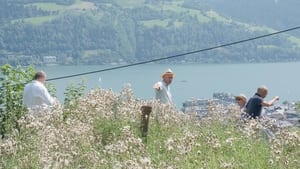
Point of Origin - Building a house in Austria
An international tech entrepreneur with a fondness for architecture asks Rem Koolhaas to build a house on an impossibly small piece of mountainside in Zell am See in Austria. The architect of the celebrated book S,M,L,XL seizes the challenge: how to draw light into a house less than four metres wide that is mostly underground? Photographer and filmmaker Frans Parthesius followed the building process and offers insight into Koolhaas’s way of working and the special relationship with his client.
2023
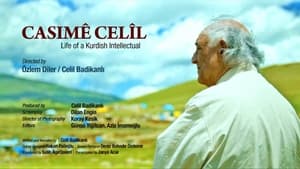
Jiyana Rewsenbireki Kurd: Casimê Celîl
Casimê Celîl was born into a Yezidi Kurdish family in 1908, in a village called Kızılkule, located in Digor, Kars. The village and family life, which he longed to remember throughout his life, ends with the massacre they endured in 1918. During his long road to Erivan, Armenia, he lost all his family members. Left all alone, Casim was placed into an orphanage and was forced to change his name. To remember who he was and where he came from, every morning he repeated the mantra “Navê min Casim e, Ez kurê Celîlim, Ez ji gundê Qizilquleyê Dîgorê me, Ez Kurdim, Kurdê Êzîdî me”, which translates to: “My name is Casim, I am the son of Celîl, I come from the village of Kızılkule in Digor, I am a Kurd, and I am Yezidi”. He clings to every piece of his culture he can find, reads, and saves whatever Kurdish literature or art he comes across. As the year’s pass, Casim finds himself with an impressive collection of Kurdish culture and history.
2021

Underground
Numerous people are on subway trains running up and down the city center endlessly. There are people who run this decent space “underground”. Under the noisy world today, we approach them to see what life is like underground.
2021

Johanna Dohnal - Visionary of Feminism
Johanna Dohnal, whose political career spans three decades, was one of the very first explicitly feminist politicians in Europe. As a member of the Austrian socialist government and the first Austrian minister for Women’s Affairs from 1990 to 1994, Dohnal was responsible for founding Austria’s first women’s refuge as well as criminalizing of marital rape. Yet her legacy remains yet to be discovered and re-examined. DIE DOHNAL makes a first step, and it makes Dohnal come alive.
2020
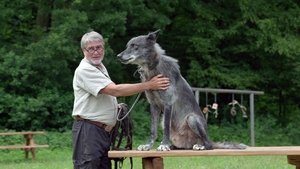
Wolves Return
Wolves divide and fascinate us. 150 years after they were driven to extinction in Central Europe, they are returning slowly but inexorably. Are they dangerous to humans? Is it possible to coexist? Using Switzerland as a point of departure, where wolves have returned in the very recent past, this documentary sheds light on the wolf situation in Austria, eastern Germany, Poland, Bulgaria, and even Minnesota, where freely roaming packs of wolves are more common sight.
2019

Bombshell: The Hedy Lamarr Story
The life and career of the hailed Hollywood movie star and underappreciated genius inventor, Hedy Lamarr.
2018
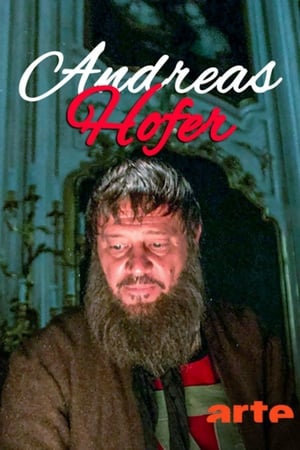
Andreas Hofer. Held wider Willen
During the Napoleonic Wars at the beginning of the 19th century, Andreas Hofer became a Tyrolean folk hero. As the head of a resistance movement, he became caught up in a dangerous political game of interests between the French and Austrians, Napoleon and the Habsburgs. After the defeat at Austerlitz, the Habsburgs had to cede Tyrol to the Bavarian kings in 1805. The liberal Bavarians implemented numerous reforms in Tyrol, including religious reforms, which met with resistance from the rural population. The young Archduke Johann wanted to take advantage of their discontent. In Andreas Hofer, the commander-in-chief of the Tyrolean troops, the brother of Emperor Franz I finds a loyal patriot whom he can use for his political moves. The Tyrolean revolt against the French and Bavarians puts Napoleon in a tight spot. In several battles, the rebels succeed in defeating the Bavarian and French troops, but not in defeating them for good.
2017
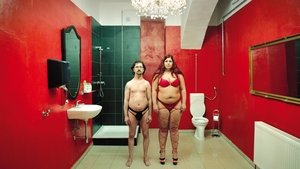
In the Basement
Filmmaker Ulrich Seidl explores of the dark underside of the human psyche by entering Austrian basements fitted out as private domains for secrets and fetishes.
2014
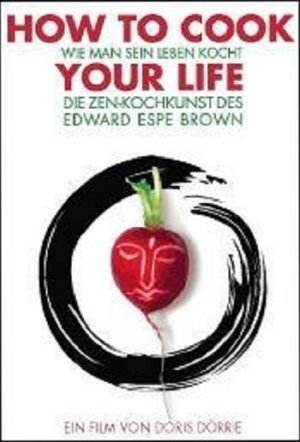
How to Cook Your Life
A Zen priest in San Francisco and cookbook author use Zen Buddhism and cooking to relate to everyday life.
2007

We Feed the World
A documentary that exposes the shocking truths behind industrial food production and food wastage, focusing on fishing, livestock and crop farming. A must-see for anyone interested in the true cost of the food on their plate.
2005

Wall of Silence
In the small town of Rechnitz a terrible crime against humanity was performed during the holocaust. Until now, no-one dares to talk about it.
1994
Beware Haderer
A staged TV portrait of the Austrian cartoonist Gerhard Haderer; and first collaboration with Maria Hofstätter.
1992
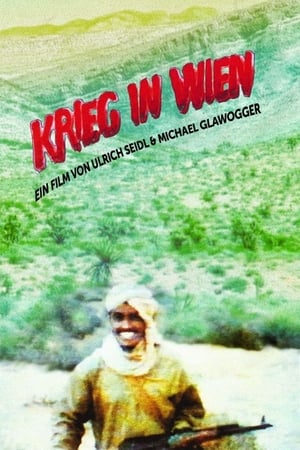
War in Vienna
A film about news, life and death. Before the media became so prevalent, we were concerned about our immediate neighborhood. At the end of the day, news was the subject of our conversations, but now it's possible to converse with someone at the other end of the globe. We do it all the time. It's simple. The world has become one big neighborhood. Now Headline News has replaced the back fence. That's the news service of the eigthies. It's a new idea and a new approach.
1989

Hallstätter Ballade
Hallstätter Ballade refers to a celebrated 1961 Austrian documentary short film directed by István Szőts. The film is best known for poetically capturing the unique, centuries-old Alpine tradition of skull painting (Totenkult) in the village of Hallstatt.
1961