Watch A World Without Bees? (2021) Online Free
There are numerous alerts and alarms. We now know that bees are endangered throughout the world. What are the possible solutions? How can humans respond to this situation? There are many answers, some are ubiquitous, some futuristic, others are innovative and still others embody unity and collectivity. Let's take a trip around the world to meet the different players and discover the possible solutions. The world of tomorrow will be found in the answers we find.
More Like This
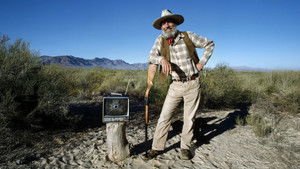
Edward Abbey, naturellement subversif !
A resistance writer and pioneer of nature writing with a controversial personality, Edward Abbey wrote more than twenty books on the theme of eternal nature. A gem of counterculture, his 1975 novel The Monkey Wrench Gang inspired a generation of environmental activists and readers with rebellious souls. Portrait of a rebellious, lyrical, and rude writer.
2025
Le Dernier Territoire du Lynx
2025

Enxame
2024

The Elimination
2023

Rose à la ferme
Rose, a young filmmaker looking for work, embarks on a retraining course to become a farmer. An initiatory tale that questions our relationship with the land, with art, and with the role of the filmmaker as an observer of our world.
2023
Foraging Love
In doubt after a 3 year relationship, Nicolás, searches in his closest friends the meaning of romantic love. Without a clear idea in sight, he turns to his grandmother.
2023
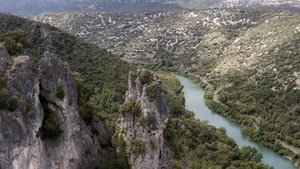
Les Trésors cachés des gorges
2022
Im Wald der wilden Bienen
2022
Earth: Muted
Three farming families in Hanyuan, China, strive to give their children a good life in the midst of an ecological crisis, as widespread use of pesticides leads to a dramatic decline in bees and other pollinating insects in the valley.
2021
Breaking Boundaries: The Science of Our Planet
David Attenborough and scientist Johan Rockström examine Earth's biodiversity collapse and how this crisis can still be averted.
2021
Krajina s vôňou medu
2018
The Strange Disappearance of the Bees
Investigation into a global ecological disaster that could endanger the entire human race. Today, a third of our food depends directly on bees, the most important agricultural pollinator* on our planet. Yet, for several years now, millions of bees have been mysteriously disappearing. Why? Will we be able to cope with this predicted catastrophe?
2010
Itapoa - Un proyecto que camina
Honey Hunters
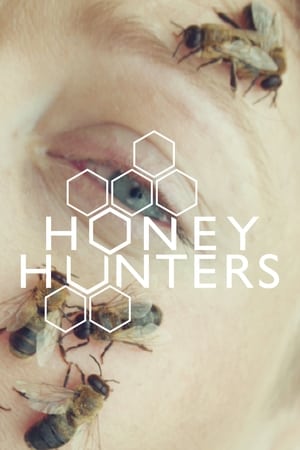
A life story of bees and people. In order to get to the bottom of the mysteries of the life of bees and show them to the audience, the camera enters a contemporary hive and a traditional wild beehive drilled in the trunk of an old tree. It wanders the forests in Poland and Ural, mountains in Nepal and... roofs of Paris and Warsaw. For millions years bees have been laboriously building the natural environment of our planet. These days, they started to die by millions. A programme of wild tree beekeeping reintroduction was launched in Polish forests. It has been an ancient local tradition. Maybe reaching for the past, the original model of coexistence of bees and people, for wild tree beekeeping, can help us to save the bees? After watching “Honey Hunters” everyone wants to have their own beehive and harvest their own honey!
2016
La clara y oscura
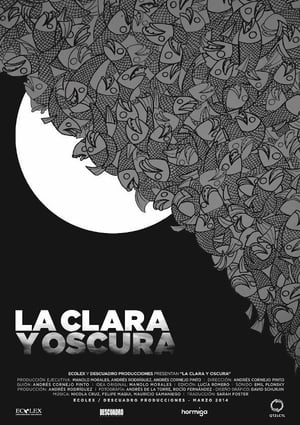
Salango is a small parish south of Manabí. What this land means to Ecuador, however, is huge. Its name is associated with the pre-Columbian legacy of the Manta Wancavilca cultures, the humpback whales that arrive each year to mate, the homonymous island and its coral reefs, the great wealth of marine fauna. It is there, in one of the places with the greatest archeological and environmental heritage of our country, where the Polar fishmeal processor has been operating for 35 years. What does not emerge from the idyllic postcards of the area is the foul smell that pollutes the air, the portrait of people sick from the factory's toxic wastes, the disgusting black smoke that flows into the sea directly from the processor pipeline. That is why it is the struggle of the few members of the community who have not given up and demand that Polar leave.
2014
Semences : les gardiens de la biodiversité
2014

Climate of Hope
Documentary created to demystify climate change and nuclear energy. While the threat of climate change is now widely accepted in the community, the potential for a host of nuclear power stations in Australia has raised questions about the best strategy for the country to move to a low-carbon economy. This animated documentary takes viewers on a tour through the science of climate change and the nuclear fuel chain and the remarkable energy revolution that is under way.
2007
L'usine s'engage
Le secret des Dunes
biopixels
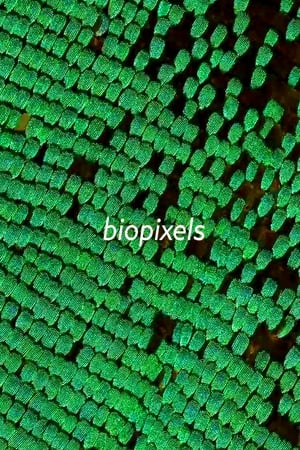
Shot at two cutting-edge research labs which specialize in the evolution of butterflies and moths, BIopixels is an animated short film exploring the world of evolutionary biology on the microscopic scale. The images - rendered from collections containing over 50,000 specimens - were take by microscopists over three years to create the animated shorts Nanoscapes and Biopixels. Both the animation and the score play with concepts of pattern, time, density and other means of development common to biological evolution.