Watch A Question of Madness: The Furiousus (1999) Online Free
In Capetown, South Africa, in September 1966, Prime Minister Hendrik Verwoerd, the architect of apartheid, was stabbed to death in Parliament. The course of South African history was changed by the assassin, Dimitri Tsafendas, who was written off as mad and condemned to twenty-eight years of imprisonment. A Question of Madness tells the extraordinary human story of a man, born of a black mother, but classified white, who travelled the world in hopeless search of sanctuary - eventually returning to the land of apartheid to wreak vengeance on the one who symbolized the racism which had haunted his life.
More Like This

Seize the Summit
4 young strangers, all war refugees, unite to take on the challenge of summiting Mt. Kilimanjaro, one of the seven summits and the highest peak in Africa. They have been brought together by the charity INARA to shed light on the impact of war on children. The mountain always has a lesson, and often not what we think or expect it to be. Not all will make it to the summit, some will be forced to face dormant personal demons. This is a story of physical and emotional adventure, the rollercoaster of life, and the possibilities that emerge when we stand together.
2024
Voyages au centre de la Terre : Dans les pas de Jules Verne
2023
Disparitions autour du Kanga Pan
2019
Walter Mittelholzer - Eine Schweizer Pioniergeschichte
2015
Io sono nata viaggiando
A journey back through Dacia Maraini's and her trips around the world with her close friends cinema director Pier Paolo Pasolini and opera singer Maria Callas. An in-depth story of this fascinating woman's life. Maraini's memories come alive through personal photographs taken on the road as well as her own Super 8 films shot almost thirty years ago.
2013
Pussy Versus Putin
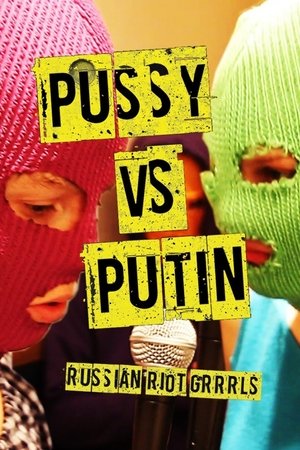
In 2012 two members of anarchistic female band Pussy Riot were sentenced to two years in a Mordovian labor camp for "hooliganism motivated by religious hatred". Russian film collective Gogol’s Wives follow each step of the feminist punk band’s battle against Putin including their first disruptive performances on a trolley bus, shooting a video about transparent elections, a controversial performance in a Red Square cathedral, and footage shot in a jail cell. Support comes from many corners including Madonna who painted the words "Pussy Riot" on her back and wore a balaclava during her Moscow show. The documentary portrays the grim state of present-day Russia, a country starkly divided between conservatism and anarchy. Pussy Riot believes that art has to be free and they're willing to take it to extremes. "Pussycat made a mess in the house," they say, and the house is Russia. The filmmakers do not seek to moralize, they simply edit events and leave viewers to draw their own conclusions.
2013
Les États-Unis d'Afrique
2011
Forest of Crocodiles
How do white South Africans deal with their fears of crime and violence? Like crocodiles, some survive without evolving, living with their fears. Others make fear their friend and evolve in ways you'd never imagine.
2009
Papa Césaire
Shortly after his death in 2008, Maldoror made this film about her longtime friend and collaborator, the Négritude poet Aimé Césaire. In this film, she retraces the steps of Césaire’s travels across the globe — particularly back to his hometown in Martinique, where Maldoror interviews his relatives about his life — and her working relationship with Césaire, including fragments of her previous films about him, Un homme, une terre (1976) and Le masque des mots (1987).
2009
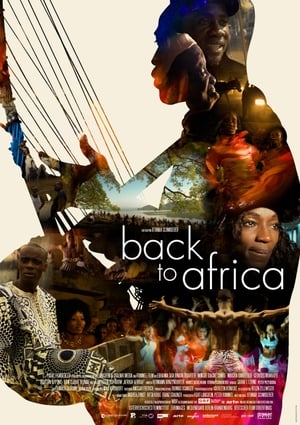
Back To Africa
An Austrian director followed five successful African music and dance artists with his camera and followed their lives for a year. The artists, from villages in Ghana, Gambia and Congo, were the subjects of Africa! Africa! touring across Europe, but they have unbreakable roots to their homeland and their families. Schmiderer lovingly portrays his heroes, who tell their stories about themselves, their art and what it means to them to be African with captivating honesty. The interviews are interwoven with dance scenes and colourful vignettes set to authentic music.
2008
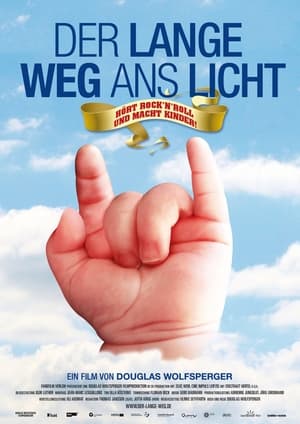
Der lange Weg ans Licht
Edeltraut Hertel - a midwife caught between two worlds. She has been working as a midwife in a small village near Chemnitz for almost 20 years, supporting expectant mothers before, during and after the birth of their offspring. However, working as a midwife brings with it social problems such as a decline in birth rates and migration from the provinces. Competition for babies between birthing centers has become fierce, particularly in financial terms. Obstetrics in Tanzania, Africa, Edeltraud's second place of work, is completely different. Here, the midwife not only delivers babies, she also trains successors, carries out educational and development work and struggles with the country's cultural and social problems.
2008
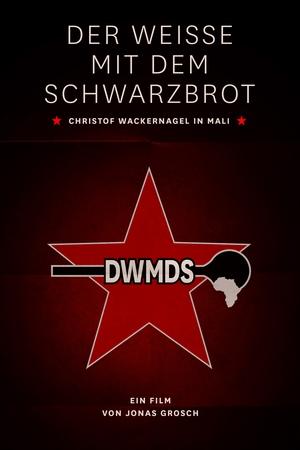
White Man with Black Bread
Christof Wackernagel, best known in Germany as an actor and former member of the Red Army Faction ("RAF") lives in Mali. In his compelling portrait, Jonas Grosch shows a man who simply cannot stand still if he senses injustice. The courage to stand up for one’s beliefs coupled with vanity? However one chooses to look at it, it is easy to imagine what made him connect with the "RAF". With his irrepressible will for freedom, Christof Wackernagel gets entangled in the horrors of day-to-day life in Africa.
2007
2 or 3 Things I Know About Him
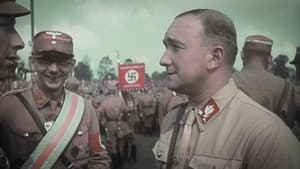
What would your family reminiscences about dad sound like if he had been an early supporter of Hitler’s, a leader of the notorious SA and the Third Reich’s minister in charge of Slovakia, including its Final Solution? Executed as a war criminal in 1947, Hanns Ludin left behind a grieving widow and six young children, the youngest of whom became a filmmaker. It's a fascinating, maddening, sometimes even humorous look at what the director calls "a typical German story." (Film Forum)
2005
Si-Gueriki, Queen Mother
Si-Gueriki is the story of the confrontation of a young man with his history, his roots and culture.
2002
World of Wildlife: African Big Cats
Sir David Attenborough presents and narrates this wildlife series, a visual encyclopedia of the natural world. This episode looks at the fast, sleek and elegant cheetahs - supreme athletes and hunters of the animal world. Also the leopard, another deadly hunter, is observed in its natural habitat.
1995
Ôrí
A look at the Brazilian black movement between 1977 and 1988, going by the relationship between Brazil and Africa.
1989
A Wife Among Wives
David and Judith MacDougall are exploring the marriage rituals and roles of Turkana women in this ethnographic documentary. The film's biggest part is taken up by talks between the Turkana people. As one of the first ethnographic documentaries "A Wife Among Wives" subtitles these talks so that the viewer can get a better and probably more personal understanding of the life of the Turkana.
1981
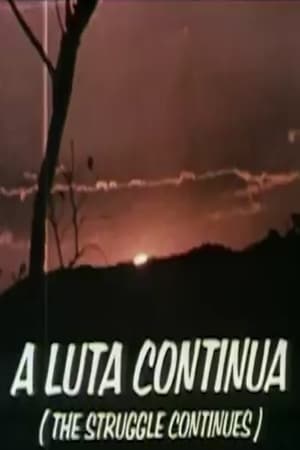
The Struggle Continues
A Luta Continua explains the military struggle of the Liberation Front of Mozambique (FRELIMO) against the Portuguese. Produced and narrated by American activists Robert Van Lierop, it details the relationship of the liberation to the wider regional and continental demands for self-determination against minority rule. It notes the complicit roles of foreign governments and companies in supporting Portugal against the African nationalists. Footage from the front lines of the struggle helps contextualize FRELIMO's African socialist ideology, specifically the role of the military in building the new nation, a commitment to education, demands for sexual equality, the introduction of medical aid into the countryside, and the role of culture in creating a single national identity.
1971
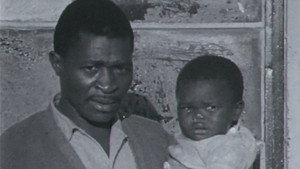
End of Dialogue
The first film to ever show what life was in South-Africa under the Apartheid state. The film was released as an anonymous production under the aegis of the Pan Africanist Congress in 1970.
1970
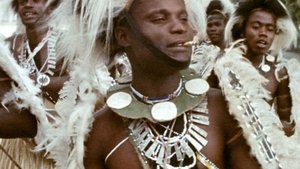
The Pan-african Festival in Algiers
Festival panafricain d'Alger is a documentary by William Klein of the music and dance festival held 40 years ago in the streets and in venues all across Algiers. Klein follows the preparations, the rehearsals, the concerts… He blends images of interviews made to writers and advocates of the freedom movements with stock images, thus allowing him to touch on such matters as colonialism, neocolonialism, colonial exploitation, the struggles and battles of the revolutionary movements for Independence.
1969