Loading Cinehub...
María Estela Martínez, better known as Isabel Perón, achieved what Evita Perón never could: From an unknown cabaret dancer she became the first female president of the Americas. But after surviving prison and exile under South America’s most brutal military dictatorship, Isabel was forgotten in popular memory. “Una casa sin cortinas” (A House Without Curtains) uncovers why Isabel still haunts Argentina today.
Haydée Padilla, Juan Carlos Dante Gullo, Juan Manuel Abal Medina, Isabel Perón, Octavio Aceves, Alfredo Garcia Serrano, Marcia Schvartz, Enrique Savio, Nilda Garré, Carlos Ruckauf, Harry Ingham, Norma Herrera de Landini
In the 2000s, Vicente Viloni and La Masa became legendary wrestling rivals and idols for kids across the country. The hit television show "100% Lucha" brought a spectacle of skill and drama to every home, forging a famous rivalry that transcended the screen, leaving a mark on national culture. After the conflict that separated them for ten years, they face each other in the ring and relive great moments from their careers.
2024

In '90s Argentina, the murder of a high school student sparks widespread protests. Retold by her loved ones, this documentary shows their fight for justice.
2024

2023

2021

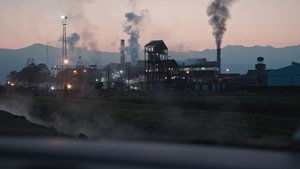
Images of Argentinian companies and factories in the first light of day, seen from the inside of a car, while the director reads out documents in voiceover that reveals the collusion of the same concerns in the military dictatorship’s terror.
2020

A Journey to the Fumigated Towns is the final episode made by Fernando Solanas in a series of 8 films dedicated to the Argentinian’s crisis in the 21st century. Based on testimonies, re-creations, archives and photos, this investigative documentary reveals not only the after-effects of the soya’s model and other GMO’s grain productions with agrochemicals, on the health of the Argentinian people, but also the global and environmental consequences.
2018

The villagers of El Dorado, Argentina, shy away from doctors. Then again, they hardly need one. They have almost as many cures for ailments and illnesses as there are residents in the village. 65 year old Jorge can also cure the most dreaded ailment of them all, the much feared espanto.
2017

A young man decides to join the army. He becomes the drummer in the military band, and his everyday life is now a combination of military training and music. What does the Argentine Army do these days, more than thirty years after the dictatorship? What does it mean to be a soldier in a country without wars?
2017

A chronicle on the days without Jorge Julio López, key witness and complainant on the first trial on genocide in Argentina, dated in 2006. López, who had survived through concentration camps on the late seventies argentinian dictatorship, disappeared for the second time the day the court decision meant to condemn his kidnappers was about to be read.
2017

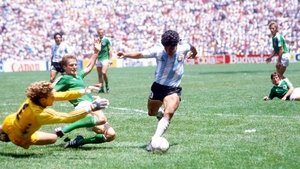
Anecdotes and testimonials about the performance of Argentina in the 1986 FIFA World Cup. The whole story behind the Cup.
2016

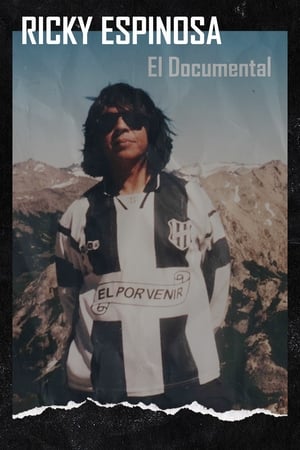
Ricky Espinosa: The Documentary is a self-managed and independent project created by Juan Pablo Duarte in Buenos Aires, Argentina. It explores the life of Ricky Espinosa as an artist—his beginnings, his career, and his discography—featuring previously unreleased archival material and exclusive interviews.
2015

His teachers, coaches, childhood friends and Barça teammates, together with journalists, writers and prominent figures from the history of football, come together in a restaurant to analyze and pick apart Messi's personality both on and off the field, and to look back at some of the most significant moments in his life. Viewed from Álex de la Iglesia's unique perspective, Messi recreates the player's childhood and teenage years, from his very first steps, with a football always at his feet, through to the decision to leave Rosario for Barcelona, the separation from his family, and the role played in his career by individuals such as Ronaldinho, Rijkaard, Rexach and Guardiola.
2014

The third installment in Dan Přibáň's series of travel documentaries describes the author's journey with his friends across South America in vehicles that are often notorious but cult in their own way. The charming dynamics of the group on screen are further enhanced by the high-quality craftsmanship.
2014

2012

Documentary film about the then longest range bombing mission in history, which changed the outcome of the Falklands War.
2012

Reveals an alternate history of the post-war world. This is a version of history where, in contrast to what we are all told, fascist ideology prevailed. The story of Klaus Barbie, Nazi torturer, American spy, tool of repressive right-wing regimes, is symbolic of the real relationship that the "Western" governments had with fascism and makes us see the world as it is today - and the politicians that inhabit it - in a different way.
2007

DEBT is the story of a frantic pursuit: the search for the responsible for the televised cry of hunger of Barbara Flores, an eight-year-old Argentinean girl. Buenos Aires, Washington, the IMF, the World Bank and Davos; corruption and the international bureaucratic lack of interest.
2004

The lifetime of the great Argentinian man of letters Jorge Luis Borges through narration and interviews of such key players in his life as Leonor de Acevedo —his mother—, María Kodama —his second wife—, and Adolfo Bioy Casares —his best friend and collaborator for decades.
1999

A detailed account of each of the details of the Malvinas War based on interviews, dramatic scenes, maps and other elements of historical roots without ignoring the historical antecedents from the 18th century that ended in this confrontation.
1996

The New Tango (El Nuevo Tango) was not shown in Argentina for a long time as it deals with the ascent of Argentinean president Hector Campora in May 1973, and features Cuban and Chilean presidents, Osvaldo Dorticos and Salvador Allende. A million people gathered on the Plaza de Mayo to acclaim the new President. One of Cámpora's first presidential actions was a granting of amnesty to political prisoners who where jailed during the dictatorship. On 28 May Argentina restored diplomatic relations with Cuba, which then received Argentine aid - such as food and industrial products - to break the United States embargo against Cuba.
1973