Watch A Home with the Street Inside It (2025) Online Free
People experiencing homelessness, social work professionals, and film artists join forces to transform fragments of real life into fictional short films.
Cast
Andreia Miranda, Virgílio Rodrigues, Pilar Alves, Cristina Ferreira, Carlos da Mata, Filipe Ferraz, Luciano Moniz, Cátia Barros, Sofia Lagos, Hélio Sousa, Djamila Teixeira, Nélia Vasconcelos
More Like This
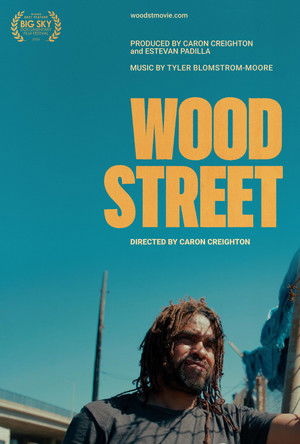
Wood Street
Two unhoused men turned community leaders— John and LaMonté —organize their neighbors in the face of displacement, addiction, and a failing social system.
2026
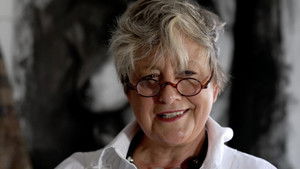
Greer Ralston – Giving It All To Art
An intimate portrait of figurative artist Greer Ralston as she astonishes us with her exceptional talent and tells of her plans to devote herself solely to art.
2024
Vanity
2022

Sunflowers
Working closely with the Van Gogh Museum in Amsterdam, Sunflowers goes beyond a ‘virtual exhibition’, delving into the rich and complex stories behind each of the paintings to unveil the mysteries of the sunflowers. What did the flowers mean to Van Gogh, and why do they resonate so much with audiences today? With a striking portrayal of the artist by actor Jamie de Courcey and fascinating insights from art historians, botanists and everything in between, the film offers a unique insight into Van Gogh’s life and artwork.
2021
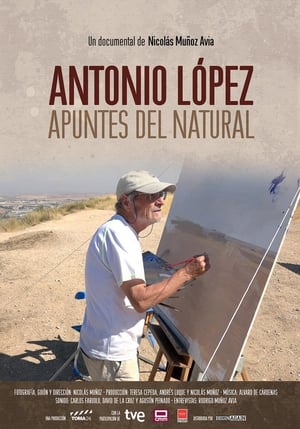
Antonio López: apuntes del natural
A documentary on the painter Antonio López and his day-to-day work.
2019
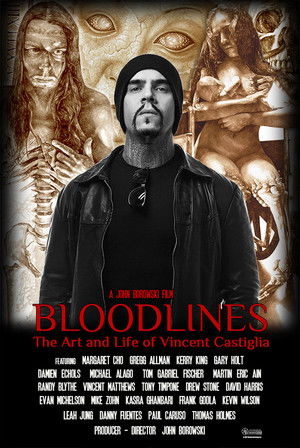
Bloodlines: The Art and Life of Vincent Castiglia
Vincent Castiglia paints in human blood.
2018
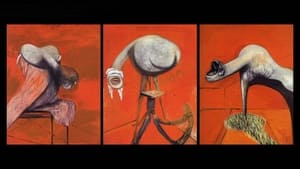
Francis Bacon: A Brush with Violence
In this unique, compelling film, those who knew him speak freely, some for the first time, to reveal the many mysteries of Francis Bacon.
2017
Schama on Rembrandt: Masterpieces of the Late Years
Simon Schama explains the style, theme and concept of Rembrandt's late masterpieces.
2014
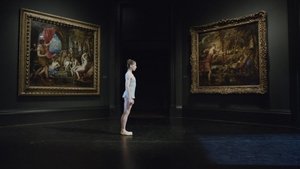
National Gallery
A portrait of the day-to-day operations of the National Gallery of London, that reveals the role of the employees and the experiences of the Gallery's visitors. The film portrays the role of the curators and conservators; the education, scientific, and conservation departments; and the audience of all kinds of people who come to experience it.
2014
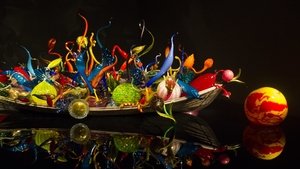
Chihuly Short Cuts III
For nearly half a century, Dale Chihuly has traveled the world, creating and installing his artwork. From sculptures to large-scale installations, his blown-glass works revolutionized the American studio glass movement. In Short Cuts III, Chihuly's role as both artist and teacher is revealed, uncovering the stories and the process behind some of his most celebrated projects, from working with students in his hometown of Tacoma, Washington, to exhibitions in prominent botanic gardens worldwide.
2014
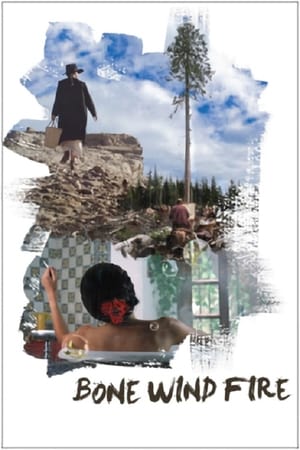
Bone Wind Fire
A journey into the hearts, minds and eyes of Georgia O’Keeffe, Emily Carr and Frida Kahlo - three of the 20th century’s most remarkable artists.
2011
The Sophisticated Misfit
The Sophisticated Misfit is a long-awaited must-have for fans of the artist Shag and Tiki culture alike. This documentary traces the artist’s roots growing up in Hawaii, his artistic journey in college, his early work designing album covers, to his modern-day role as an art-world phenom. In addition to exclusive footage of Shag painting in his home studio, the film features intimate interviews with the artist, his family, artistic influences, tiki-philes, celebrity collectors, and fans.
2007
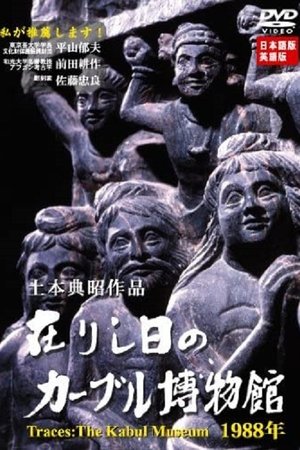
Traces: The Kabul Museum 1988
The Kabul National Museum, once known as the "face of Afghanistan," was destroyed in 1993. We filmed the most important cultural treasures of the still-intact museum in 1988: ancient Greco-Roman art and antiquitied of Hellenistic civilization, as well as Buddhist sculpture that was said to have mythology--the art of Gandhara, Bamiyan, and Shotorak among them. After the fall of the Democratic Republic of Afghanistan in 1992, some seventy percent of the contents of the museum was destroyed, stolen, or smuggled overseas to Japan and other countries. The movement to return these items is also touched upon. The footage in this video represents that only film documentation of the Kabul Museum ever made.
2003
Of a Different Order
About the art explosion in Amsterdam during the 1980's when artists of all sorts found spaces and places and the legendary club RoXY (1987-1999) was created.
1998

Douglas Gordon sings the best of Lou Reed & The Velvet Underground (For Bas Jan Ader)
In the present work, the artists appears lying on his back, his eyes mostly closed, dreamingly listening to a walkman that plays, a recording of 'The Best of Lou Reed and the Velvet Underground'. The artist can hear the music through his earphones, but as viewers we are only privy to the sound of his voice that whispers the melody. As we listen to the hypnotic interpretion of the familiar songs - as emblematic for pop music history as 'Psycho' is for film - we are forced to mentally 'reconstruct' the remaining orchestration, instrumentation and vocals. We must attempt to reassemble something we already know to be a fact by negotiating the sticky mess of interpretation, meaning, and memory.
1993
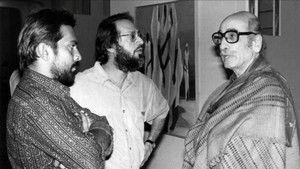
Colours of Absence
The film documents the life and art of painter Jehangir Sabavala, capturing the intricate relationship between the artist’s vision and his environment. Khopkar describes the challenges of conveying Sabavala’s creative spirit through film, emphasizing the need to engage with the subtleties of colour, light, and composition.
1993
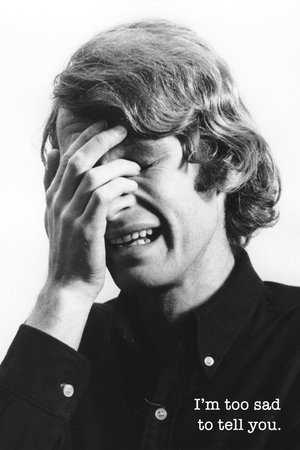
I'm Too Sad to Tell You
This short film is part of a mixed media artwork of the same name, which also included postcards of Ader crying, sent to friends of his, with the title of the work as a caption. The film was initially ten minutes long, and included Ader rubbing his eyes to produce the tears, but was cut down to three and a half minutes. This shorter version captures Ader at his most anguished. His face is framed closely. There is no introduction or conclusion, no reason given and no relief from the anguish that is presented.
1971
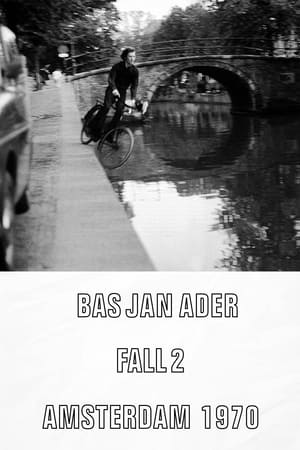
Fall 2
Bas Jan Ader rides his bike into a canal in Amsterdam.
1970
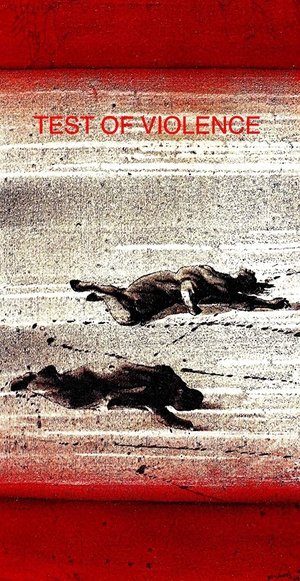
A Test of Violence
Stuart Cooper's short about the work of Spanish artist Juan Genovés is an inspired introduction to the works of this extraordinary artist, exploring its minimalist aesthetic and storytelling qualities through a variety of cinematic techniques, including rostrum, animation, news footage and live action recreations.
1969
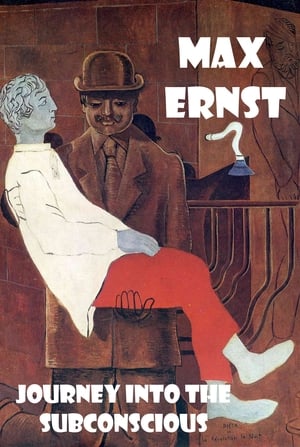
Max Ernst: Journey into the Subconscious
The inner world of the great painter Max Ernst is the subject of this film. One of the principal founders of Surrealism, Max Ernst explores the nature of materials and the emotional significance of shapes to combine with his collages and netherworld canvases. The director and Ernst together use the film creatively as a medium to explain the artist's own development.
1964