Watch A Failed Peace, The Mistakes of The Treaty of Versailles (2019) Online Free
At the end of WWI, the treaty of Versailles established the conditions for peace in Europe. The aim for the victorious powers was to make Germany pay reparations, and to guarantee a future without war. Yet a decade later, the denunciation of 'Versailles' became a powerful lever for the nazis to obtain power as these reparations would mark the beginning of the humiliation of the German people, and nurture a feeling of having been bestowed a hopeless future. In the 20 years that follow the end of WWI, the issue of reparations and responsibility will effectively poison international relationship. The treaty negative impact goes well beyond WWII as the new European borders it implemented led to many conflicts during the twentieth century. This documentary shines a light on the causality between the decisions taken with the treaty of Versailles, and the ensuing events of the century.
More Like This
Jean-Pierre Elkabbach, autoportrait de mon père
A witness to the history of the Fifth Republic for more than half a century, Jean-Pierre Elkabbach left his mark on the profession of radio and television journalism. This film tells the story of the man and his career through the voice of his daughter, Emmanuelle Bach, and previously unpublished private interviews recorded shortly before his death in 2023. It offers a portrait of this hyperactive, versatile, demanding, and inventive journalist, and reveals the private man: funny, sensitive, warm, and secretive. Emmanuelle Bach recounts with tenderness and humor her father, absorbed by his consuming passion for journalism, and with whom she struggled to find her place.
2025

peace love (unicorns) & communism
Chatting with another recent graduate, a former student activist learns about the controversial origin of a now-beloved campus group. she embarks on a journey through the recent past, weaving conversations with a vast ensemble of young organizers into a tapestry of disruption and determination. political, personal and bursting with youthful exuberance, peace love (unicorns) and communism is a homegrown chronicle of a decade of movements at McMaster University. as past struggles echo in the present, the film poses an urgent question to today's rising generation: do you believe that we will win?
2024

La bande son des années 90
2024

Klimt & The Kiss
The Kiss by Gustav Klimt is one of the most recognised and reproduced paintings in the world. It is perhaps the most popular poster on student dorm walls from Beijing to Boston. Painted in Vienna around 1908, the evocative image of an unknown embracing couple has captivated viewers with its mystery, sensuality and dazzling materials ever since it was created. But just what lies behind the appeal of the painting – and just who was the artist that created it? Delving into the details of real gold, decorative designs, symbolism and simmering erotica, a close study of the painting takes us to the remarkable turn of the century Vienna when a new world was battling with the old.
2023

Hannah Arendt, la liberté d'être libre
In a time of resurgence of social protests, political radicalization and distrust of power, Arendt's thought has never been more relevant: A critical thinker according to some or a conservative according to others, this great figure of the intellectual world remains, in many ways, an enigma. Who was Hannah Arendt?
2023
The Unmaking of Boris Johnson
A deep dive surrounding the scandals and events surrounding Boris Johnson that lead to his resignation
2022
Radio Silence
Mexico, March 2015. Carmen Aristegui, incorruptible journalist, has been fired from the radio station where she has worked for years. Supported by more than 18 million listeners, Carmen continues her fight. Her goal: raising awareness and fighting against misinformation. The film tells the story of this quest: difficult and dangerous, but essential to the health of democracy. A story in which resistance becomes a form of survival.
2021

CORONA.FILM - Prologue
As the first part of our investigation, the CORONA.FILM prologue will delve into the science behind the pandemic. Starting at the very beginning, we shine a light on the responses. The aim is not to point the finger; our aim is to tell the whole story in all its complexity, as we believe that justice cannot prevail if only one side of the story is told.
2021

Spookers
Documentary from Kiwi filmmaker Florian Habicht on the most successful haunted attraction in the Southern Hemisphere, Auckland’s Spookers.
2017
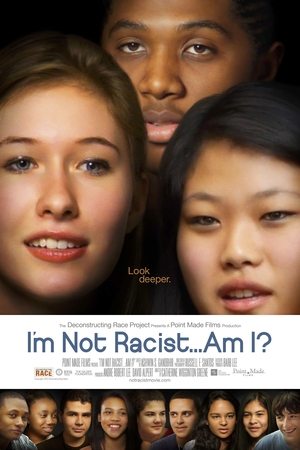
I'm Not Racist... Am I?
What if this next generation could transcend racism? One year, 12 teens, on a remarkable journey to face racism and white privilege, have the conversations most of us are too afraid to have. Once they push through naivete, guilt and tears, what they learn may change us all.
2014
All About Ann: Governor Richards of the Lone Star State
All About Ann celebrates the achievements of larger-than-life Ann Richards, who became the first elected female governor of Texas. Her cool demeanor, acid wit, and passion for social inclusivity made her one of the most powerful and progressive governors in U.S. history, a liberal democrat intent on building “the new Texas.” But, when the 1994 election begins, Richards is faced with her toughest challenge yet, as an increasingly conservative majority turn towards a new, pro-business candidate: George W. Bush.
2014
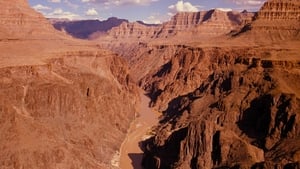
Grand Canyon Adventure: River at Risk
A documentary about a 15-day river-rafting trip on the Colorado River aimed at highlighting water conservation issues.
2008

Starko!
Learn more about Nicolas Sarkozy's presidential campaign, his personal life and more through this documentary.
2008
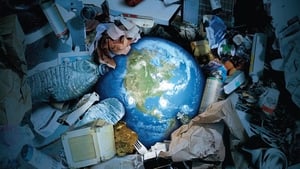
The 11th Hour
A look at the state of the global environment including visionary and practical solutions for restoring the planet's ecosystems. Featuring ongoing dialogues of experts from all over the world, including former Soviet Prime Minister Mikhail Gorbachev, renowned scientist Stephen Hawking, former head of the CIA R. James Woolse
2007
Karaoğlan: Bir Ecevit Belgeseli
2004
Monsieur Truffaut Meets Mr. Hitchcock
When Francois Truffaut approached Alfred Hitchcock in 1962 with the idea of having a long conversation with him about his work and publishing this in book form, he didn't imagine that more than four years would pass before Le Cinéma selon Hitchcock finally appeared in 1966. Not only in France but all over the world, Truffaut's Hitchcock interview developed over the years into a standard bible of film literature. In 1983, three years after Hitchcock's death, Truffaut decided to expand his by now legendary book to include a concluding chapter and have it published as the "Edition définitive". This film describes the genesis of the "Hitchbook" and throws light on the strange friendship between two completely different men. The centrepieces are the extracts from the original sound recordings of the interview with the voices of Alfred Hitchcock, Francois Truffaut, and Helen Scott – recordings which have never been heard in public before.
1999

JFK
Follows the investigation into the assassination of President John F. Kennedy led by New Orleans district attorney Jim Garrison.
1991
Interview and Reading: Jonas Mekas
Jonas Mekas recites poems of his, both in English and Lithuanian. Exclusive Mekas interview by the poet Sparrow. The legendary poet-film critic and film diarist waxes philosophical in rare extended setting exhibiting his transcendental poetic humor. Jonas attacks the crass world of TV advertising and sell-out commercial filmmakers. Contributes zen anecdotes and filmmaking advice. Choice clips include Mekas' Film Diaries with deceivingly formalist amateur "home movie" style, but in small bursts of expression in a quick collage. Footage from Jonas' homeland as well as clips of famed pop figures John Lennon, Yoko Ono and Tiny Tim.
1991
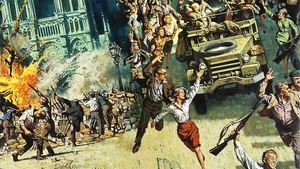
Is Paris Burning?
Near the end of World War II, General Dietrich von Choltitz receives orders to burn down Paris if it becomes clear the Allies are going to invade, or if he's unable to maintain control of the city. After much contemplation, Choltitz ignores orders, enraging the Germans and giving hope to various resistance factions that the city will be liberated. Choltitz, alongside Swedish diplomat Raoul Nordling, helps a leader organise his forces.
1966

Ben-Hur
In ancient Judea, a Jewish aristocrat opposing Roman occupation of his homeland reunites with his childhood friend, now a Roman commander — setting in motion a saga of betrayal, adventure, tragedy, revenge, and faith.
1959