Watch Yankee Doodle Goes to Town (1939) Online Free
Made just before America would be forced into the Second World War, this short subject is a brief dramatized history of American democracy. It targets a perceived threat to democracy from board room and soapbox fascists who advocated a government based upon contemporaneous European models.
Cast
John Nesbitt, Clem Bevans, Joe Devlin, Robert Dudley, Albert Russell
More Like This

News Without A Newsroom
As local newsrooms vanish, "News Without a Newsroom" explores journalism's uncertain future in the digital age. Through powerful stories and expert insights, the film examines the collapse of traditional media, the rise of misinformation, and the fight to preserve truth, trust and accountability in an era of disruption.
2025

Voices of the New Gen
Four emerging filmmakers present a collection of gritty short crime dramas and thrillers that reflect Thailand's social issues and politics.
2022
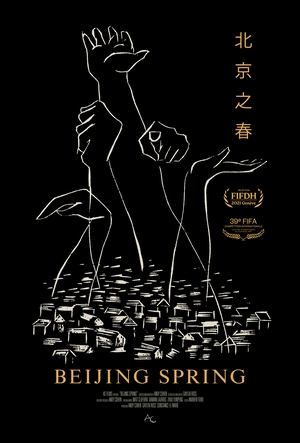
Beijing Spring
The documentary film of the brief window of artistic freedom and democracy movement 1978 - 1982 following China's brutal cultural revolution.
2021
Sistem S.
No system don't allow to person to do work which loves, knows and finally to achieve succes in the world. If we will try along our life to follow rules of system we people neither can be happy nor to achieve succes.
2017

No
In 1988, Chilean military dictator Augusto Pinochet, due to international pressure, is forced to call a plebiscite on his presidency. The country will vote ‘Yes’ or ‘No’ to Pinochet extending his rule for another eight years. Opposition leaders for the ‘No’ vote persuade a brash young advertising executive, René Saavedra, to spearhead their campaign. Against all odds, with scant resources and while under scrutiny by the despot’s minions, Saavedra and his team devise an audacious plan to win the election and set Chile free.
2012
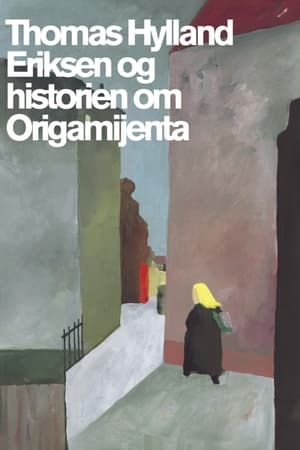
The Professor and the Story of the Origami Girl
A director feels he is about to lose himself to the market forces and thinks that the only way he can protest is by making a political film. He contacts Thomas Hylland Eriksen, who will become his mouthpiece and articulate what is wrong. But along the way the director becomes distracted by another person, a young, fumbling girl reminiscent of himself.
2005
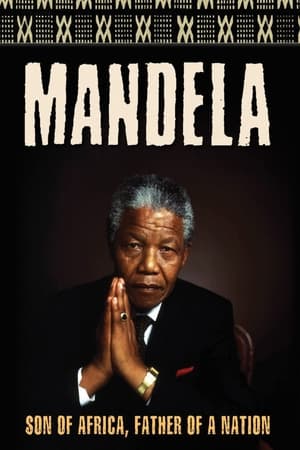
Mandela
A documentary that chronicles the life of South African leader Nelson Mandela. Mandela is probably best known for his 27 years of imprisonment, and for bringing an end to apartheid. But this film also sheds light on the little-known early period of Mandela's life.
1996
Danton
Danton and Robespierre were close friends and fought together in the French Revolution, but by 1793 Robespierre was France's ruler, determined to wipe out opposition with a series of mass executions that became known as the Reign of Terror. Danton, well known as a spokesman of the people, had been living in relative solitude in the French countryside, but he returned to Paris to challenge Robespierre's violent rule and call for the people to demand their rights. Robespierre, however, could not accept such a challenge, even from a friend and colleague, and he blocked out a plan for the capture and execution of Danton and his allies.
1983
Mr. Whitney Had a Notion
Historical short showing how Eli Whitney (best known for the invention of the cotton gin) played a significant role in the introduction of mass production techniques to the USA in the late 18th century.
1949
A Really Important Person
A policeman's son searches for a suitable subject for an essay about an important person.
1947
Magic on a Stick
This MGM Passing Parade series short recounts how English chemist John Walker invented the wooden friction match during the 1820s.
1946
People on Paper
Americans are preoccupied with the news, but need an escape from many of the events reported in the news. These escapes in the past have included dime store novels. The most accessible of these escapes is what are known as the funny papers, the set of serialized comic strips that are included within many newspapers. They appeal to all socio-economic classes, and all ages. Some of the earliest known from the late 19th century include the Yellow Kid, Little Nemo, Happy Hooligan, the Katzenjammer Kids, Mutt & Jeff, and Bringing Up Father. Many cartoonists are seen in action. Some originated their characters, while others have taken over following the passing of the originator. The joy of many comic strips are the absurd and the fantastical, which are limited only by the imagination of the cartoonist. Others are grounded in reality, which add to their poignancy within the public mindset.
1945
To My Unborn Son
A Yugoslav man, dying after being shot while attempting to help defend his village, writes a letter of encouragement and hope to his unborn child, explaining what he was fighting for in resisting the Nazi invasion of his homeland. A John Nesbitt's Passing Parade short.
1943
That's Why I Left You
Young couple Joe and Mary Thompson love each other and their children despite the struggles that they have that are typical of most young couples early on in their married life, such as the basics of trying to make ends meet. But after Joe leaves Mary and their inner city life, she finds an unpostmarked envelope under their apartment door with her name written in Joe's handwriting. It contains a letter explaining why he left. It has primarily to do with his feeling that another part of his life was being left behind for his married life, that other life which consists of a want to travel, especially sail the south seas. The actual impetus to leave was inadvertently fostered by Mary through the birthday present she bought for him. So what actually did happen to Joe and will he ever return to his loving wife?
1943
Madero of Mexico
This Passing Parade series short chronicles the political life of Francisco Madero, who tried to bring democracy and land reform to Mexico.
1942
The Film That Was Lost
In this John Nesbitt's Passing Parade short, a look is taken at the problems of film preservation efforts in the 1930s and early 1940s.
1942
Flag of Mercy
The 1939 dramatic short "Angel of Mercy," about Red Cross founder Clara Barton, is reedited to relate the story to America's involvement in World War II. Edited from Angel of Mercy (1939)
1942
Strange Testament
This MGM Passing Parade series short tells the story of Julian Poydras, whose encounter with a girl at Mardi Gras had a profound effect on his later life.
1941
American Spoken Here
This MGM John Nesbitt's Passing Parade series short takes a look at the origins of North American slang.
1940

One Vote
A young man visits a troubled village where a boy refuses to vote. When their candidate wins by one vote, the boy realizes his choice changed everything.