Watch Window Water Baby Moving (1959) Online Free
On a winter's day, a woman stretches near a window then sits in a bathtub of water. She's happy. Her lover is nearby; there are close ups of her face, her pregnant belly, and his hands caressing her. She gives birth: we see the crowning of the baby's head, then the birth itself; we watch a pair of hands tie off and cut the umbilical cord. With the help of the attending hands, the mother expels the placenta. The infant, a baby girl, nurses. We return from time to time to the bath scene. By the end, dad's excited; mother and daughter rest.
Cast
Jane Wodening, Myrrena Brakhage, Stan Brakhage
More Like This
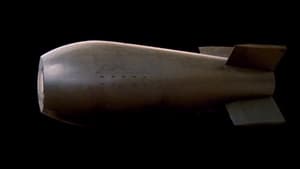
The Bomb
Filmmakers use archival footage and animation to explore the culture surrounding nuclear weapons, the fascination they inspire and the perverse appeal they still exert.
2017
State of Rest and Motion
This cine-portrait of New York City uses digital effects to turn the countless riders of the subway system into living, breathing paintings.
2017
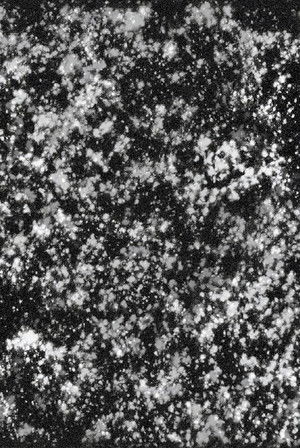
Keep That Dream Burning
Rainer Kohlberger applied various algorithms to extract the noise from a vast number of action films and used this to reduce the dramaturgy of the narrative to its essence. keep that dream burning oscillates between maximum abstraction and pure blur. Within the blurriness, objects form and disappear. The surface allows the space to be conceived.
2017
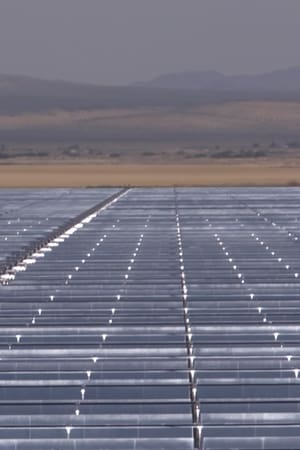
Irradiant Field
In the Mojave Desert, fields of solar panels follow the sun’s daily journey in perfect synchronicity.
2016
The Dance of Memory
Memory mechanisms are mysterious: we only see the stories we choose in order to construct our own reality. Every mark is a message in time, the invocation of an absence. To travel in the memory is to walk in time, zigzagging, a long road permeated by a dark, indecipherable logic… if we could choose seven moments to sum up our entire life, which ones would they be? The Dance of the Memory is a documentary-essay that guides us in that autobiographical search, where image and memory intertwine. It mixes archive material with an aesthetic and subjective tone.
2014
Let Us Persevere in What We Have Resolved Before We Forget
On the island of Tanna, a part of Vanuatu, an archipelago in Melanesia, strange rites are enacted and time passes slowly while the inhabitants await the return of the mysterious John.
2013
The Red Bank. James Joyce: His Greek Notebooks
This documentary aims to register this unknown side of James Joyce: His Greek Notebooks. Trieste. Bloomsday, 2013. Dance in slow motion, accompanied by text. By deconstructing the body, we turn it into a memory: of the body, of life, of texts. The biographical references to Joyce and Mando Aravantinou, combined with the diagonal slicing of the image, cancel the realism of the landscape, including that of the Narrator’s space/study. As a culmination, Joyce’s letter “A request for a loan in Greek” functions as a timely denunciation. Various routes through cities, such as Trieste, London, New York, and Athens; languages such as Greek and English. In addition to the primal myth of Ulysses, there is another issue: Greek is “the language of the subject of Ulysses”
2013
OLO, the Boy from Tibet
A 6-year-old Tibetan boy leaves his family and flees to a refugee camp in northern India.
2012
Refrains Happen Like Revolutions in a Song
Sarah is a debt collector who lives among the inhabitants of the village of Guimbal on the island of Panay. She wants to find the young man who appeared to her in a dream and goes to the island of Negros. Here, as she interacts with the inhabitants, Sarah continues her search, gathering memories of life and war, dreams, myths, legends, songs and stories that she takes part in and at times revolve around her. She is the daughter of an ancient mermaid, a revolutionary, a primordial element, a virgin who was kidnapped and hidden away from the sunlight. “The film is a retelling of fragments of the American occupation. Dialogue, shot in the Hiligaynon language, is not translated but used as a tonal guide and a tool for narration. Using unscripted scenes shot where the main character was asked to merely interact with the villagers, I discard dialogue and draw meaning from peoples’ faces, voices, and actions, weaving an entirely different story through the use of subtitles and inter-titles.”
2010
Spirit House
A tale of 2 passages within the Spirit house. This is the first in a series that looks at the places we find our spiritual presence augmented, inflamed, or simply acknowledged.
2008
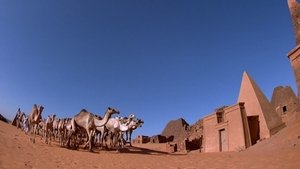
Mystery of the Nile
Filmed in IMAX, a team of explorers led by Pasquale Scaturro and Gordon Brown face seemingly insurmountable challenges as they make their way along all 3,260 miles of the world's longest and deadliest river to become the first in history to complete a full descent of the Blue Nile from source to sea.
2005
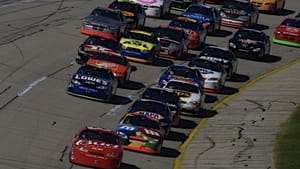
NASCAR: The IMAX Experience
A big-screen look into one of America's most successful entertainment industries, NASCAR racing.
2004
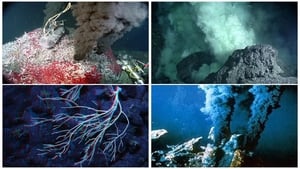
Volcanoes of the Deep Sea
12,000 feet down, life is erupting. Alvin, a deep-sea mechanized probe, makes a voyage some 12,000 feet underwater to explore the Azores, a constantly-erupting volcanic rift between Europe and North America.
2003
Alaska: Spirit of the Wild
Alaska... Here, in this vast and spectacularly beautiful land teeming with abundant wildlife, discover the "Spirit of the Wild." Experience it in the explosive calving of glaciers, the celestial fires of the Aurora Borealis. Witness it in the thundering stampede of caribou, the beauty of the polar bear and the stealthful, deadly hunt of the wolf pack.
1998
Amazon
Explore the mysterious Amazon through the amazing IMAX experience. Amazon celebrates the beauty, vitality and wonder of the rapidly disappearing rain forest.
1997
Cosmic Voyage
The Academy Award® nominee Cosmic Voyage combines live action with state-of-the-art computer-generated imagery to pinpoint where humans fit in our ever-expanding universe. Highlighting this journey is a "cosmic zoom" based on the powers of 10, extending from the Earth to the largest observable structures in the universe, and then back to the subnuclear realm.
1996
The Displaced View
The Displaced View traces a personal search for identity and pride, within the unique and suppressed history of the Japanese in Canada. Through an examination of the emotional and cultural links between the women of one family, the processes of the construction of memory and the re-construction of history, are revealed. Utilizing an innovative combination of experimental, dramatic and documentary forms, the film emerges as a deeply moving and compassionate love letter. Just as the official history of the Japanese Canadians has been thrown into question, so does the film’s fictionalized narrative, question documentary as truth.
1988
Jeune femme à sa fenêtre lisant une lettre
Jean-Claude Rousseau's Jeune femme à sa fenêtre lisant une lettre is not only his first medium-length film, but a chance to discover this filmmaker whom Jean-Marie Straub has called, along with Frans Van de Staak and Peter Nestler, the greatest working in Europe. With this newly restored print there is also a possibility to discover the relationship between Rousseau's art of filming and Jan Vermeer's famous painting. As Prosper Hillairet wrote in 1988, four years after Rousseau had finished Jeune femme ... (for the first time as we know today): «Without adopting the usual systematic spirit and form of cinéma structurel, Rousseau presents us with simple images and leaves it at that. Keeps the image in hand. A minimalist and ascetic expression of cinema: a shot that lasts.»
1983
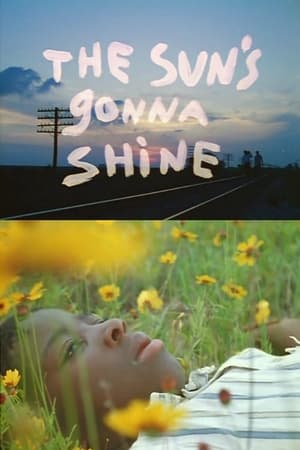
The Sun's Gonna Shine
A lyrical recreation of Lightnin’ Hopkins’ decision at age eight to stop chopping cotton and start singing for a living. Preserved by the Academy Film Archive in 2013.
1969
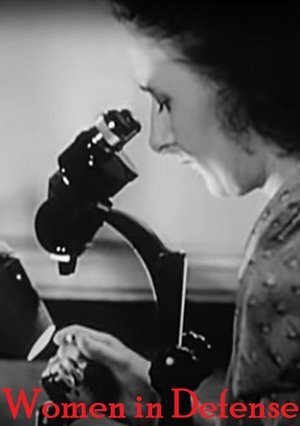
Women in Defense
Short documentary extolling the virtues and necessity for women to participate in America's preparation for war, showing women working in scientific, industrial, and voluntary-services activities. Preserved by the Academy Film Archive in 2008.
1941