Watch Where the Light Shines (2019) Online Free
When two men compete to qualify in the Winter Olympics for the first time for Afghanistan, they realize that home is worth fighting for. In their wake they leave a passion for skiing and a hope for a brighter future. Where the Light Shines is the debut documentary from Pulitzer Prize-winning photographer Daniel Etter with stunning cinematography by Angello Faccini. It is produced by Academy Award nominees Marcel Mettelsiefen and Stephen Ellis along with Steven Sawalich from Articulus Entertainment. Filmed over four years, Where the Light Shines paints an intimate portrait of life in Afghanistan and shows the difficulties of trying to create change in a country that for generations has only seen war.
Cast
Alishah Farhang, Sajjad Hossain
More Like This
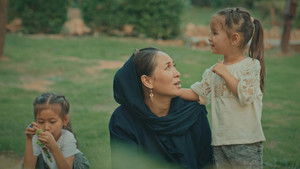
Le Pays taliban
Almost five years after their return to power, a new era has dawned under the yoke of the Taliban, an inflexible fundamentalist regime. Under their rule, the former republic has disappeared, replaced by an ultra-rigid power structure closed off from the rest of the world and the foreign press. An "Islamic Emirate of Afghanistan", largely unrecognised, even by Islamic theocracies. After four shoots, mainly carried out outside the official framework, "The Taliban Country" offers a glimpse into the heart of this new Afghan reality. Through the eyes of the men and women facing these upheavals, the film paints a portrait of a paradoxical and radical system. It offers an in-depth look at the workings of a state characterised by extreme rigour, unparalleled in the contemporary world.
2026
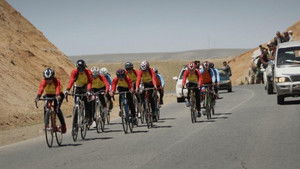
Les échappées de Kaboul
2026

Kabul Chaos
A look back at the years leading up to the fall of Kabul and the perilous evacuation of civilians trapped inside the embassy in the hours following the Taliban's takeover of the country.
2025
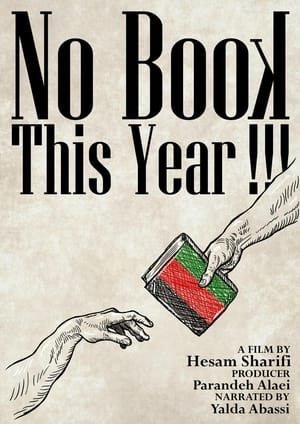
No Book This Year
"No Book This Year" tells the story of Yalda, a former staff member of Afghanistan's booth at the Frankfurt Book Fair. Years after the booth's closure, Yalda takes it upon herself to independently relaunch Afghanistan's presence at the fair. Despite numerous challenges and obstacles, her unwavering determination to showcase Afghan literature and culture shines through, illustrating the resilience of the human spirit in preserving cultural heritage.
2024
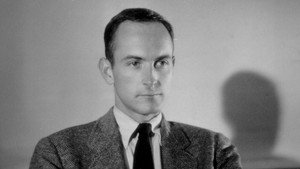
A Cooler Climate
In 1960, acclaimed filmmaker James Ivory traveled to Afghanistan to shoot scenes for a documentary that was never completed. In 2022, he decided to revisit this unique footage, which takes him back to his adventurous youth.
2022

Under Taliban Law
On August 15, 2021, Afghanistan descends into chaos. In one day, the completion of the withdrawal of Western forces precipitated the debacle of the regime in place: the army vanished, the leaders fled and the Taliban took Kabul without a fight. The great Central Asian country opens a new chapter in its tragic history, twenty years after the "war on terror" launched by George W. Bush in response to the attacks of September 11, 2001. The undisputed masters of 40 million trapped Afghans, the "students of religion" are back and are savoring their revenge by posing as the United States' victors. Their program will surprise no one: to restore the Islamic emirate and set up the "true" sharia, i.e. a perfect world, with divine commandments applied to the letter as in the time of the prophet.
2022
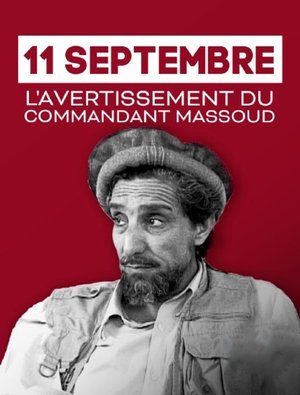
11 Septembre, l'avertissement du commandant Massoud
On September 9, 2001, Commander Massoud, a hero of the Afghan resistance, was assassinated by two members of al-Qaeda posing as journalists. Two days later, the terrorist organization struck the United States. However, a few months earlier, during a visit to France, Commander Massoud had come to warn the West about the disastrous plans of al-Qaeda and the rise of the Taliban. He asked the West to exert pressure on Pakistan, a country that supplied arms, supported and sheltered the Taliban, but which was also a major buyer of French arms. He was not listened to.
2021
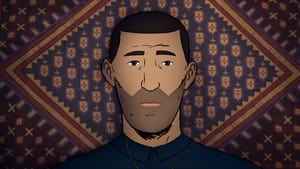
Flee
Recounted mostly through animation to protect his identity, Amin looks back over his past as a child refugee from Afghanistan as he grapples with a secret he’s kept hidden for 20 years.
2021
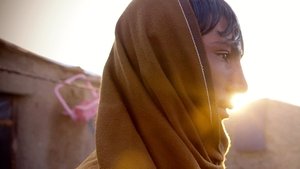
Three Songs for Benazir
The story of Shaista, a young man who—newly married to Benazir and living in a camp for displaced persons in Kabul—struggles to balance his dreams of being the first from his tribe to join the Afghan National Army with the responsibilities of starting a family. Even as Shaista’s love for Benazir is palpable, the choices he must make to build a life with her have profound consequences.
2021
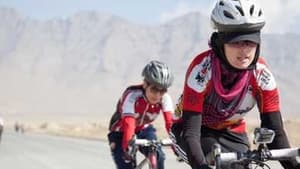
Afghan Cycles
"Afghan Cycles" is a feature documentary about a generation of Afghan women who are pedaling their own revolution, aggressively challenging gender and cultural barriers using the bicycle as a vehicle for freedom, empowerment and social change.
2018
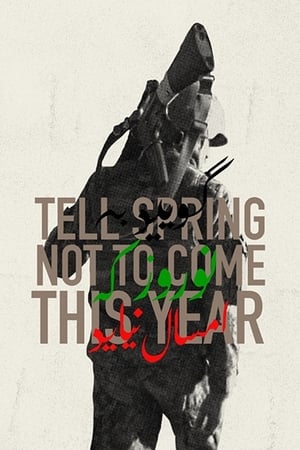
Tell Spring Not to Come This Year
When NATO troops withdrew from Afghanistan, the Afghan National Army (ANA) took over control of Helmand Province, an extremely dangerous region where attacks by Taliban fighters are the order of the day. Security, much less peace, would seem to be unattainable; it is even difficult to find a common language in a country where everyone mistrusts each other. The directors of this film accompanied an ANA company during a year of frontline duty in Helmand. The soldiers are paid irregularly, there are not enough supplies and their equipment is substandard. They cannot fight a war with the equipment left behind by the ISAF.
2015
The Hornet's Nest
Armed only with their cameras, Peabody and Emmy Award-winning conflict Journalist Mike Boettcher, and his son, Carlos, provide unprecedented access into the longest war in U.S. history: they are embed with U.S. troops during nine days of intense combat in Afghanistan.
2014
Gary Barlow: Journey to Afghanistan
One of our biggest music stars Gary Barlow faces his toughest gig when he heads to the harsh terrain of Afghanistan to perform an exclusive concert for British troops.
2013
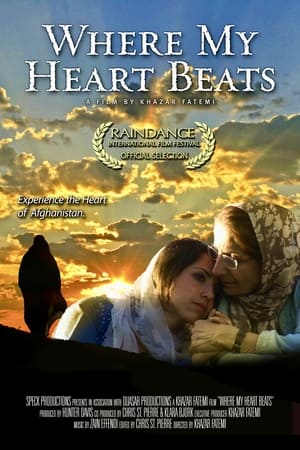
Where My Heart Beats
In 1989, Swedish journalist, Khazar Fatemi narrowly fled the war torn country of Afghanistan with her life. Twenty years later, the former refugee returned to the place that has always remained in her heart. Where My Heart Beats follows Khazar's dangerous, painful, and inspirational journey back home to reconnect with the amazing people of this broken nation.
2012
Afghanistan: The Battle for Helmand
Mark Urban tells the inside story of Britain's fight for Helmand, told with unique access to the generals and frontline troops who were there.
2011
Afghanistan: War without End?
Key decision makers reveal the inside story of how the West was drawn ever deeper into the Afghan war. Reporter John Ware charts the history of a decade of fighting and looks at when the conflict may end.
2011
Afghan Star
This documentary on the effect the talent competition "Afghan Star" has on the incredibly diverse inhabitants of Afghanistan affords a glimpse into a country rarely seen. Contestants risk their lives to appear on the television show that is a raging success with the public and also monitored closely by the government.
2008
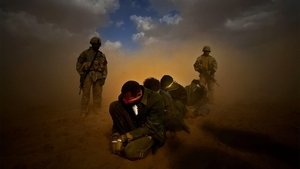
Taxi to the Dark Side
An in-depth look at the torture practices of the United States in Afghanistan, Iraq and Guantanamo Bay, focusing on an innocent taxi driver in Afghanistan who was tortured and killed in 2002.
2008
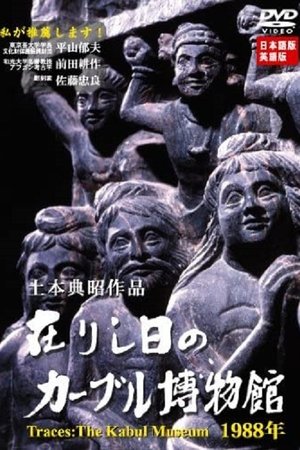
Traces: The Kabul Museum 1988
The Kabul National Museum, once known as the "face of Afghanistan," was destroyed in 1993. We filmed the most important cultural treasures of the still-intact museum in 1988: ancient Greco-Roman art and antiquitied of Hellenistic civilization, as well as Buddhist sculpture that was said to have mythology--the art of Gandhara, Bamiyan, and Shotorak among them. After the fall of the Democratic Republic of Afghanistan in 1992, some seventy percent of the contents of the museum was destroyed, stolen, or smuggled overseas to Japan and other countries. The movement to return these items is also touched upon. The footage in this video represents that only film documentation of the Kabul Museum ever made.
2003
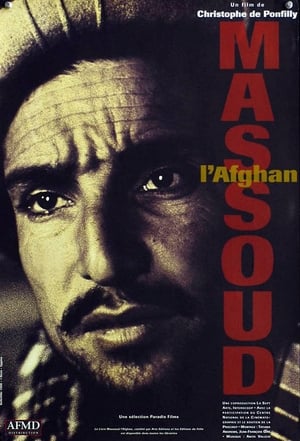
Massoud the Afghan
The friendship between Christophe de Ponfilly and Commander Massoud, a legendary figure of the Afghan resistance against the Soviet invader, goes back to the filmmaker's first film, "A Valley Against an Empire", made in 1981. Fifteen years later, weakened, isolated, betrayed by many of his own, the "Lion of Panshir" has not surrendered to his new and implacable enemies, the Taliban. While preparing his next offensive, he evokes his commitment and his fights, and bears witness to a history in which he has been one of the main actors for twenty years. At the same time, the director questions the role and power of the media, as well as his own approach as a filmmaker. Commander Massoud was killed in an attack in September 2001.
1998