Watch What is Your Name? (2025) Online Free
A government job brings Seema Valmiki to Mumbai. On her first day, she hears two remarks: a casteist comment from a female officer and a loud “Jai Bhim” from the liftman.Trying to fit in, Seema hides her surname and avoids the liftman's greetings. But Seema is changed when the liftman is fired for wanting to celebrate Dr. Ambedkar’s birth anniversary.
Cast
Ipshita Chakraborty Singh, Shashank Shende
More Like This
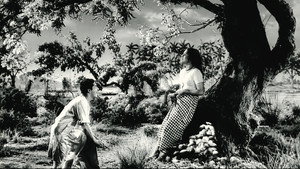
Neelakuyil
The plot revolves around Neeli, a Dalit peasant girl, who falls in love with Sreedharan Nair, a high caste teacher.
1954

Bringing Down a Mountain
A rural village never wanted to be a city’s landfill or a distant blur in Reels but rather home to new imaginations. Bringing Down a Mountain dissects the intersecting themes of access, abolition and caste through the experiences of residents of a rural village and that of a hyper-urban city. The film follows the village residents’ dreams—of mobile data, digital payment and relief from menial work. What happens when the landfill is full, and dreams want to break free?

Rock Springs
After her father's death, a grieving young girl moves to Rock Springs, Wyoming with her mother and grandmother, only to discover something monstrous hidden in the town’s history and the woods behind their new house.
2026

Chocolate para tres
Julia reaches the semifinals for the lead role in a musical comedy. But, because her grandfather wants to sell the family hotel, beloved by her father who died a year ago, she feels she must take over and postpones her dream, exacerbating her eating disorder. Her only hope is that her grandmother, who abandoned the family business, will return, reconcile with her grandfather, and take his place.
2024

Daddy’s Little Scratch
For the first time, Slava spends a day with her father, Roman, who is home on leave from the war. They go to return an expensive carpet he bought for her, and Slava must navigate the distance that eight years of service has created between them.
2024

THE REDEMPTION
Manja and Ravi, two dalit kids live in a tiny village in the western ghats. Vaasudeva, a kid from an orthodox brahmin family wants to be friends with them. This leaves Manja and Ravi in a conflict with their daily lives.
2019

Carol
In 1950s New York, a department-store clerk who dreams of a better life falls for an older, married woman.
2015

Short Working Day
A dramatisation of the workers' protests in June 1976 in Radom, seen from the perspective of the local Secretary of the Polish United Workers' Party.
1995
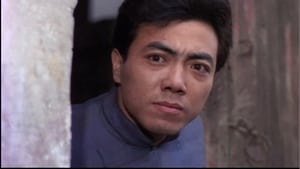
Don't Cry, Nanking
In December 1937, during the Second Japanese-Sino War, a Chinese doctor, his Japanese pregnant wife, their teenage daughter and their young son travel from Shanghai to Nanjing seeking shelter in the Capital during the Japanese invasion. The family faces the Rape of Nanking by the Imperial Japanese Army, with rapes, mass murder of prisoners of war and civilians including women, children and elders, and disrespect of international conventions.
1995

Sparkling Fox
A cinema projectionist whose life has lost all meaning decides to go hunting for the fabled red fox in a northern forest in winter. There he meets another who’s been living in the forest six years, and is also in search of the fox.
1993
Balak Ambedkar
A story about the childhood of Dr. B.R. Ambedkar.
1991
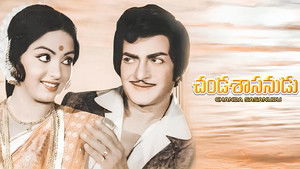
Chandashasanudu
The film is a battle between feudalism & Communism. Trouble ensues when Raja, a medical college student, falls in love with his classmate Rani, unaware of a powerful enmity existing between their families based on class differences.
1983

The Scar of Shame
An educated, upscale young black musician marries a woman from a lower socioeconomic class to get her out of the clutches of her stepfather.
1929
Untouchable: Laughing Out Caste
Manjeet Sarkar is an internationally acclaimed stand-up comedian who has been performing for 7 years. He has done six national tours in India of his solo show ‘Untouchable’, performed at the United Nations, and is currently on a world tour. Co-directed by Mike Noone, Untouchable: Laughing Out Caste is Sarkar’s first documentary that covers his groundbreaking journey across India and now the world. It captures his unique perspective on rural and urban life, caste, and class. Untouchable: Laughing Out Caste highlights the universality of issues faced by marginalised communities and the transformative power of artistic expression.

Lost Tribe of Africa
“Over 500 years ago, my tribe arrived on the shores of India from Africa,” says the social worker narrator of Asha Stuart’s Lost Tribe of Africa. His ancestors fled enslavement, escaping into the forest in the Indian state of Karnataka where they live today, most of them Hindu converts. India’s 35,000 descendants of slaves from Africa’s Bantu Region are members of the Siddi tribe. Siddi means “enlightened one,” but the Siddi are “Untouchables” in India’s caste system. “How do you empower the youth in a world whose people think they’re less than human?” asks the narrator, whose life mission is to do just that.

The Shining Arc
On a cold night, psychology student Liu Kai took Jing Huan, a paranoid schizophrenia patient, to a mysterious frozen lake she had often dreamed of. The lake reflected an “8” shape, causing Jing Huan’s expression to change, unsettling Liu Kai. During an internship at a psychiatric hospital, Liu Kai’s classmate Xie Ni, who was in a relationship with him, became interested in Jing Huan, a former factory cashier who developed mental illness after embezzling funds. Xie Ni wanted to study Jing Huan’s condition for a thesis and asked Liu Kai to help her, even arranging for Jing Huan to stay at her home.
1989
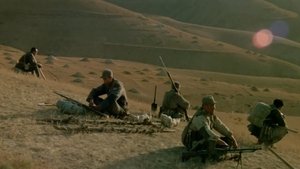
Evening Bell
Taking place in the immediate aftermath of the Second Sino-Japanese War, Evening Bell follows a small platoon of five Chinese soldiers who must negotiate a devastated landscape, burying bodies, disarming mines, and eventually facing off against a starving band of Japanese soldiers who do not yet know that the war has ended.
1989
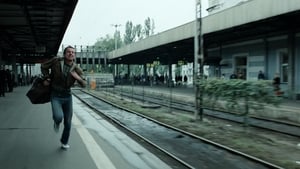
Blind Chance
Witek runs after a train. Three variations follow on how such a seemingly banal incident could influence the rest of Witek's life.
1987
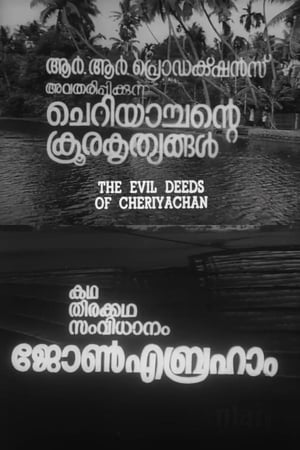
The Evil Deeds of Cheriyachan
Cheriyachan, a landlord, feels threatened by industrialisation and leftist activities. But when he witnesses police atrocities on poor peasants, a feeling of guilt engulfs him and he feels responsible for the guilt of his entire class. He is last seen up a coconut tree trying to keep away from the police. The film is about a peasant's movement against the feudal system.
1979
Vasilisa Melentievna and Tsar Ivan the Terrible
Based on the drama by Dmitry Averkiev. The reign of Tsar Ivan Vasilyevich the Terrible. Boyar Vorotynsky loudly expresses his indignation at the untruth. Many agree with the boyar in their hearts, only Malyuta hates him and dreams of revenge. Having whispered to Grozny about Vorotynsky, he receives an order to arrest him.
1911