Watch We Are Many (2014) Online Free
The story of the biggest demonstration in human history, which took place on 15th February 2003, against the impending war on Iraq.
Cast
Damon Albarn, Brian Eno, Danny Glover, Richard Branson, Noam Chomsky, Ken Loach, Mark Rylance, Jesse Jackson, Ron Kovic, Susan Sarandon, Hans Blix, Medea Benjamin
More Like This
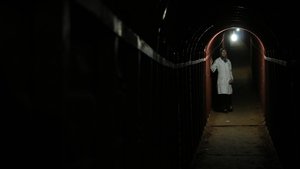
The Cave
Deep beneath the surface in the Syrian province of Ghouta, a group of female doctors have established an underground field hospital. Under the supervision of paediatrician Dr. Amani and her staff of doctors and nurses, hope is restored for some of the thousands of children and civilian victims of the ruthless Syrian civil war.
2019
Hidden Colors 5: The Art of Black Warfare
The history of warfare as it relates to global Black society, broken down into 7 chapters that examines the ways the system of racism wages warfare from a historical, psychological, sexual, biological, health, educational, and military perspective.
2019
2017 Oscar Nominated Short Films: Documentary
2017
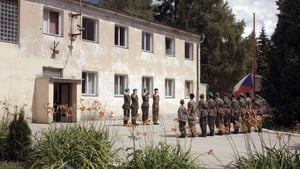
Teaching War
This episode from the Czech Journal series examines how a military spirit is slowly returning to our society. Attempts to renew military training or compulsory military service and in general to prepare the nation for the next big war go hand in hand with society’s fear of the Russians, the Muslims, or whatever other “enemies”. This observational flight over the machine gun nest of Czech militarism becomes a grotesque, unsettling military parade. It can be considered not only to be a message about how easily people allow themselves to be manipulated into a state of paranoia by the media, but also a warning against the possibility that extremism will become a part of the regular school curriculum.
2016
Iraq: Children of the Crisis
Three film-makers travel to Iraq to film the ongoing crisis in which ISIS forces are trying to take over the country. The film-makers speak with locals, military, police and other media outlets to get their opinions on the crisis but it's the voices of the children which often goes unheard, so the film-makers listen to the children, and find out their views on the crisis.
2014
Art as a Weapon
Street art, creativity and revolution collide in this beautifully shot film about art’s ability to create change. The story opens on the politically charged Thailand/Burma border at the first school teaching street art as a form of non-violent struggle. The film follows two young girls (Romi & Yi-Yi) who have escaped 50 years of civil war in Burma to pursue an arts education in Thailand. Under the threat of imprisonment and torture, the girls use spray paint and stencils to create images in public spaces to let people know the truth behind Burma's transition toward "artificial democracy." Eighty-two hundred miles away, artist Shepard Fairey is painting a 30’ mural of a Burmese monk for the same reasons and in support of the students' struggle in Burma. As these stories are inter-cut, the film connects these seemingly unrelated characters around the concept of using art as a weapon for change.
2014
The Auschwitz Trial
The biggest trial of Nazi war crimes ever: 360 witnesses in 183 days of trial - a stunning and gripping portrayal of the most terrible massacre in history.
2013
This Is My Picture When I Was Dead
Athens, 1983. The world press reports that 4-year old Bashir is killed in the assassination of his father, Mamoun Mraish, a top PLO lieutenant. Father and son are declared dead but when they arrive at the hospital Bashir turns out to be still alive. But if Bashir is fully alive today, what happened to the dream he and his father were believed to have died for?
2010
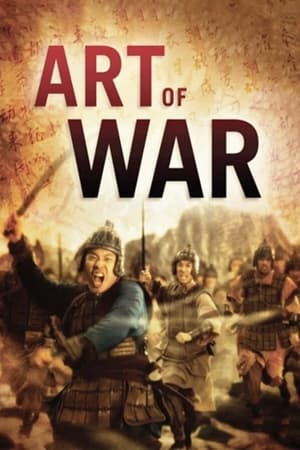
Art of War
Documentary on the main principles of Sun Tsu "Art of War" illustrated with examples from the second world war, the Vietnam war and the American civil war.
2009
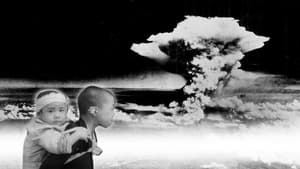
White Light/Black Rain: The Destruction of Hiroshima and Nagasaki
Steven Okazaki presents a deeply moving look at the painful legacy of the first -- and hopefully last -- uses of nuclear weapons in war. Featuring interviews with fourteen atomic bomb survivors - many who have never spoken publicly before - and four Americans intimately involved in the bombings, White Light/Black Rain provides a detailed exploration of the bombings and their aftermath.
2007
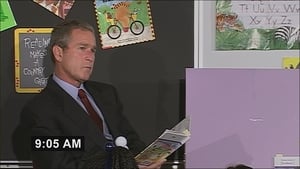
Fahrenheit 9/11
Michael Moore's view on how the Bush administration allegedly used the tragic events on 9/11 to push forward its agenda for unjust wars in Afghanistan and Iraq.
2004
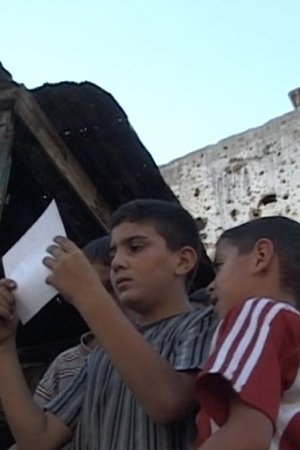
Here and Perhaps Elsewhere
During the Lebanese civil war, thousands of people disappeared. In most cases, the bodies were not found and the circumstances of their disappearance never known. Today, I travel through Beirut, asking the inhabitants I encounter, one same question: Do you know anyone who was kidnapped here during the war? My investigation carries me through the many districts around the "Green line", which used to divide Beirut between East and West, and where militias set up their checkpoints, the scenes of many kidnappings, and crimes. I thereby attempt to trigger the process of memory and to reveal the multiplicity of existing discourses on the war and the immensity of the drama. As I cross town and discover places laden with history, I draw a personal map of this city.
2003
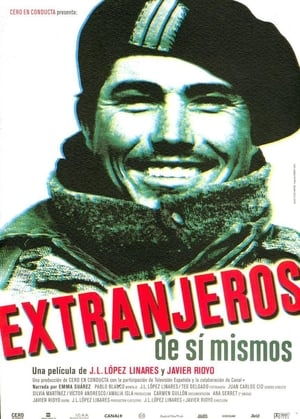
Extranjeros de sí mismos
2000
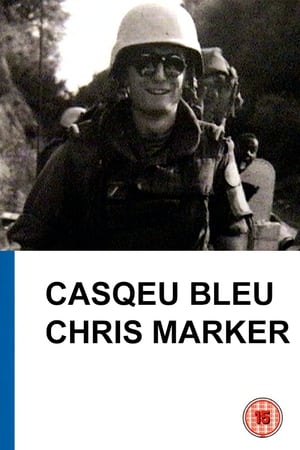
Blue Helmet
A young man, who served as a peacekeeper in Bosnia and Herzegovina for a few months during the war, recounts his experiences. Throughout the film, we only see his face filmed in close-up, along with a few photos. The interview acts as a strong testimony to the failure of the international community in the Yugoslav crisis.
1995
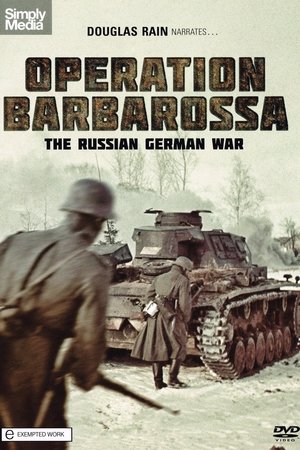
The Russian German War
This is a rare look at one of the worst horror stories in the long infamous history of warfare. This series features captured German and Russian film footage, much of which has never been seen before. For decades the Cold War prevented us from looking closely at what really happened between the Russians and the Germans on the Eastern Front during World War II. More than a struggle between nations, it pitted maniacal tyrant against maniacal tyrant, evil ideology against evil ideology. The lives of tens of millions of human beings were consumed by its raging hatreds and appalling indignities. One in every ten Russians died. One in every four Poles died. Whole divisions of Italians, Romanians, Hungarians disappeared with barely a trace. An average of 17,800 people died on every single day and this, the war on the Russian German Front, lasted for 1,400 days. This series features captured German and Russian film footage, much of which has never been seen before.
1995
But... Seriously
A documentary juxtaposing the events of the 20th century with the commentary of stand-up comedians.
1994
A Letter from Beirut
Letter from Beirut documents the filmmaker's return to Beirut during one of the lulls, three years after the outbreak of the civil war, animated by the urge to return. She is confronted by the physical, emotional and psychological ravages of the war, terrified and sorrowful, she cannot find her place in the city. In that quest, she communicates with everyday people, friends, neighbors, people riding the bus across the city's eastern and western flanks. To pace her journeying and dramatic unraveling of the film, Saab borrows the guise of a letter read in a voice-over, written by world-renowned poet Etel Adnan. A rare document from the civil war, Letter from Beirut lays bare and spontaneously how people make sense of their everyday in the midst of chaos, violence, terror and sorrow.
1978

Caudillo
Caudillo is a documentary film by Spanish film director Basilio Martín Patino. It follows the military and political career of Francisco Franco and the most important moments of the Spanish Civil War. It uses footage from both sides of the war, music from the period and voice-over testimonies of various people.
1977
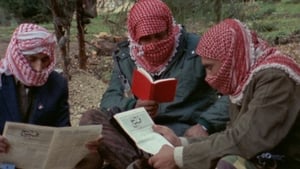
Here and Elsewhere
Here and Elsewhere takes its name from the contrasting footage it shows of the fedayeen and of a French family watching television at home. Originally shot by the Dziga Vertov Group as a film on Palestinian freedom fighters, Godard later reworked the material alongside Anne-Marie Miéville.
1976
Danmark i Lænker
Seminal Danish documentary about Nazi Germany's occupation of Denmark in the Second World War between 1940 and 1945.
1945