Watch Waterwalker (1984) Online Free
Naturalist Bill Mason on his journey by canoe into the Ontario wilderness. The filmmaker and artist begins on Lake Superior, then explores winding and sometimes tortuous river waters to the meadowlands of the river's source. Along the way, Mason paints scenes that capture his attention and muses about his love of the canoe, his artwork and his own sense of the land. Mason also uses the film as a commentary on the link between God and nature and the vast array of beautiful canvases God created for him to paint. Features breathtaking visuals and exciting whitewater footage, with a musical score by Bruce Cockburn.
Cast
Bill Mason, Wilf Pelletier
More Like This
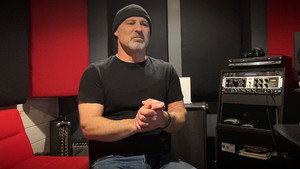
Resilience & Sacrifice
Award-winning documentary Resilience & Sacrifice follows an emerging musician from Vermont’s Northeast Kingdom who shelved his dreams to raise his family. Years later, he returns to the stage, facing the music industry and a medical crisis that nearly ends his career. A story of grit and passion.
2025
This is Love
This is Love tells the romance stories of 3 Nigerian LGBTQ+ couples and how they navigate romantic relationships in a conservative and hostile Nigerian environment. It is an attempt to humanize LGBTQ+ people in Nigeria by telling a story of how they find love amidst the risks and struggles. The cast includes a lesbian couple, a gay couple and a couple made up of a transman and a ciswoman. It covered conversations around acceptance, religion, health, the Same-Sex Marriage Prohibition Act (SSMPA), and finding love. 2 out of the 3 couples wore masks and had their voices distorted. Aside from helping to conceal the identity of the cast, the mask and distorted voices are also symbolic of the double life LGBTQ+ Nigerians have to live for their safety and security.
2024
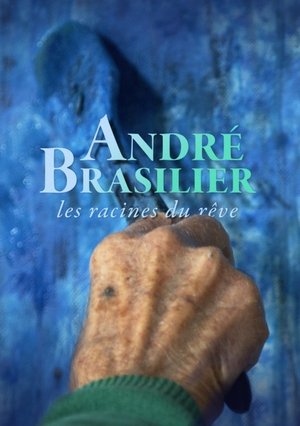
André Brasilier: Where dreams come from
This documentary is a touching and intimate portrait of André Brasilier, both as a man and as an artist. Presented as a testament to his art, the film focuses on two main aspects: André's connection to his youth and early inspirations, and the evolution of his art. The film pays special attention to his wife Chantal, who was André's muse and who appears in many of his paintings.
2023

Grid
A ritual of grids, reflections and chasms; a complete state of entropy; a space that devours itself; a vertigo that destroys the gravity of the Earth; a trap that captures us inside the voids of the screen of light: «That blank arena wherein converge at once the hundred spaces» (Hollis Frampton).
2021
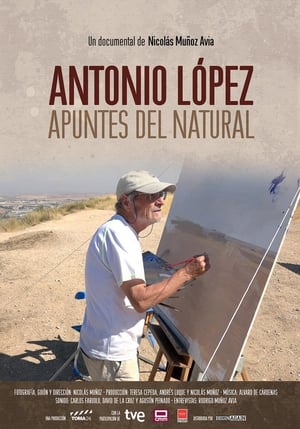
Antonio López: apuntes del natural
A documentary on the painter Antonio López and his day-to-day work.
2019
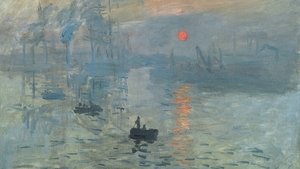
I, Claude Monet
From award-winning director Phil Grabsky comes this fresh new look at arguably the world’s favourite artist – through his own words. Using letters and other private writings I, Claude Monet reveals new insight into the man who not only painted the picture that gave birth to impressionism but who was perhaps the most influential and successful painter of the 19th and early 20th centuries. Despite this, and perhaps because of it, Monet’s life is a gripping tale about a man who, behind his sun-dazzled canvases, suffered from feelings of depression, loneliness, even suicide. Then, as his art developed and his love of gardening led to the glories of his garden at Giverney, his humour, insight and love of life is revealed. Shot on location in Paris, London, Normandy and Venice I, Claude Monet is a cinematic immersion into some of the most loved and iconic scenes in Western Art.
2017
Gutierres
2015
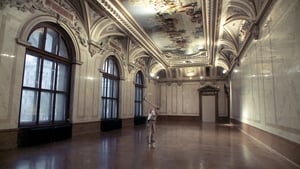
The Great Museum
This feature documentary portrays one of the most important museums in the world, the Kunsthistorisches Museum Wien. It presents a unique look behind the scenes of this fascinating institution and encounters a number of charismatic protagonists and their working fields unfolding the museum’s special world – as an art institution as well a vehicle for state representation.
2014
Counterfeit Culture
A documentary that explores the dangerous and sometimes deadly world of fake products. An industry that once dealt in imitation designer handbags and shoes has exploded into a global epidemic of counterfeit pharmaceuticals, foods, toys, electronic goods, car parts and microchips. COUNTERFEIT CULTURE challenges consumers to take a deeper look at what appears to be harmless knock-offs at bargain prices.
2013
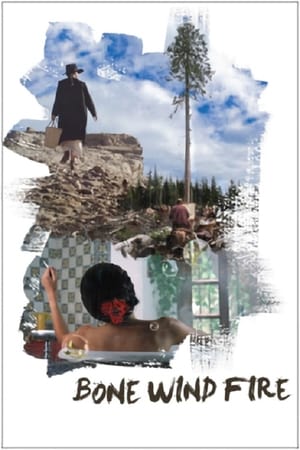
Bone Wind Fire
A journey into the hearts, minds and eyes of Georgia O’Keeffe, Emily Carr and Frida Kahlo - three of the 20th century’s most remarkable artists.
2011
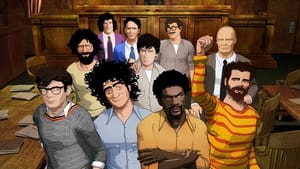
Chicago 10
Archival footage, animation and music are used to look back at the eight anti-war protesters who were put on trial following the 1968 Democratic National Convention.
2008
As the Crow Flies
Documentary film based on the artist Akbar Padamsee.
2004
Warren Oates: Across the Border
A retrospective of the work of the late actor Warren Oates, with clips from his films and interviews with cast and crew members who worked with him.
1993
Faces of Death III
Gory real-life footage of blood and guts on the German Autobahn, drug smugglers getting blown away, a parachutist landing in a crocodile pit, torture and murder in El Salvador, a PCP addict getting stoned, a videotaped rape/murder, a car thief getting ripped apart by two junkyard dogs, and much more.
1985
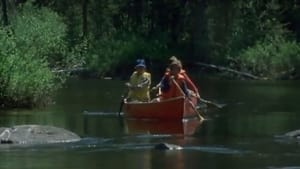
Pukaskwa National Park
This short documentary by Bill Mason explores Pukaskwa National Park on Lake Superior, providing a background of the park's geological past and plant life. The film also shows scenes of hiking, canoeing and camping. The result is to put us back in touch with the natural elements that our ancestors both fought and enjoyed.
1983
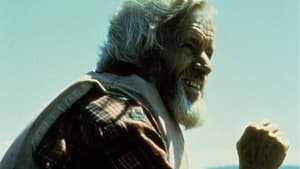
Song of the Paddle
Join outdoorsman Bill Mason in this short documentary as he and his family go canoe camping in the wilderness. Gain an appreciation for the art of canoeing while watching a small group experience the sheer joy and beauty of Nature. Along the way, the Masons experience countless adventures and some breathtaking scenery, including Indian rock carvings at Lake Superior.
1978
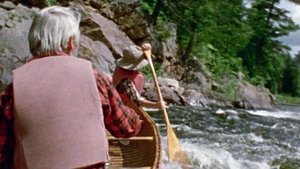
Path of the Paddle: Doubles Basic
This short film from canoeist Bill Mason demonstrates the basic doubles paddling strokes and how to apply them in various combinations. The application of each stroke in rapids is shown briefly and the emphasis is always on working as a well-coordinated team. Part of 'Path of the Paddle: Quiet Water', in Bill Mason's Path of the Paddle Series.
1977
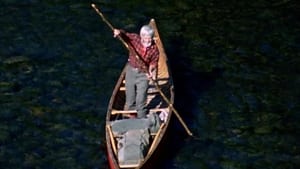
Path of the Paddle: Solo Whitewater
This short film from canoeist Bill Mason explains clearly how to locate a deep water channel by reading the rapids and how to apply paddling strokes and manoeuvres to steer the canoe where you want it to go. It also depicts what happens if you "wipe out" in a turbulent rapid and shows you how to survive the swim. Part of 'Path of the Paddle: Whitewater', in Bill Mason's Path of the Paddle Series.
1977
Ich lebe in der Gegenwart - Versuch über Hans Richter
1973
Leonardo Da Vinci The Tragic Pursuit of Perfection
A portrait of the artist as a "sublime demon with the archangel's face", with an innovative musique concrète soundtrack.
1953