Watch Volker Bradke (1966) Online Free
Loading Cinehub...
As the only work in this medium by Richter, the film was created for the exhibition Volker Bradke that took place on 13th December 1966 at Galerie Schmela in Düsseldorf. For the purpose of this exhibition, Gerhard Richter addressed the person Volker Bradke in different mediums. In addition to photographs, a banner and a large-scale painting Volker Bradke [CR: 133], the film had been screened. Richter transferred one of the stylistic features of his paintings of that time into film: the blurring.
More Like This
The Last Nomad
Greek Sarakatsani community members, a former group of nomadic animal breeders, share personal experiences and discuss the concept of identity in today's world. A tribute to collective memory through an experiential journey that sets out from the past, progresses into the present, and contemplates the future.
2024
The First Film
In a small town of 1960's India, where cinema is forbidden for women, a 14-year-old embarks on a quest to watch her first film.
2023
François Mitterrand & Anne Pingeot: Pieces of a Love Story
In the summer of 1963, François Mitterrand was going through a deep existential crisis. His political career was at a standstill and, after 19 years of marriage, the couple had grown apart. It was at this point that François Mitterrand met the woman who was to give new meaning to his life. Anne Pingeot, aged 19, was to become the companion of a lifetime, a woman who would be with him throughout his rise to power and who would remain by his side until his last breath. For the first time, Anne Pingeot has agreed to allow the fragments of this passionate love story — hundreds of letters and a diary — to be shown on television, before being donated to the National Library.
2021
Blood Money: Inside the Nazi Economy
How did Nazi Germany, from limited natural resources, mass unemployment, little money and a damaged industry, manage to unfurl the cataclysm of World War Two and come to occupy a large part of the European continent? Based on recent historical works of and interviews with Adam Tooze, Richard Overy, Frank Bajohr and Marie-Bénédicte Vincent, and drawing on rare archival material.
2021

Breaking the Silence
Francesca, tormented by her past, breaks the silence to talk about surviving the horrors of the comfort stations of Imperial Japan.
2020

Hannas baby
2019
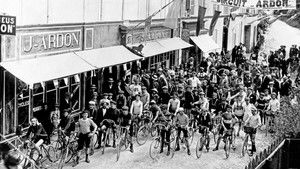
Paris in the Belle Epoque
The Bokelberg photographic collection brings to life the Paris of the Belle Époque (1871-1914), an exhibition of workshops and stores with extremely beautiful shop windows before which the owners and their employees proudly pose, hiding behind their eyes the secret history of a great era.
2019
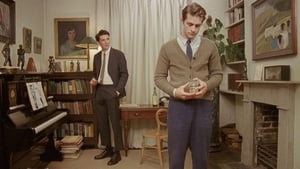
The Colour of His Hair
Based on an unrealized film script written in 1964 for The Homosexual Law Reform Society, a British organisation that campaigned for the decriminalization of homosexual relations between men, "The Colour Of His Hair" merges drama and documentary into a meditation on queer life before and after the partial legalization of homosexuality in 1967.
2017
Artist Unknown
A short documentary on how people view art and its value in today's society.
2017
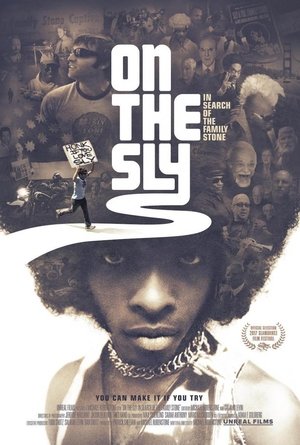
On the Sly: In Search of the Family Stone
One man's search for the prolific funk legend, Sly Stone.
2017
Conversations of a Marriage
A portriat of the daily lives of Beatriz and Gilberto, a couple that has been together for over 40 years. A reflection about love and marriage. An intimate glimpse into the lives of two people who struggle to live in harmony.
2013

Kurosawa's Way
Eleven major film makers from Europe, America and Asia talk about Akira Kurosawa and discover surprising influences on their own work.
2011
The War Prayer
"In 1904, disgusted by the aftermath of the Spanish-American War and the subsequent Philippine-American War, Mark Twain wrote a short anti-war prose poem called "The War Prayer." His family begged him not to publish it, his friends advised him to bury it, and his publisher rejected it, thinking it too inflammatory for the times. Twain agreed, but instructed that it be published after his death, saying famously: None but the dead are permitted to tell the truth."
2005
Antigravitation
An isolated village in the Lithuanian countryside. Seated in her house, an elderly woman recites an old folk story. Then she climbs up the tall ladder that takes her to the rooftop of the church.
1995

Larisa
Elem Klimov's tribute to his late wife, director Larisa Shepitko, killed in a car accident a year earlier. Features excerpts from all of her films, and archival audio of her discussing life and art.
1980
Del mero corazón
A lyrical journey through the heart of Chicano culture as reflected in the love songs of the Tex-Mex Norteña music tradition. Performers include, Little Joe & La Familia, Leo Garza, Chavela Ortiz, Andres Berlanga, Ricardo Mejia, Conjunto Tamaulipas, Chavela y Brown Express and more.
1979
Christo: Works in Progress
“Christo: Works in Progress” takes us around the world on a showcase of the artist’s grand environmental installations. With both critique and praise from members of the communities that have hosted Christo and his works, the film takes a deep look into the process and outcome of pieces such as Wrapped Coast, Running Fence, and Wrapped Walkways. While discussing his inspirations and motives, Christo states, “The work of art is not the fabric, steel poles and cable, the work of art is the hills and the ocean, the sky, the gates, the rocks, the people, the light- this is the work of art.” (Christo Vladimirov Javacheff) Though his work may appear to be visually distracting from the landscapes he creates in, Christo’s aim is to bring attention to the land itself and encourage people to take note of their surroundings.
1974

Brasilia, Contradictions of a New City
In 1967, de Andrade was invited by the Italian company Olivetti to produce a documentary on the new Brazilian capital city of Brasília. Constructed during the latter half of the 1950s and founded in 1960, the city was part of an effort to populate Brazil’s vast interior region and was to be the embodiment of democratic urban planning, free from the class divisions and inequalities that characterize so many metropolises. Unsurprisingly, Brasília, Contradições de uma Cidade Nova (Brasília, Contradictions of a New City, 1968) revealed Brasília to be utopic only for the wealthy, replicating the same social problems present in every Brazilian city. (Senses of Cinema)
1968

Daybreak Express
Set to a classic Duke Ellington recording "Daybreak Express", this is a five-minute short of the soon-to-be-demolished Third Avenue elevated subway station in New York City.
1957
Visite à Oscar Dominguez
This is the legendary meeting between a young filmmaker and one of the masters of surrealism: the spanish painter Óscar Domínguez, born in La Laguna, Tenerife, in 1906, died in Paris in 1957. In the "Visite," the artist -admirer of Picasso, rebellious disciple of Breton- is presented in solitude, far from the tumult of the exhibitions and parisian circles. An austere approach, almost “povera”, with no audio, nor flashy camera movements, but rarely attractive. Why Resnais could not finish his movie? Hope one of our experts help us to solve the mystery.
1947