Watch ¡Vivan las Antipodas! (2011) Online Free
What would be the shortest route between Entre Rios in Argentina and the Chinese metropolis Shanghai? Simply a straight line through the center of the earth, since the two places are antipodes: they are located diametrically opposite to each other on the earth's surface. During his visits to four such antipodal pairs, the award-winning documentary filmmaker Victor Kossakovsky captured images that turn our view of the world upside down.
More Like This
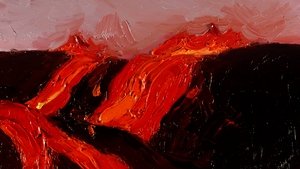
Nuée ardente
2025
Running Fields III
Twenty images of a camera running next to a chemical platform and capturing abstract light throught improvised gestures and asymmetrical motion
2024
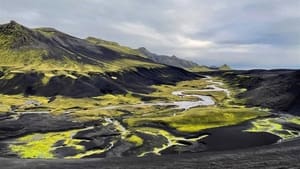
Great natural monuments - Iceland
The fascinating landscape formations of Iceland in the North Atlantic bear witness to the beauty and primal power of nature. They were created through the interaction of powerful volcanic, geological and biological processes that have been changing the face of the earth for billions of years. This is what the Earth might have looked like four billion years ago. Iceland is the realm of ice and fire. Nowhere else is there such a high density of volcanoes. The landscapes, which are continually reshaped by eruptions, make the island a natural laboratory full of clues about the formation and development of the earth. The documentary follows a group of scientists through the most active areas of Iceland, along a mountain range that has emerged from the ocean. On the slopes of the volcanoes, in the fog of the fumaroles and on streams and rivers, the three researchers explore how the first forms of life populated the earth's surface and in what evolutionary steps they took over the earth.
2023

El Niño del Volcán
Joel, an 11-year-old boy, will guide us through the forest of the Popocatépetl volcano and with his childlike wisdom leaves us lessons on a natural life.
2022
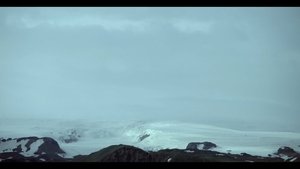
Heimaland
For centuries the inhabitants of the Icelandic village Vík í Mýrdal maintained a mystique relationship with the nearby volcano 'Katla'. Today the tide has turned; the volcano is used to lure tourists and create economic prosperity. In the villagers' search for wealth, they gradually become strangers in their own habitat.
2022
A New Environment Heinrich Klotz on Architecture and New Media
The old world is gone. Our landscape bears scars. Entire cities have been levelled. Is it possible to regenerate the city without covering over the warnings of war’s aggressions? Or can these ruins provide a unique chance to reinvent the city thoroughly? The art historian Heinrich Klotz took precisely these questions, concerning the reconstruction of Germany’s historical districts after World War II, as the departure point of his practice.
2019
One Strange Rock
A mind-bending, thrilling journey exploring the fragility and wonder of planet Earth, one of the most peculiar, unique places in the entire universe, brought to life by the only people to have left it behind – the world’s most well known and leading astronauts. This edit combined episodes one and ten to create a new movie.
2018

Wild Amsterdam
The city from the unique perspective of the many wild animals and plants that inhabit it. Seen through the eyes of the adventurous urban cat, Abatutu.
2018
The Day the Dinosaurs Died
Investigates the greatest vanishing act in the history of our planet - the sudden disappearance of the dinosaurs 66 million years ago.
2017
O Projeto Terra e a Data Limite
In this documentary, Prof. Laércio Fonseca presents facts and connections between cosmology, the universe, The Earth Project and The Planet Deadline according to Chico Xavier. Where did I come from? Where I go? Is the end of the world near? Was Chico Xavier right? Do we have a deadline? Find out the answers to these and other questions in this movie.
2015
Las Vegas Meditation
Florent Tillon takes an anthropological lens to Las Vegas, Nevada. What he finds is some curious new species of Americana. (Dorothy Woodend, DOXA Documentary Film Festival)
2014
The Earth Wins
The Earth Wins explores the delicate balance between man and Mother Earth, our inter-dependence and the impact of man's actions upon the earth and her inhabitants. With music from Coldplay, The Temper Trap, New Order, indigenous musicians, and commissioned choral pieces, The Earth Wins is a visceral experience celebrating the magnificent diversity of the earth's riches and asking the most important questions of all, "How do we save ourselves from causing the planet's destruction?"
2013
Lon Marum
A TV-hour length documentary film depicting the relationship between language, culture, place, music, tradition, and magic on an active volcano, in the Pacific nation of Vanuatu, on the island of Ambrym.
2012
Home
In 200,000 years of existence, man has upset the balance on which the Earth had lived for 4 billion years. Global warming, resource depletion, species extinction: man has endangered his own home. But it is too late to be pessimistic: humanity has barely ten years left to reverse the trend, become aware of its excessive exploitation of the Earth's riches, and change its consumption pattern.
2009
A Global Warning?
Global warming in context. What the climate of the past tells us about the climate of the future.
2007
Encounters at the End of the World
Acclaimed filmmaker Werner Herzog travels to Antarctica, where he finds a desolate, beautiful landscape, largely untouched by human hands, and a group of truly unique people who risk their lives to study it. Centered at McMurdo Station, the United States' largest Antarctic research center, Herzog explores the minds of the scientists willing to abandon civilization and endure volatile conditions to learn more about the continent's wildlife and awe-inspiring natural wonders.
2007
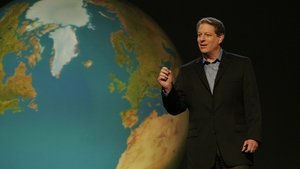
An Inconvenient Truth
A documentary on Al Gore's campaign to make the issue of global warming a recognized problem worldwide.
2006
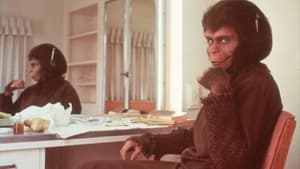
Behind the Planet of the Apes
Roddy McDowall takes you, film by film, from production meetings to make-up sessions, then right onto the movie set to see the actual filming of the science fiction masterpiece. The most comprehensive history of Planet of the Apes ever created, this fascinating 127-minute documentary explores one of the most imaginative and influential series in movie history.
1998
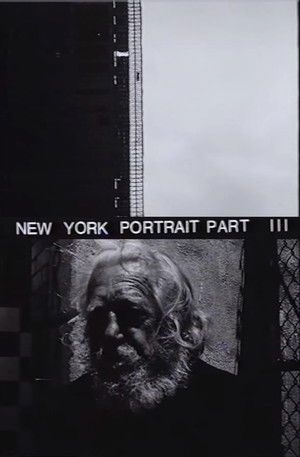
New York Portrait, Chapter III
"[Hutton’s] latest urban film, New York Portrait, Chapter III, takes on a unique tone in relation to Hutton’s ongoing exploration of rural landscape. The very fact that Hutton is dealing with older footage, with archives of memory more than immediacy, gives it a different texture than his earlier New York films. Hutton always found the presence of nature in the city, not only in his many shots of sky and vegetation, but also in the geometry and texture of the city itself, which seemed to project an independence from the human." (Tom Gunning)
1990
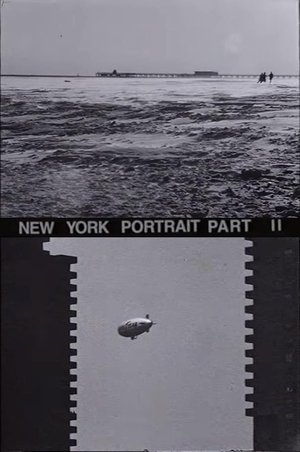
New York Portrait, Chapter II
Chapter Two represents a continuation of daily observations from the environment of Manhattan compiled over a period from 1980-1981. This is the second part of an extended life's portrait of New York.
1981