Watch Vite (1969) Online Free
In 1969, the painter-sculptor Daniel Pommereulle made his third film, this one financed by Sylvina Boissonnas. Although only a short, Vite was one of the most costly of all the Zanzibar productions. It features, for instance, shots of the moon taken by a state-of-the-art telescope, the Questar, that Pommereulle first saw while visiting Marlon Brando in southern California in 1968. In Rohmer’s La Collectionneuse, Pommereulle and his friend Adrien philosophize on how best to achieve le vide (emptiness) during their summer holidays. Three years later, Pommereulle would transform the word “vide” to “vite” (quickly), signifying his profound disenchantment with the aftermath of the revolution of May ’68. —Harvard Film Archive
Cast
Mustapha, Daniel Pommereulle, Charlie Urvois
More Like This

Maine Man
A loop of a guy in Maine hanging out in his room.
2024
Return to Reason: Four Films by Man Ray
An immersion into the surreal and dreamlike world of painter, photographer and filmmaker Man Ray (1890-1976), one of the most prolific American visual artists, through four of his short films, brought to life by the atmospheric music of SQÜRL.
2024
Seasonal Concerns
A triple exposure on EXR 50D 16mm film: two layers shot in summer, and the third captured on the cusp of winter. A collection of statues fading in and out of consciousness, around the Weissensee lake in northeast Berlin, where the filmmaker lives.
2024
Three Mirrors Creature's Flashes of Flesh
In the aftermath of an emotional shock, a ruthless high-class manager faces her own abyss, becomes pervaded by a sensory spirit and undertakes a purifying voyage.
2023
Blows of Wind
You're waiting,aren't you?
2023
The death of the minotavr
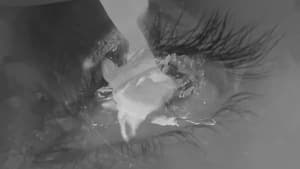
The death of the minotavr talks about the concept of the heroine's journey. Suffering, horror and exhaustion lead the protagonist to a process of transformation, abyss and expiation, because only murdering to minotaur and everything he represents is possible to return to life. From the female gaze, it shows the depth of the emotional wounds caused by domestic violence; the same one that the surrealist Dora Maar lived and that ask why, as a society, instead of killing the minotaur, we blindly continue to send him women only to be devoured and ask them why they simply did not fight, why they did not try get out of the labyrinth.
2022
A Man from Manchuria
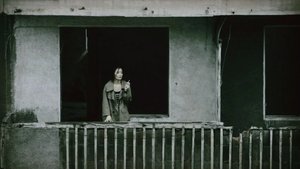
The story tracks the unhealthy and abusive relationship between an unnamed man and his wife in the days following his return to north eastern Tangshan. He's coming back to her as a wanted fugitive for a series of rapes and murders.
2015

Everlasting Love
Each day after work, Carlos, a language school teacher, frequents the heady surroundings of his local cruising ground. One evening he encounters a teenage boy from his class named Toni, and the two engage in a brief sexual tryst. As the relationship between teacher and student begins to develop, some dark truths emerge about the young man and his mysterious group of friends.
2014

60 Seconds of Solitude in Year Zero
An anthology of one-minute films created by 51 international filmmakers on the theme of the death of cinema. Intended as an ode to 35mm, the film was screened one time only on a purpose-built 20x12 meter public cinema screen in the Port of Tallinn, Estonia, on 22 December 2011. A special projector was constructed for the event which allowed the actual filmstrip to be burnt at the same time as the film was shown.
2011
Me, Myself, and My Third Eye: 4 Enlightened Stories For 1 Imperfect God
Features four distinct, bizarre, existential tales about people whose lives are in transition, who are each asking questions about themselves, their environments, and about God(s).
2010
About Buenos Aires
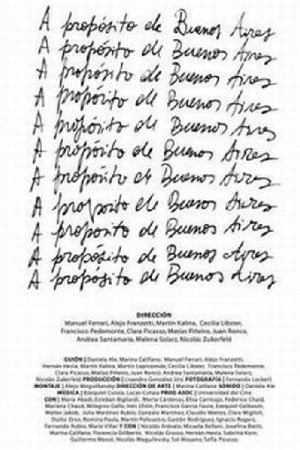
Eleven young film-makers got together to collaborate in this atypical project. Atypical not only because of its technical specs, but because of its narrative structure. There are several scenes with only the city in common, and more as a conceptual presence at that than as a precise geography. None of those scenes contains a single "story": Each one of them is part of a larger situation that we cannot see, as though the beginning and end of each "story" had to be filled in by the audience.
2006

Kshya Tra Ghya
A stream of mysterious rituals and symbols are encountered as a young boy journeys to school in the fantastical world of Kshya Tra Ghya.
2004
Assassination
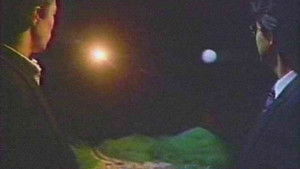
"Assassination" - Adaptation of Hermann Hesse's novel "Demian". A young man's detachment from and revolt against the superficial ideals of the world of appearances and eventually awakens into a realization of self. Max Demian is his childhood friend and mentor.
1996
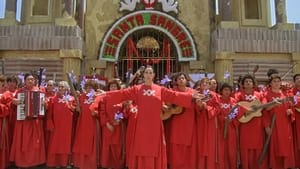
Santa Sangre
A former circus artist escapes from a mental hospital to rejoin his armless, cult leader mother, and is forced to enact brutal murders in her name.
1989
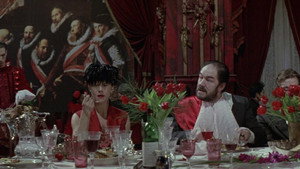
The Cook, the Thief, His Wife & Her Lover
When churlish mobster Albert Spica acquires an upscale French restaurant in London, he dines there nightly, effectively scaring off the clientele with his bad manners. His wife, Georgina, is especially disgusted by him, and soon begins an affair with regular guest Michael. Despite their best efforts to keep it secret, Spica learns about their trysts, and he plots a terrible revenge.
1989
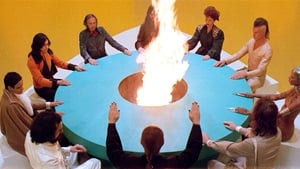
The Holy Mountain
The Alchemist assembles together a group of people from all walks of life to represent the planets in the solar system. The occult adept's intention is to put his recruits through strange mystical rites and divest them of their worldly baggage before embarking on a trip to Lotus Island. There they ascend the Holy Mountain to displace the immortal gods who secretly rule the universe.
1973
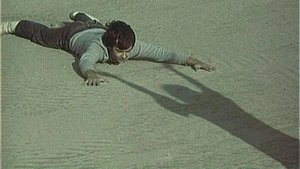
The First Murder
Based on the novel "Šta bi učinio Zobec?" (What Would Zobec Do?) by Svetozar Vlajković. It's a short movie about a young man who is afraid of being turned down by a girl.
1972
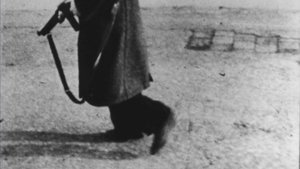
Same Player Shoots Again
Sequence of five shots, each one with a particular color treatment, in which a man carrying a machine gun runs. He moves fast in the beginning but, as the end comes closer, he starts to walk in zigzag. Is he hurt?
1968
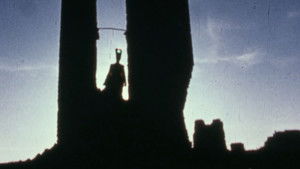
The Illiac Passion
Prometheus, on an Odyssean journey, crosses the Brooklyn Bridge in search of the characters of his imagination. After meeting the Muse, he proceeds to the "forest." There, under an apple tree, he communes with his selves, represented by celebrated personages from the New York "underground scene" who appear as modern correlatives to the figures of Greek mythology. The filmmaker, who narrates the situations with a translation of Aeschylus' Prometheus Bound, finds the personalities of his characters to have a timeless universality.
1967
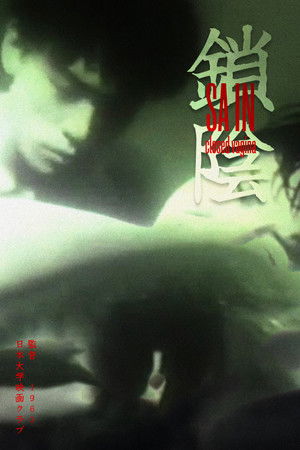
Closed Vagina
Adachi's follow-up to Bowl using the figure of a woman suffering from an unusual sexual aliment has often been taken as a controversial allegory for the political stalemate of the Leftist student movement after their impressive wave of massive fiery protests failed to defeat the neo-imperialist Japan-US Security Treaty. The ritualistic solemnity of the charged sexual scenes contribute to the oneiric qualities of Closed Vagina which Adachi would later insist was an open work, not meant to deliver any kind of deliberate political message. - Harvard Film Archive
1963