Watch Vesuvius: Deadly Fury (2002) Online Free
On the 24th August 79 AD, the eruption of Vesuvius eradicated the cities of Pompeii and Herculaneum. This extraordinary film uses visual effects and archaeological findings to chronicle the last 24 hours of Pompeii. Remains of 300 citizens trapped in beach-side crypts allow scientists to reconstruct local life in the First Century after Christ. Computer graphics recreate the scale of the eruption.
Cast
Andrew Wallace-Hadrill
More Like This
Bombing Pompeii
2023
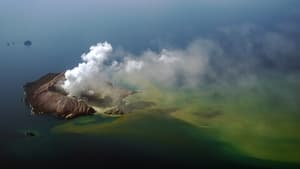
The Volcano: Rescue from Whakaari
A close examination of the Whakaari / White Island volcanic eruption of 2019 in which 22 lives were lost, the film viscerally recounts a day when ordinary people were called upon to do extraordinary things, placing this tragic event within the larger context of nature, resilience, and the power of our shared humanity.
2022
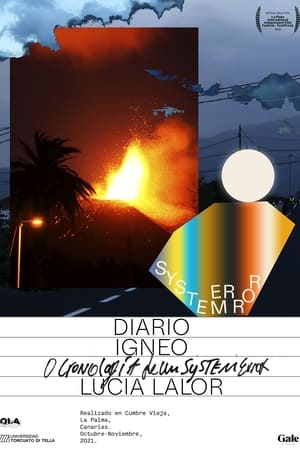
Igneous Journal or Chronology of a System Error
The 19th of September of 2021 the volcanic ridge of Cumbre Vieja, on the island of La Palma started erupting. This eruption lasted until the 13th of December of 2021. Lucía and two other filmmakers decided to travel and register the volcano. This is the journal of the first two days, based on the camera errors and casual conversations that were on the footage: Bad focus, being sleepy, journalists not knowing how to name the eruption, instagram, the crunch of Pringles fries, glutamato monosodico, the radio fluctuating between Prince and Elvis, selfies with the volcano, plans for illegal stuff and the seconds before a final system error.
2022
Supervolcan Yellowstone : Menace sur la planète ?
2022
Heimaland
For centuries the inhabitants of the Icelandic village Vík í Mýrdal maintained a mystique relationship with the nearby volcano 'Katla'. Today the tide has turned; the volcano is used to lure tourists and create economic prosperity. In the villagers' search for wealth, they gradually become strangers in their own habitat.
2022
Fire of Love
A doomed love triangle between intrepid French scientists Katia and Maurice Krafft, and their beloved volcanoes.
2022

Pompeii: The Origins
For the first time, and thanks to new archaeological excavations, this documentary reveals how Pompeii, the pride of its builders, developed, from its origins at the end of the seventh century BC until the eruption of Vesuvius in 79 AD. The use of CGI and 3D mapping provides a very clear view of this ancient superstructure and eight centuries of urban evolution. We will revive this great historical fresco through accounts by international archaeologists and historians. Pompeii: The Origins is a journey to the heart of an ancient ‘motion designed’ city.
2022
Pompeii: Sin City
A story about one of the most famous and mysterious archaeological sites in the world.
2020
Surviving the Mount St. Helens Disaster
The 1980 eruption of Mount St. Helens was the deadliest in U.S. history. Survivor testimonies and rare images reveal the cataclysms it unleashed.
2020
Réunion le volcan rouge
2018

Pompeii: New Secrets Revealed with Mary Beard
With unparalleled access to Pompeii and featuring cutting-edge modern technology, Mary Beard guides us through this amazing slice of the ancient world.
2013

Mount St. Helens: 30 Years of Change
A look at the people, history, and recovery of the mountain since the eruption in 1980.
2011
Sex in the Ancient World
In the beginning was sex. To the ancient cultures, sexuality, love and sex were inextricably connected with the creation of the earth, the heavens and the underworld. To the citizens of the ancient civilizations that gave birth to ours, sensuality and sexuality were an integral part of society. This series exploration of Egyptian and Roman sexual practice allows viewers the opportunity to see how attitudes and beliefs about sexuality functioned in the early civilizations, and how those attitudes reveal the unspoken rules that defined public and private behavior. Episodes cover human sex and sexuality from a historical perspective, and examines in detail different texts and images which provide us with evidence about sexual practices, beliefs and ideologies in the ancient world – from erotica on pots to legal texts, phallic votive objects, fertility ceremonies, prostitution, female and hermaphroditic creator deities, from religious rituals to sex manuals.
2009
Ring of Fire
Ring of Fire is about the immense natural force of the great circle of volcanoes and seismic activity that rings the Pacific Ocean and the varied people and cultures who coexist with them. Spectacular volcanic eruptions are featured, including Mount St. Helens, Navidad in Chile, Sakurajima in Japan, and Mount Merapi in Indonesia.
1991
Qâf: The Sacred Mountain
Footage of a volcano eruption in Madagascar set to music by Klaus Schulze, Popol Vuh and Tangerine Dream, and poems by Raficq Abdulla.
1985
Pink Floyd: Live at Pompeii
British progressive rock band Pink Floyd perform at the ancient Roman Amphitheatre in the ruins of Pompeii, Italy in 1971. Although the band perform a typical live set from the era, there is no audience beyond the basic film crew.
1972
The Last Days of Pompeii
Glaucus, a demobilized centurion returns home to Pompeii to find his father murdered by a gang of black-hooded Christian robbers that terrorizes the city and he decides to investigate the matter while the nearby volcano threatens to erupt.
1959

The Last Days of Pompeii
In Pompeii in the year 79, Lycias and Helen fall in love. Helen's guardian, the high priest of Isis, wants to separate them. To do so, he tries to make Lycias drink a love potion, but a young slave threatens to reveal everything. The high priest, unable to silence her, kills her and arranges to have Lycias accused...
1950
The Last Days of Pompeii
Carmine Gallone and Amleto Palermi’s The Last Days of Pompeii 1926 stages in sumptuous colour tinting the epic fall of the ancient city buried by Mount Vesuvius’ eruption. Adapted from Edward Bulwer-Lytton’s love story, the film was innovative in its special effects and an early major box-office hit. A beautiful tinted restoration print was prepared using photochemical processes by Centro Sperimentale di Cinematografia-Cineteca Nazionale in the mid-1990s and the premiere screening of the restoration print was held in the amphitheatre in Pompeii, followed by a screening at the major restoration festival ‘Il Cinema Ritrovato’ in Bologna in 1998.
1926
The Last Days of Pompeii
Pompeii 79AD, mere days before the Vesuvian eruption. Glaucus and Jone are in love with each other. Arbaces, the Egyptian High Priest, is determined to conquer Jone. Glaucus purchases Nydia, the blind and long-suffering slave. Nydia falls in love with Glaucus and asks Arbaces for his help. He gives her a potion to make Glaucus fall in love with her-- In fact, a poison which will cause violent insanity.
1908