Watch Under Pressure: How Free Are Europe's Media? (2025) Online Free
How free and independent is the press in Europe? In recent years, multiple crises and the rise of authoritarianism have put pressure on journalists. We take a look at these countries, where aggression towards the media seems to be undermining the very idea of democracy.
Cast
Scott Griffen
More Like This
Democracy Under Siege
The sharp wit and insightful art of Pulitzer Prize-winning cartoonist Ann Telnaes to examine the challenges confronting US democracy ahead of the 2024 presidential election.
2024
Fracking the System: Colorado's Oil and Gas Wars
Fracking the System is a political thriller documentary from the front lines of climate justice activism in Colorado. When a fracking mega-site gets moved from a White neighborhood to a BIPOC neighborhood, a concerned mother fights to try and stop it. This is an investigative exposé about the harms of fracking, the lengths to which the government is complacent with industrial pollution, and the nefarious tactics that the oil and gas industry uses to undermine democratic elections.
2024

The ABCs of Book Banning
In recent years, more than 2,500 books have been removed from school districts around the US, labeled as banned, restricted, or challenged, and made unavailable to millions of students. By no accident, the themes targeted are the usual scapegoats of the American Right—LGBTQ+ issues, Black History, and women’s empowerment—impeding the power of future generations to develop their own thoughts and opinions on critical social issues. By weaving together a lyrical montage of young readers and authors, THE ABCs OF BOOK BANNING reveals the voices of the impacted parties, and inspires hope for the future through the profound insights of inquisitive youthful minds.
2024
God & Country: The Rise of Christian Nationalism
Examines the implications of Christian Nationalism, how it distorts not only our constitutional republic, but Christianity itself, and asks the question: What happens when a faith built on love, sacrifice, and forgiveness grows political tentacles, conflating power, money, and belief into hyper-nationalism?
2024
Les Scandales de « La Religieuse »
Released in 1796 posthumously, The Nun, a novel that Diderot did not dream of publishing during his lifetime, as he knew it to be revolutionary, caused the same explosion in the 19th century France as in that of the 1960s, when Jacques Rivette decided to adapt it, with Anna Karina in the title role. “This film is banned and it will remain so!” said the General de Gaulle. Exploration of an indictment of incredible modernity which, through the tragedy of the young Suzanne, locked up in the convent against her will, denounces the inequity of a society denying women all moral, political and sexual freedom.
2023
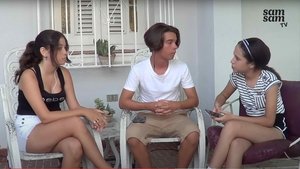
Leysi over media in Cuba
2023
CORONA.FILM - Prologue
As the first part of our investigation, the CORONA.FILM prologue will delve into the science behind the pandemic. Starting at the very beginning, we shine a light on the responses. The aim is not to point the finger; our aim is to tell the whole story in all its complexity, as we believe that justice cannot prevail if only one side of the story is told.
2021
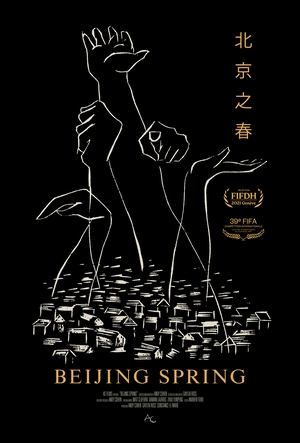
Beijing Spring
The documentary film of the brief window of artistic freedom and democracy movement 1978 - 1982 following China's brutal cultural revolution.
2021

Nous ne sommes rien, soyons tout !
2020
Strike or Die
In October 1995, Forbach witnessed one of the most violent strikes in the history of contemporary France. A thousand or so miners took to the streets for a merciless struggle against a reform in their rights. Twenty years after the mines shut down, people’s will to fight is still alive, just hidden away somewhere.
2020
Book Hunters
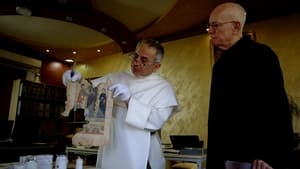
When chaos reigns, while barbaric and fanatical rulers, both ecclesiastical and secular, systematically burn entire libraries, book hunters, secret heroes of history, travel the world saving and copying texts, threatened by the madness of censors, with the noble purpose of preventing the ultimate loss of human knowledge.
2017
Històries de Bruguera
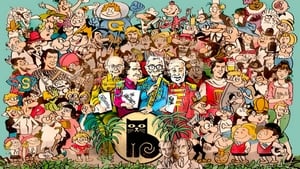
The history of Bruguera, the most important comic publisher in Spain between the 1940s and the 1980s. How the characters created by great writers and pencilers became Spanish archetypes and how their strips persist nowadays as a portrait of Spain and its people. The daily life of the creators and the founding family, the Brugueras. The world in which hundreds of vivid colorful paper beings lived and still live, in the memory of millions, in the smile of everyone.
2012
In the Lost City
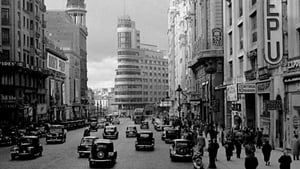
The city of Madrid as it appears in the Spanish films of the 1950s. A small tribute to all those who filmed and portrayed Madrid despite the dictatorship, censorship and the critical situation of industry and society.
2009
Orange Revolution
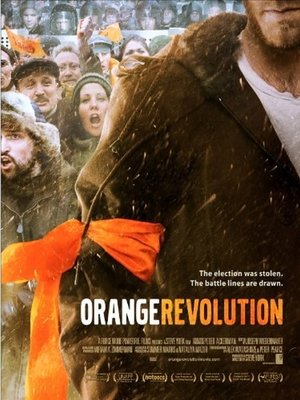
Filmmaker Steve York explores the controversial 2004 Ukrainian presidential election, during which candidate Viktor Yushchenko suffered a near-fatal poisoning and his unpopular opponent, Viktor Yanukovych, was declared the winner. In the aftermath, more than a million people -- including the ailing Yushchenko -- took to the streets of Kiev, protesting the results that contradicted exit polls showing Yushchenko with an impressive lead.
2007

This Film Is Not Yet Rated
Kirby Dick's provocative documentary investigates the secretive and inconsistent process by which the Motion Picture Association of America (MPAA) rates films, revealing the organization's underhanded efforts to control culture. Dick questions whether certain studios get preferential treatment and exposes the discrepancies in how the MPAA views sex and violence.
2006
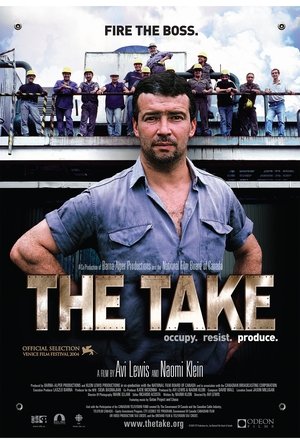
The Take
In suburban Buenos Aires, thirty unemployed ceramics workers walk into their idle factory, roll out sleeping mats and refuse to leave. All they want is to re-start the silent machines. But this simple act - the take - has the power to turn the globalization debate on its head. Armed only with slingshots and an abiding faith in shop-floor democracy, the workers face off against the bosses, bankers and a whole system that sees their beloved factories as nothing more than scrap metal for sale.
2004

The Corporation
Since the late 18th century American legal decision that the business corporation organizational model is legally a person, it has become a dominant economic, political and social force around the globe. This film takes an in-depth psychological examination of the organization model through various case studies. What the study illustrates is that in the its behaviour, this type of "person" typically acts like a dangerously destructive psychopath without conscience. Furthermore, we see the profound threat this psychopath has for our world and our future, but also how the people with courage, intelligence and determination can do to stop it.
2003
Mr. N's Cutouts
The subject of the film is censorship in the broadest sense, and the narrator and guide of this story is the non-existent Mr. N. - a limited, though not humorous dignitary-censor. His inner monologue gives the whole film a certain course, and also "gives credibility" to the statements of artists, critics and officials of the time. In the documentary, almost all the prominent directors, screenwriters and critics of the post-war 50 years speak about artistic freedom and its restriction. We listen to Czesław Miłosz, Jerzy Stefan Stawiński, Janusz Morgenstern, Maria Kaniewska, Kazimierz Kutz, Janusz Głowacki, Feliks Falk, Wojciech Marczewski, Marek Piwowski, Janusz Kijowski, Wiesław Saniewski, Marek Ryszard Groński and Krzysztof Zanussi. There were also reviewers: Krzysztof Teodor Toeplitz and Zdzislaw Pietrasik.
2002
Princess Diana: The Mourning After
In "Diana: The Mourning After" Christopher Hitchens sets out to examine the bogusness of "a nation's grief", tries to uncover the few voices of sanity that cut against the grain of contrived hysteria. His findings suggested that the collective hordes of emotive Dianaphiles sobbing in the streets were not only encouraged but emulated by the media. In the aftermath of Diana's death a three-line whip was enforced on newspapers and on TV, selling the sainthood line wholesale. The suspicion was that journalists, like the public, greeted the death as a chance to wax emotional in print, as a change from the customary knowing cynicism, to wheel out all those portentous phrases they'd been saving up for the big occasion. Sadly, they just seemed to be showboating; the eulogies, laments and tear-soaked platitudes ringing risibly hollow.
1998
Primary
Primary is a documentary film about the primary elections between John F. Kennedy and Hubert Humphrey in 1960. Primary is the first documentary to use light equipment in order to follow their subjects in a more intimate filmmaking style. This unconventional way of filming created a new look for documentary films where the camera’s lens was right in the middle of what ever drama was occurring. Preserved by the Academy Film Archive in partnership with The Film Foundation in 1998.
1960