Watch Treno di parole - Viaggio nella poesia di Raffaello Baldini (2018) Online Free
The œuvre of poet Raffaello Baldini (1924-2005) through the words of those who knew him, the poems he himself read, the fragments of his monologues, his beloved Romagna landscapes.
Cast
Ivano Marescotti, Gigio Alberti, Ermanno Cavazzoni, Gianni Fucci, Ermanna Montanari, Marco Martinelli, Lucia Vasini
More Like This

Vegetarians, The Great Odyssey
A documentary that uncovers the rich, global history of vegetarianism—from ancient Indian Jains and Roman philosophers to Victorian activists and modern hippies—revealing how dietary choices have long challenged humanity’s relationship with the world, shaped by ideals, conflict, and visionary thinkers.
2025
Running Fields III
Twenty images of a camera running next to a chemical platform and capturing abstract light throught improvised gestures and asymmetrical motion
2024

Running Fields II
Fifteen images of a camera running in a park and in obscurity searching the space of light through distorsion and the sensory of rapid motion.
2024

Terra incognita
2024
Running Fields
Three images of a person running in the void through the movement of speed and abstract images
2024
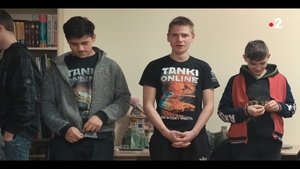
Younost, une jeunesse russe
2024
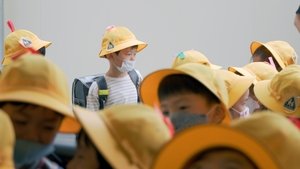
The Making of a Japanese
Intimately following 1st and 6th graders at a public elementary school in Tokyo, we observe kids learning the traits necessary to become part of Japanese society.
2024
Polvere in Sala
2023
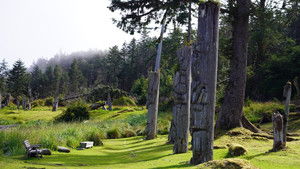
The Haida in Canada
Haida Gwaii, an archipelago off the west coast of Canada, is home to Skil Jaadee and her family. They live in harmony with nature and have made it their mission to save their language and preserve their history.
2022
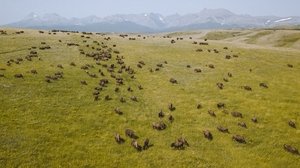
Inhabitants
For millennia, Native Americans successfully stewarded and shaped their landscapes, but centuries of colonization have disrupted their ability to maintain their traditional land management practices. From deserts, coastlines, forests, mountains, and prairies, Native communities across the US are restoring their ancient relationships with the land. As the climate crisis escalates these time-tested practices of North America's original inhabitants are becoming increasingly essential in a rapidly changing world.
2021
Wonder of the Century
2019
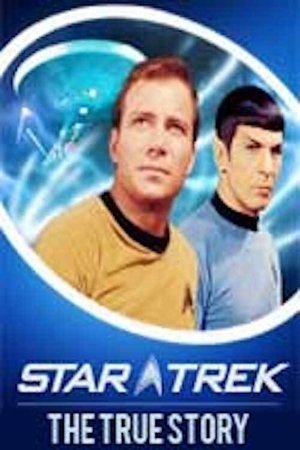
Star Trek: The True Story
Documentary covering the current state of both the theoretical and practical development of the various scientific basic principles that served, as per Gene Roddenberry's dictum, as a believable basis at the time for The Original Series. Several real-world scientists are interviewed, not a few of them unabashedly admitting they went into their chosen field of profession because of Star Trek: The Original Series.
2013
Fuck
A documentary on the expletive's origin, why it offends some people so deeply, and what can be gained from its use.
2006

This Film Is Not Yet Rated
Kirby Dick's provocative documentary investigates the secretive and inconsistent process by which the Motion Picture Association of America (MPAA) rates films, revealing the organization's underhanded efforts to control culture. Dick questions whether certain studios get preferential treatment and exposes the discrepancies in how the MPAA views sex and violence.
2006
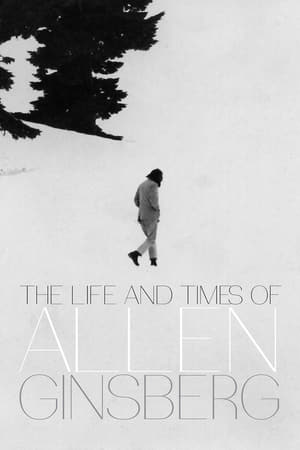
The Life and Times of Allen Ginsberg
Visionary, radical, spiritual seeker, renowned poet, founding member of a major literary movement, champion of human rights, Buddhist, political activist and teacher. Extensive archival footage, interviews, and home movies cover Allen Ginsberg's life, activism, and influence on American culture through the Beat era, the 1960s, and beyond.
1994
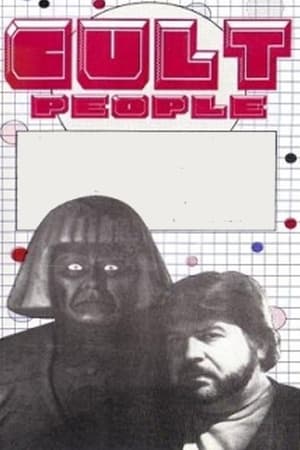
Cult People
In interviews, various actors and directors discuss their careers and their involvement in the making of what has come to be known as "cult" films. Included are such well-known genre figures as Russ Meyer, Curtis Harrington, Cameron Mitchell and James Karen.
1989
The Society of the Spectacle
Guy Debord's analysis of a consumer society.
1974

In Memory of Rock
The rock-wild youth of the 1960s during the apparitions of their idols.
1963
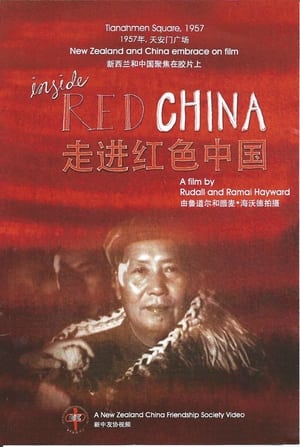
Inside Red China
October 1st, 1957. Dusk descends on Tiananmen Square, Peking. Fireworks crackle light across the night sky, above a city alive with National Day festivities and celebrations. Two intrepid New Zealand film-makers - Rudall and Ramai Te Miha Hayward - are there, documenting the life and times of communist China. The distinction of being the first English speaking foreigners to film unfettered in communist China was significant. The invitation to visit China was facilitated through the New Zealand China Friendship Society. They filmed in Canton, Shanghai, Peking (Beijing) and Wuhan. It was a small window of opportunity for Westerners to gaze on a country that was largely a mystery to the outside world since 1949. The unfortunate irony was that two of the documentaries; “Wonders of China”, and “Inside Red China”, were considered to be communist propaganda, and were not distributed outside of New Zealand.
1958

The Chaplain & the Doctor
Frustrated by watching Black patients suffer due to end-of-life healthcare inequities, two determined allies – a chaplain and a doctor – work to transform a broken medical system, one patient at a time.