Watch TOUTES DIRECTIONS (2017) Online Free
A road trip in the truest sense: shifts, irritations, motion at the levels of image and sound, in all directions. Like a distillate of a “best-of” road movie, Billy Roisz and Dieter Kovačič condense cinema to pure trip – moving past colorful image surfaces that fluctuate between abstraction and depiction.
More Like This
Amor
Landscapes revealed themselves through text, paper through movement, while the sun gave them relief. This is a journey across found words, enunciating a discovery, their textures constructing the sea and the waves, in a travelogue from the first exploration, the first step over the sand towards the shore. “Amor” writes this joy to underline it in its time, captured on paper. This film has been composed through a scanner, and it’s the first chapter of the “Reír al Sol” series.
2025
The Hypergaussian Wars
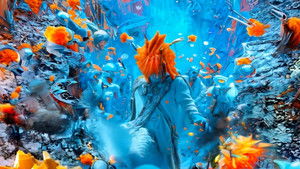
The Hypergaussian Wars is an AI-generated feature-length audiovisual work exploring algorithmic warfare, obsolete media and the transformation of images through repetition, saturation and collapse. Built from thousands of generated images, synthetic landscapes and references to 14th–16th century painting, the film stages a continuous conflict between historical visual culture and contemporary computational systems. Fragments of obsolete video games, ruined architectures, military simulations and post-human figures circulate through increasingly unstable environments. Rather than telling a linear story, the film operates as an image system in which visual excess progressively erodes meaning. The Hypergaussian Wars reflects on memory, obsolescence, artificial intelligence and the persistence of images after their original function has disappeared.
2025
A Bunch of Questions With No Answers
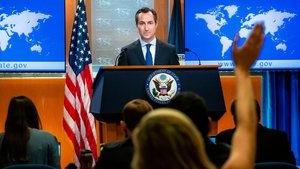
A Bunch of Questions with No Answers (2025) is a 23-hour film by artists Alex Reynolds and Robert M. Ochshorn. Compiled entirely from questions posed by journalists at U.S. State Department press briefings between October 3, 2023, and the end of the Biden administration, the work removes the officials’ answers, leaving only the unresolved demands for clarity and accountability.
2025

Swinging Light
An experience of a camera swinging in different gestures facing the optical distortion of the Sun. The last appearance of the smudge.
2025
Running Fields III
Twenty images of a camera running next to a chemical platform and capturing abstract light throught improvised gestures and asymmetrical motion
2024

Running Fields II
Fifteen images of a camera running in a park and in obscurity searching the space of light through distorsion and the sensory of rapid motion.
2024
Las Preguntas que Perdimos
2023
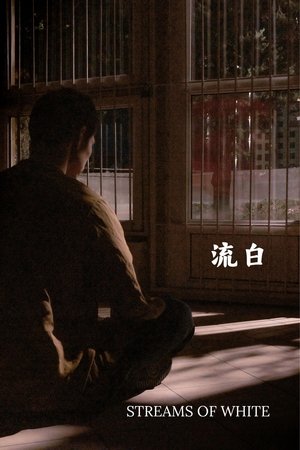
Streams of White
A sitting man listens to his thoughts, but can't catch any of them.
2023
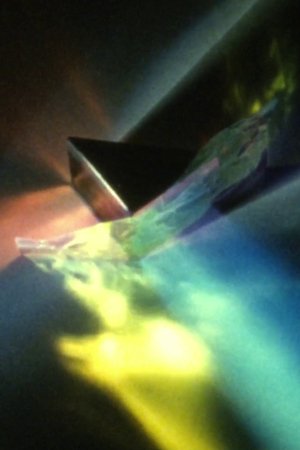
Fluid Fragments
A roll and a half made to delight in color and the presence of friends. Steps toward learning to read in the dark.
2023
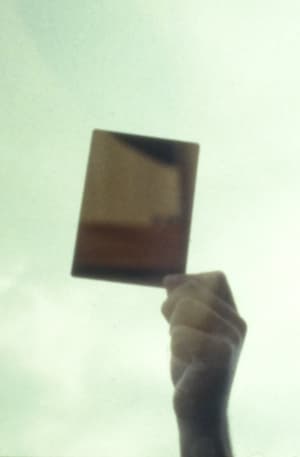
Sightreading
"My first 16mm, Sightreading, was shot in August 2022 in Minneapolis and Chicago. It uses images from three sources: black mattes held in front of the sky near my parents’ house which were filmed and edited in-camera to a metronome; my friends drinking wine and discussing The Bachelor in their Chicago apartment; and details of a Breughel painting filmed from a television." -NC
2023
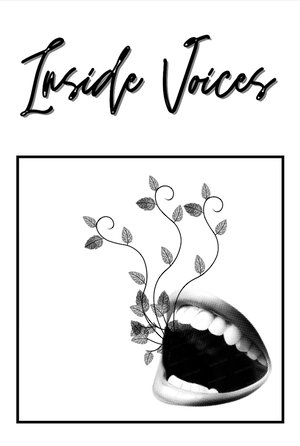
Inside Voices
A short experimental film about the human race taking over nature.
2023

Title 18
An experimental short film made as part of a multi-media triptych, originally screened alongside a fashion collection and an art-installation. Drawing from Papa Yorick’s (Director and fashion designer) thesis “Men Are My Cumrag”, the film reenacts eight mainstay gay porn scripts, incorporating and parodying tropes and clichés, that explore masculine identities within the gay porn industry, through a satirical and critical lens.
2022
Beautiful Solution
The film poem about pesticides reflects on the return to the natural food chain, in which insect pest serve as food for the higher order. The harmonic cycle of life and death, the temple that is the wildflower field resounding with the inebriating sound of crickets chirping and wheat spikes rustling in the wind, is invaded by the human, the ultimate consumer with no natural predator.
2021

Grid
A ritual of grids, reflections and chasms; a complete state of entropy; a space that devours itself; a vertigo that destroys the gravity of the Earth; a trap that captures us inside the voids of the screen of light: «That blank arena wherein converge at once the hundred spaces» (Hollis Frampton).
2021
Phantom Islands
Phantom Islands is an experimental film that exists at the boundary of documentary and fiction. It follows a couple adrift and disoriented in the stunning landscape of Ireland’s islands. Yet this deliberately melodramatic romance is constantly questioned by a provocative cinematic approach that ultimately results in a hypnotic and visceral inquiry into the very possibility of documentary objectivity.
2018
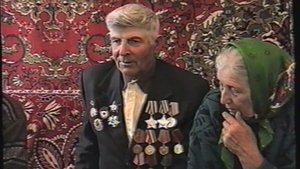
Den Pobedy: Victory Day
"Den Pobedy" (Victory Day) is counted among the most important celebrations for many former Soviet Republics. It is held on May 9 and commemorates the victory of the USSR over Nazi Germany in the Great Patriotic War (1941-1945). This day pays homage to the war veterans and to the over 26 million Soviets who lost their lives fighting this war. Kalinichenko Vasily Porfirievich fought in the Red Army on the 3rd Ukrainian Front and on the 1st Belarusian Front. As a member of the 226th Infantry Regiment he entered Berlin on April 22, 1945. This documentary explores the war, his life and his family story.
2015
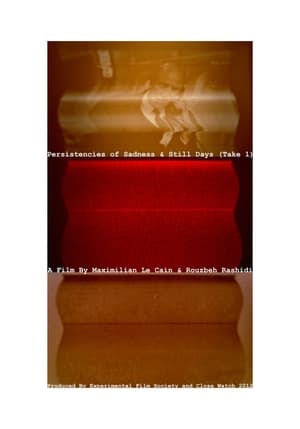
Persistencies of Sadness & Still Days (Take 1)
“Persistencies of Sadness & Still Days”, is a four hour feature film by Maximilian Le Cain and Rouzbeh Rashidi. Structured in two sections or ‘takes’ of two hours each, this dream-like, experimental project offers two complementary explorations of cinematic form that skirt around possible narratives, ducking through a series of fluctuating audio-visual categories and intensities.
2012
Reflecting Thought: Stan Brakhage
Stan Brakhage is a film maker whose work is shown mainly at film festivals. His work has been likened to poetry. Brakhage explains his techniques and his motivation.
1985
EXILE
An immigrant's last attempt to restore childhood innocence on strange lands.

Emergency: The Living Theatre
a 32-minute color film by Gwen Brown, featuring precious footage of Living Theatre productions “Mysteries” and smaller pieces, “Paradise Now” and “Frankenstein.” “The fusion of Brown’s freewheeling direct cinema and the Living Theatre’s performance for revolutionary change (amidst the heydays of both) unite as a dynamic concoction of the era, yielding for the viewer a shifting terrain of both critical insight and ecstatic zeal, not as a vacant nostalgia for a pre-commodified radicality, but as tactical inspiration for future days.” – Andrew Wilson (Artist’s Access Television)
1968