Watch There's No Fish in Lake Michigan Online Free
There's No Fish in Lake Michigan is a short documentary exploring salmon's surprising presence in Chicago and the communities, industries, ecology, and history surrounding it. Made by Allegra Hatem, Macallister Rescorl, and Joshua Silver.
More Like This
She Fishes
A local fisherwoman navigates her way through a male dominated environment to work in an industry that has been essential to island life for hundreds of years.
2025

Leo from Chicago
The Vatican media documentary about the roots of Robert Francis Prevost in his native United States. It follows an itinerary that begins with his childhood in Dolton, through the memories of his brothers Louis and John, and continues among schools and universities, communities and parishes, featuring the voices of confreres, teachers, classmates, and longtime friends. A production of the Vatican Dicastery for Communication, in collaboration with the Archdiocese of Chicago and the Apostolate El Sembrador Nueva Evangelización (ESNE), broadcast on the official channels of Vatican Radio – Vatican News.
2025
Free Fish
Free Fish is a short documentary filmed over the course of a year in Gaza, following two brothers — Abu Nagham and Ahmad — separated by war yet connected by the sea. Displaced from their home, Abu Nagham now lives in a tent in the south, fishing with his young nephew Rami, who lost his twin brother. Ahmad remains in the north, fishing amid ruins and occupation. Once a source of livelihood and freedom, the sea has become a battleground — heavily restricted, constantly watched, and always dangerous.
2025
Camera Roll 3 (2018-2022)
The third iteration of a continuing diary film. Five years and one roll of film distilled into three and a half minutes. The filmmaker captures a distinct period in their life, living and moving from Ithaca, New York to Chicago, experiencing and exiting the pandemic, seeing friends and taking road trips. Sound captured separately on a micro cassette recorder between 2019-2022.
2023
Kristallklar - A Fly Fishing Short Film
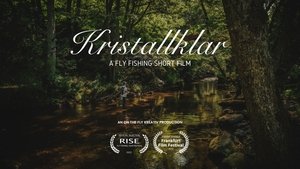
Kristallklar tells the tale of a hidden river holding wild brown trout near the border of Luxembourg and Germany. Find out about this magical river from the perspective of Kirill, who recently acquired the lease to the fishing rights of the river and a small tributary thereof. It captures the essence of a fly fishing adventure on the river embarked on by the incredibly passionate Kirill and two companions: Nic, a fly fishing scientist and Simon, the filmmaker. The film tries to capture the feeling of the magnificent surroundings and being at peace on the river. It also delves into topics of conservation of nature and the plans to re-stock the river with native crayfish which vanished from the river. A lot of love went into this film the hope is that it inspires those around the world to find a love for the outdoors and to preserve it for many years to come and just to get out there and fly fish.
2022
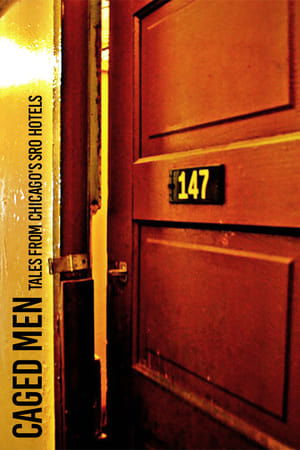
Caged Men: Tales from Chicago's SRO Hotels
Caged. Invisible. Shamed. Trapped. These words mark the tenants, clerks and even the owners of Chicago's last remaining Singe Room Occupancy (SRO) hotels. These small spaces are home for many at the bottom of Chicago's housing ladder. Cloaked in darkness and secrecy, these hotels are often maligned as drug dens and havens for prostitution but the people who live, work and own these hotels have never fully shared their stories. Caged Men is a feature-length documentary which examines the disquieting stories of near-homeless Americans living on the margins and their invisibility in a largely indifferent and, at times, hostile community. It attempts to lend a voice to SRO residents, clerks, owners and to the hotels themselves.
2017

Vera Klement: Blunt Edge
As her 80th birthday is approaching, Vera Klement, an oil painter in Chicago, adamantly starts yet another new figure painting: a portrait of an artist under oppression, an homage to Russian composer, Dmitri Shostakovitch.
2010
Disney: Through the Looking Glass
Tito del Amo, a passionate 72-year-old researcher, takes the final step to unravel the enigma about the alleged Spanish origin of the American cartoonist Walt Disney, making the same journey that his supposed mother made to give him up for adoption in Chicago. A journey that begins in Mojácar, Almería, Spain, and ends in New York. An exciting adventure, like Alicia's through the looking glass, to discover what is truth and what is not, with an unexpected result.
2010
Radical Disciple: The Story of Father Pfleger
The story of Catholic iconoclast Michael Pfleger who made it his mission to transform the drug ravaged south side Chicago community surrounding his parish. In so doing, Father Mike has run directly into conflict with the local Catholic hierarchy. The film explores issues of racism, the power of the media, and the tension between Pfleger's 'gospel of the streets' versus traditional Church theology.
2009
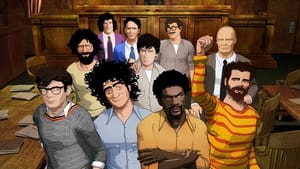
Chicago 10
Archival footage, animation and music are used to look back at the eight anti-war protesters who were put on trial following the 1968 Democratic National Convention.
2008
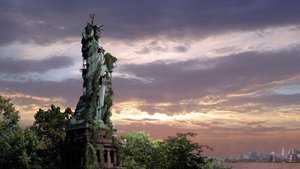
Life After People
In this special documentary that inspired a two-season television series, scientists and other experts speculate about what the Earth, animal life, and plant life might be like if, suddenly, humanity no longer existed, as well as the effect humanity's disappearance might have on the artificial aspects of civilization.
2008
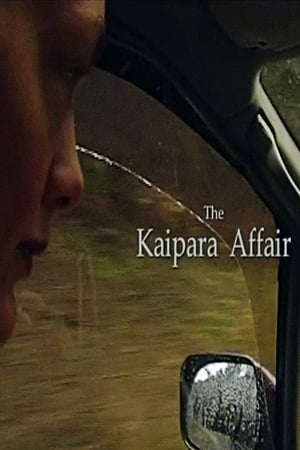
The Kaipara Affair
A documentary about the threat posed to New Zealand's Kaipara Harbour by rapacious commercial fishing and development.
2005
Stolen Spirits of Haida Gwaii
Filmmaker Kevin McMahon accompanies the Haida delegation on a repatriation trip to Chicago in 2003. His film reveals the whole repatriation process through the stories and experiences of the people who participated, both Museum staff and the Haida people.
2004

Halsted Street, USA
This documentary takes the viewer on a journey along Halsted Street, from the southern tip of Illinois, north through various Chicago neighborhoods, to the end of the road at Broadway in Chicago's Lakeview neighborhood.
1998
Anything I Catch
Louisiana filmmaker, Pat Mire, teams up with veteran filmmaker and cinematographer, Charles Bush, to capture the natural drama of handfishing in this award-winning documentary. Highly visual, the film examines the thrilling regional phenomenon of Cajuns who wade in murky bayou waters to catch huge catfish and turtles by reaching into hollow logs and stumps with their bare hands. Friends and family accompany the handfisherman to the bayou banks for Cajun music, festive cooking, and storytelling, and to witness this increasingly rare tradition. Told from the inside with multiple voices, Mire and Bush explore the chain of events set off by man's attempt to "improve" his environment by dredging bayous in this remarkable study of the relationship between cultural and natural resources.
1990
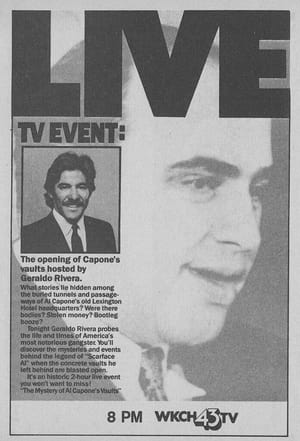
The Mystery of Al Capone's Vaults
The Mystery of Al Capone's Vaults is a two-hour live American television special that was broadcast in syndication on April 21, 1986, and hosted by Geraldo Rivera. It centered on the live opening of a secret vault in the Lexington Hotel in Chicago once owned by noted crime lord Al Capone.
1986
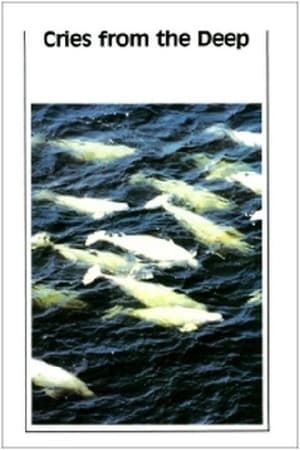
Cries from the Deep
This documentary records the journey undertaken by Jacques Cousteau, his 24-member team, and an NFB film crew to explore the Grand Banks of Newfoundland, one of the world's richest fishing areas. They discover shipwrecks, film icebergs and observe beluga whales, humpback whales and harp seals. The film also includes a fascinating sequence showing Calypso divers freeing a calf whale entrapped in a fishing net.
1981
Watermen
In 1965, on the Eastern Shore of the Chesapeake Bay, there was the last operating fleet of sailing work boats in the United States. Forty-odd "Skipjacks" were still used by Maryland watermen to dredge up oysters from the Bay. At that time, the fleet had survived because of a Maryland conservation law which prohibits the use of motor power for oyster dredging. The watermen traditionally marked the opening of each oystering season with a skipjack race which the Maryland State Tourist Board incorporated into its annual "Chesapeake Bay Appreciation Day."
1968
Ráj rybářů
1948
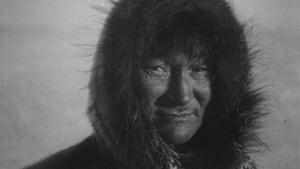
Nanook of the North
This pioneering documentary film depicts the lives of the indigenous Inuit people of Canada's northern Quebec region. Although the production contains some fictional elements, it vividly shows how its resourceful subjects survive in such a harsh climate, revealing how they construct their igloo homes and find food by hunting and fishing. The film also captures the beautiful, if unforgiving, frozen landscape of the Great White North, far removed from conventional civilization.
1922