Watch The Ultimate History Lesson (2012) Online Free
When John Taylor Gatto resigned from his job, he did so on the Op-Ed page of the Wall Street Journal. At the time, he was NYC and New York State School Teacher of the Year. The Ultimate History Lesson is a five-hour interview session memorializing Gatto's research, publications and life experiences, which forms an impeccable resource and reference library of the Underground History of American Education. Each hour focuses on examining the evolution of ideas which manifest today in the phenomenon of "public schooling". By dissecting the history and presenting you with the references, you're left at the end of each hour with a copious amount of information from which you can continue your own personal journey of discovery. With more than 200 footnotes and more than 30 book references contained in its entirety, this unique interview provides you with the primary sources, quotes, links, and suggested resources to expedite your own open-source education.
More Like This

Frederica Montseny, la dona que parla
In the midst of the Spanish Civil War, the rise of anarcho-syndicalism brings Frederica Montseny into the Republic’s government. She reluctantly accepts the position to prevent the spread of fascism, becoming the first female minister in Spain — and in Europe. After the war, Montseny is forced into exile in France, where she faces an extradition trial that puts her firm convictions to the test.
2021
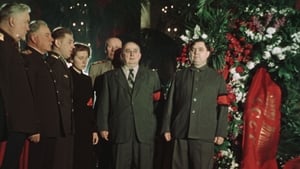
State Funeral
The enigma of the personality cult is revealed in the grand spectacle of Stalin’s funeral. The film is based on unique archive footage, shot in the USSR on March 5 - 9, 1953, when the country mourned and buried Joseph Stalin.
2019

Genji Fantasy: The Cat Fell in Love With Hikaru Genji
The Tale of Genji Museum in Uji City, Kyoto will be airing a short film blending history and fantasy, the story follows a modern high school girl named Hana who is transformed into a cat and transported back in time. She travels 1,000 years ago to the Heian Era as portrayed in The Tale Of Genji, arguably the most famous novel in Japanese literature. Guided by the novel's titular character Hikaru Genji, Hana experiences firsthand the emotions that the author Murasaki Shikibu depicted in her novel. The short features scenes based on The Diary of Lady Murasaki and other historical materials, such as the real-life noble Fujiwara no Michinaga swiping early drafts of The Tale Of Genji because he could not wait to read chapters as Murasaki wrote them.
2019
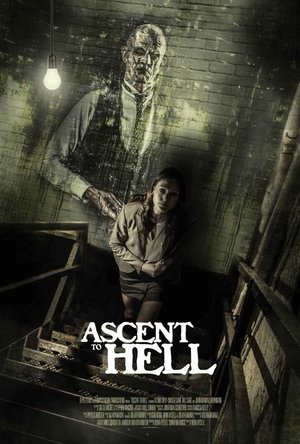
Ascent to Hell
When a realtor shows an old New York factory building to a group of would-be investors, they are unwittingly caught in its tragic and sinister history.
2017

Zensur: Die organisierte Manipulation der Wikipedia und anderer Medien
2017
The Ghazi Attack
India’s first underwater war film tries to decode the mystery behind the sinking of Pakistani submarine PNS Ghazi during the Indo-Pak war of 1971.
2017
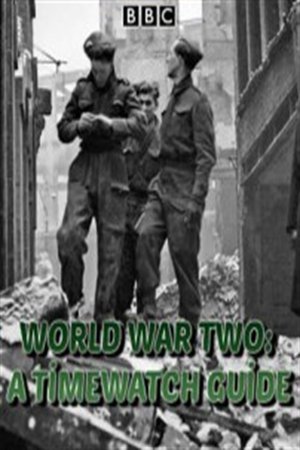
World War Two: A Timewatch Guide
Professor Saul David uses the BBC archive to chart the history of the world's most destructive war, by chronicling how the story of the battle has changed. As new information has come to light, and forgotten stories are remembered, the history of World War Two evolves. The BBC has followed that evolution, and this programme examines the most important stories, and how our understanding of them has been re-defined since the war ended over 70 years ago.
2016
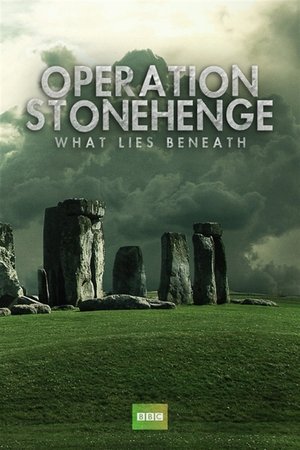
Operation Stonehenge: What Lies Beneath
Stonehenge is an icon of prehistoric British culture, an enigma that has seduced archaeologists and tourists for centuries. Why is it here? What is its significance? And which forces inspired its creators? Now a group of international archaeologists led by the University of Birmingham and the Ludwig Boltzman Institute in Vienna believe that a new state-of-the-art approach is the key to unlocking Stonehenge's secrets. For four years the team have surveyed and mapped every monument, both visible and invisible, across ten square kilometres of the sacred landscape to create the most complete digital picture of Stonehenge and the surrounding area over millennia. Operation Stonehenge takes the viewer on a prehistoric journey from 8000BC to 2500BC as the scientists uncover the very origins of Stonehenge, learning why this landscape is sacred, preserved and has been revered by following generations.
2014
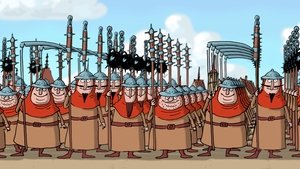
The Hussites
What if the events in a key era in our history were actually completely different than what our history textbooks try to tell us? What if Master Jan Hus didn't even get warm in Constance, let alone burn up? What if Jan Zizka had more than one healthy eye? This animated comedy from director Pavel Koutský playfully breaks the myths about the Hussite era as the pedestal of history is occupied not by preachers and military leaders but by two unbelievable scatterbrains, who become the heroes of their time against their will.
2013

Planet Food: Spice Trails
In this remarkable journey, Planet Food travels the world to see how control of the spice trails, over the last five millennia, has made great cities and destroyed ancient civilizations. Our guides travel from the Molucca Islands of Indonesia, the original home of cloves and nutmeg, to the Indian province of Kerala, with its native pepper and cardamom. Additional stops include Venice, Beirut, Cairo and other significant places in the spice trade that created and toppled empires.
2012
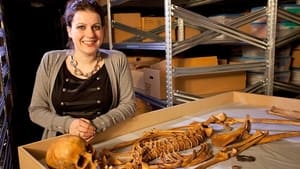
The Viking Sagas
Dr Janina Ramirez travels across glaciers and through the lava fields of Iceland to find out about one of the most compelling of the great Viking stories - the Laxdaela Saga. This hour-long film explores how the unique literary achievements of the Saga writers were possible at a time of such immense cultural, political and religious upheaval.
2011

The Polio Crusade
The film interweaves the personal accounts of polio survivors with the story of an ardent crusader who tirelessly fought on their behalf while scientists raced to eradicate this dreaded disease. Based in part on the Pulitzer Prize-winning book Polio: An American Story by David Oshinsky, Features interviews with historians, scientists, polio survivors, and the only surviving scientist from the core research team that developed the Salk vaccine, Julius Youngner.
2009
Salvador (Puig Antich)
The story of Salvador Puig Antich, one of the last political prisoners to be executed under Franco's Fascist State in 1974.
2006
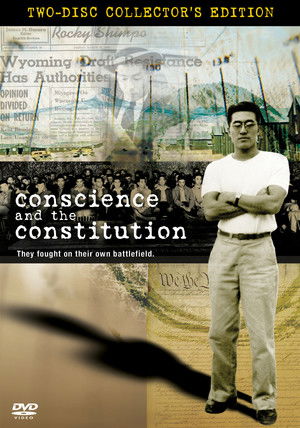
Conscience and the Constitution
Americans refused to be drafted from the concentration camp at Heart Mountain, Wyoming. Ready to fight, but not before their rights as U.S. citizens were restored and families released.
2000
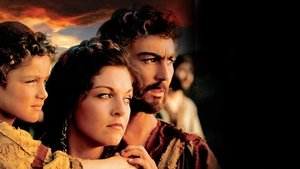
David
A distinguished military leader whose reign was touched by great scandal, shocking betrayals and rousing victories. A simple shepherd boy chosen to be king, under the watchful eyes of prophet Samuel.
1997
Asaltar los cielos
Documentary about the killer of Trotsky
1996
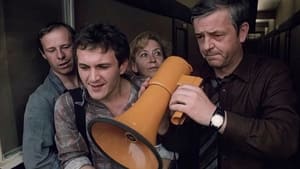
Short Working Day
A dramatisation of the workers' protests in June 1976 in Radom, seen from the perspective of the local Secretary of the Polish United Workers' Party.
1995
The French Revolution
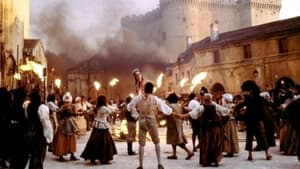
A history of the French Revolution beginning from the decision of the king to convene the Etats-Generaux in 1789 in order to deal with France's debt problem. Part one spans the event until August 10, 1792 (when the King Louis XVI lost all authority and was imprisoned). Part two carries the story through the end of the terror in 1794.
1989

Bill & Ted's Excellent Adventure
Bill and Ted are high school buddies starting a band. They are also about to fail their history class—which means Ted would be sent to military school—but receive help from Rufus, a traveller from a future where their band is the foundation for a perfect society. With the use of Rufus' time machine, Bill and Ted travel to various points in history, returning with important figures to help them complete their final history presentation.
1989
Two Lines in Small Font
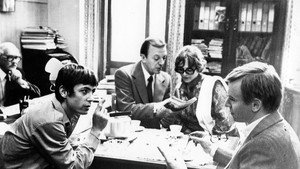
While studying the history of the revolutionary movement in Russia, a historian decides to restore the good name of one of the revolutionaries, who was accused of betrayal by his comrades-in-arms and committed suicide.
1981