Watch The Shout (1968) Online Free
In the summer of revolt 1968, student Leobardo López Aretche captured the protests in Mexico City, and the state’s brutal response, up close – and like many of his subjects and fellow comrades, would pay a high price for his audacity. Fifty years later, his movie is no longer a secret.
Cast
Rolando de Castro, Magda Vizcaíno, Óscar Chávez, Gustavo Díaz Ordaz
More Like This
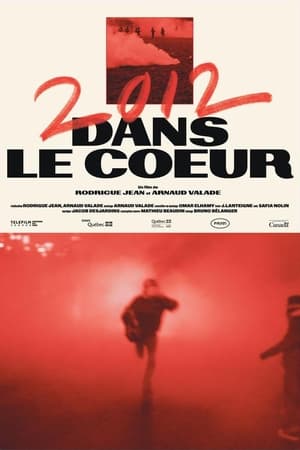
2012/Through the heart
What remains of the 2012 Quebec student protests? Little has changed in the decade that ensued. Rodrigue Jean and Arnaud Valade exhume images of the battles, recorded live and relayed through the mass media, that flared up as anger and indignation went head-to-head with the rhetoric of power. Against these divisive images, the filmmakers overlay a historical perspective of the state and its police in Montreal, Quebec and Canada, delving into the roots of sanctioned violence. Their compelling glance at the past is, of course, a cry that continues to echo in the present day. While the voices have been silenced, revolt still brews. All it takes is a spark...
2023
A Night of Knowing Nothing
L, a student in India witness to the government's violent response to university protests, writes letters to her estranged lover while he is away.
2022
Tulevaisuuden rakentajat
For a hundred years, the Association of Finnish Student Unions (SYL) has acted as the mouthpiece for Finnish university students. SYL opened its doors to the world and was a pioneer in both student health care and housing production. At the same time, there have been marches both for developing countries and against the Soviet Union.
2021

When a City Rises
Behind the gas masks of Hong Kong’s democracy movement, the often very young activists are just as diverse as the youths of the rest of the world. But they share a demand for democracy and freedom. They have the will and the courage to fight – and they can see that things are going in the wrong direction in the small island city, which officially has autonomy under China but is now tightening its grip and demanding that ‘troublemakers’ be put away or silenced. Amid the violent protests, we meet a 21-year-old student, a teenage couple and a new father.
2021
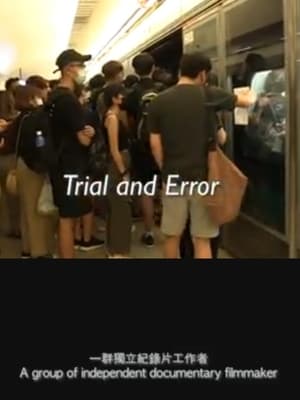
Trial and Error
This Anti-ELAB (Anti-Extradition Law Amendment Bill) Movement documentary short takes us back to the airport occupation on 12 August 2019. Although this new form of protest soon turned into a crisis, it became an important lesson for the protesters. Compared to the tension inside the airport terminal, the long walk home at sunset on the Lantau highway, which connects the Hong Kong International Airport to the residential areas, felt like a reminiscence of a school field trip.
2020
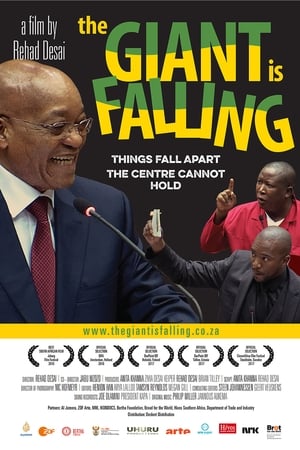
The Giant is Falling
The film documents the key political issues in recent years in South Africa that have marked the demise of the African National Congress (ANC). These include the Marikana massacre in August 2012, whereby 34 striking miners were gunned down by the ANC government's police force. Rehad Desai documented this historic event in his 2013 film MINERS SHOT DOWN. He refers to the incident once again in his latest film and shows how the ANC is undermining its close connections to the trade unions it set up as a freedom movement under Nelson Mandela, and how students have also turned on the party to protest against tuition fees under the motto #FeesMustFall. The film's compelling footage unmasks the cynical despotism of corrupt president Jacob Zuma, who is chiefly responsible for the ANC's demise and its catastrophic losses at the most recent elections. It also introduces opposition movements that are challenging his now-untenable position.
2016
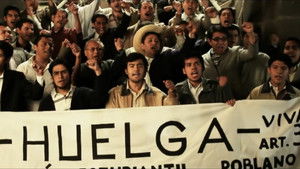
La Historia de Esos Días
2016
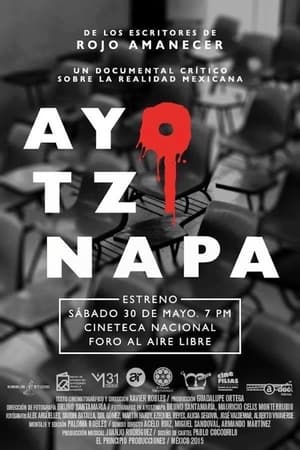
Ayotzinapa
This film is a story, testimony and documentation of the forced disappearance of 43 student teachers, which exposes the criminal complicity between the police and military authorities, between the political and economic elites and criminal organizations in Mexico, which appear to be different forces, but respond to similar interests.
2015
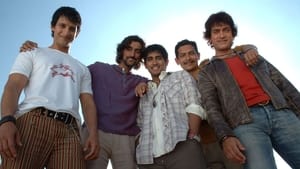
Rang De Basanti
After a group of friends graduate from Delhi University, they listlessly haunt their old campus, until a British filmmaker casts them in a film she's making about freedom fighters under British rule. Although the group is largely apolitical, the tragic death of a friend owing to local government corruption awakens their patriotism. Inspired by the freedom fighters they represent in the film, the friends collectively decide to avenge the killing.
2006
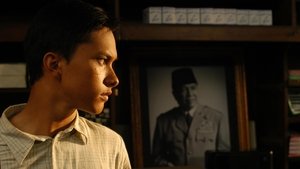
Gie
Indonesian activist Soe Hok Gie experiences a political awakening during the tumultuous regimes of Soeharto and Soekarno.
2005
La parte bassa
Divided into three parts (two documentary and one fictional), the film explores the early stages of the 1977 movement, between demonstrations and heated assemblies at the Circoli del Proletariato Giovanile of the State University of Milan. The daily difficulties and the search for redemption are told without rhetoric, but with a raw reflection on social marginalization.
1978
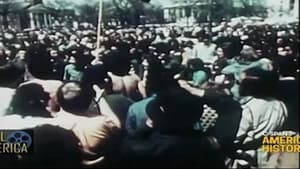
Brink of Disaster!
A student is held up in the library while a riot rages outside. As SDS protesters head to burn the library down, he has to fend them off with his baseball bat. This film opens with actual footage of civil disturbances in the 1960s, and moves on to images of historical American figures.
1972

The Columbia Revolt (Newsreel #14)
In April 1968, black and white students rebelled against the university administration, occupying five buildings, including the president's office in one of the first campus revolts of the Civil Rights/Vietnam War era. The revolt began as a protest against university expansion into neighboring communities and its role as a slum lord. After five days of student control, the administrators and trustees ordered the police to clear the buildings. What resulted was an unprecedented display of brutality and repression. Narrated by one of the student rebels, the detailed eyewitness account of this event galvanized other campus revolts around the country.
1968
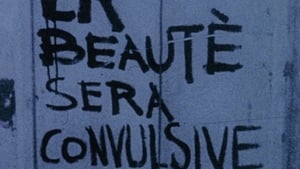
A Film Like Any Other
An analysis of the social upheaval of May 1968, made in the immediate wake of the workers’ and students’ protests. The picture consists of two parts, each with with identical image tracks, and differing narration.
1968
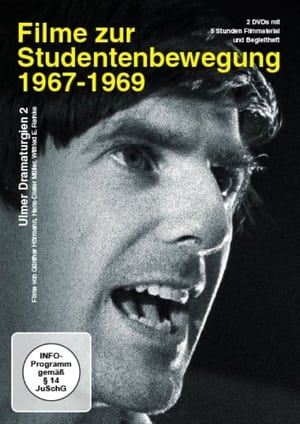
Ruhestörung
The film chronicles the beginning of the student protest following the death of student Benno Ohnesorg in Berlin in June of 1967.
1967
Sons and Daughters
The Vietnam War protest movement from the student point of view is the basis for this documentary shot in the San Francisco Bay area and dealing mainly with a protest march from the University of California to the Oakland Army Terminal in 1966.
1967
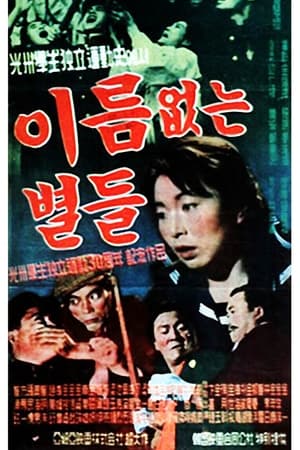
Nameless Stars
The son of a freedom fighter, Sang-hun is a member of an anti-Japanese resistance group called "Seongjinhoe," composed of students who share a dedication to the cause of liberation. Their spiritual guide is a teacher named Song Un-in. One day, Yeong-ae, whose brother is a detective in the Japanese police force charged with monitoring independence movements, joins their group. Following a series of sporadic incidents, the students gather one night to resolve on an uprising, but are discovered by the police. Young-ae is wrongfully accused of betraying their plans, but she risks her life in order to allow the group members to escape. The morning after, the students of Gwangju rise up against the Japanese government.
1959
Ein Fenster in die Welt
Students from nine nations unite on August 7, 1950 at the Franco-German border near Germanshof, tear down the barriers and remove the border posts and barriers, which they burn in a ceremony. This act is a commitment to Europe and a protest against the arbitrariness of borders between nations.
1951
Les Misérables
In 19th century France, Jean Valjean, a man imprisoned for stealing bread, must flee a relentless policeman named Javert. The pursuit consumes both men's lives, and soon Valjean finds himself in the midst of the student revolutions in France.
1935
Sports
The film is about a protest provoked when the university decided to restrict access to sports facilities to athletes, cutting out all other students. This is, strictly speaking, not a Prokino film. It was produced by the Waseda University Film Circle, which was organized by Kawazoe Shiro. Feature film directors Yamamoto Satsuo and Taniguchi Senkichi were apparently students at Waseda at the time and participated in the production.
1932