Watch The Ruin (2018) Online Free
Now, in the era we live in, we are surrounded by a variety of ideas, and each of these ideas and thoughts is given to us in many ways. The Art and The Media play an important role as two important tools for forcing and pushing information, but these two important tools go so far as to get something that takes their lives and lose control of humanity and is nothing but The Ruin.
Cast
Mahdi Falahati, Armin Mokhtari
More Like This
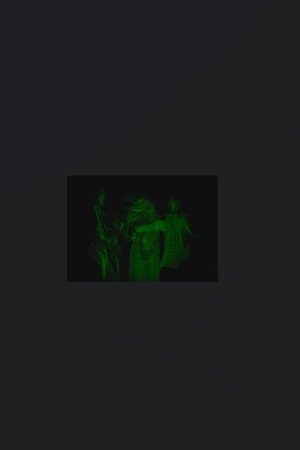
Nuvem
NUVEM is a screendance piece created using the point cloud technique, exploring the boundaries of form and presence within digital space. Dispersed points are drawn to each other like suspended particles, guided by invisible forces that shape them into ephemeral bodies — cloud-bodies that emerge and dissolve in constant mutation. The work constructs a sensory landscape where movement is not only choreographic, but also magnetic. As if held in suspension by an unseen magnetic field, NUVEM invites the viewer to immerse themselves in this rarefied universe, where the body’s contours are volatile and time unfolds in slow, continuous transformations.
2025
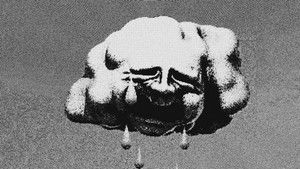
CHOKE ECHO
This isn’t a film. It’s a leaked ritual. Somewhere between analog prayer and digital disease, a collection of gestures tried to become human again. They failed. Children orbit the fence like insects around an electric hymn. A figure holds a violin but never plays — his silence is louder than the sound. The man in the branches hasn’t fallen in years. The killer appears, or doesn’t — but you’ll feel him beneath the cuts, mouthing things you’ll wish you didn’t understand. There are bodies, sometimes clothed in flesh, sometimes not. There is scripture, mangled and reversed — not to mock it, but to unlock it. The voice speaks, but only when you stop listening. This is the place where lost footage remembers you. Where noise prays back. CHOKE ECHO was compiled under duress by 0xHamza in 2025 using material never meant to be rearranged. Watch it if you must — but it will keep watching after you close the tab.
2025
U B(ON) IN MY EYES
2024
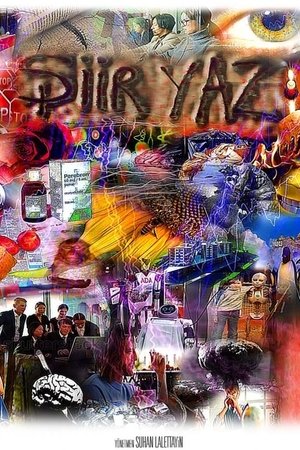
Write A Poem
This ironic and satirical video poem focuses on the mind of a young artist struggling with the desensitisation, exhaustion and stress of information overload at a time when 328.77 million terabytes of data are generated every day.
2023
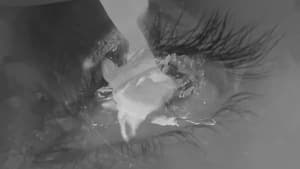
The death of the minotavr
The death of the minotavr talks about the concept of the heroine's journey. Suffering, horror and exhaustion lead the protagonist to a process of transformation, abyss and expiation, because only murdering to minotaur and everything he represents is possible to return to life. From the female gaze, it shows the depth of the emotional wounds caused by domestic violence; the same one that the surrealist Dora Maar lived and that ask why, as a society, instead of killing the minotaur, we blindly continue to send him women only to be devoured and ask them why they simply did not fight, why they did not try get out of the labyrinth.
2022
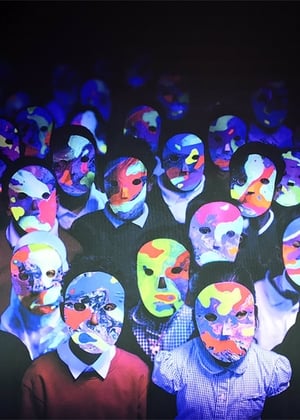
No Ordinary Protest
Ted Hughes's 1993 novel The Iron Woman is the springboard for this multi-media project by Mikhail Karikis. The video section of the installation features seven-year-olds from Mayflower Primary School in East London discussing the novel's environmental themes.
2019
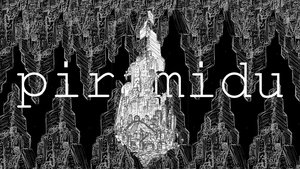
jany robiać z hary piramidu
a visualization of a poem telling a story of making a piramid out of a mountain
2018
El siglo de las luces
2017
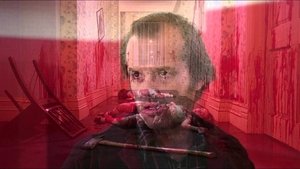
The Shining: Forwards and Backwards
An experimental film comprised of Stanley Kubrick's THE SHINING played forwards and backwards at the same time on the same screen, creating bizarre juxtapositions and startling synchronicities.
2011
The Phantom Harp
Super 8mm, 21 min., b&w, music by Jefre Cantu-Ledesma.
2008
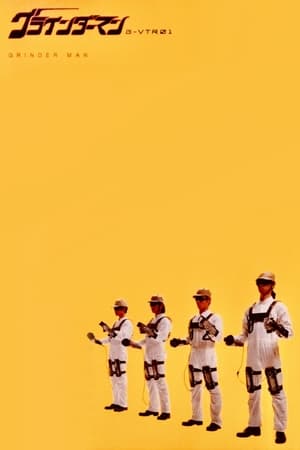
Grinder-Man - G-VTR01
A 19-minute short film featuring the six performances of the Japanese performance art group Grinder-Man. Only released on VHS.
1998
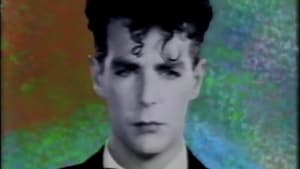
Projections
The innovative and influential British filmmaker Derek Jarman was invited to direct the Pet Shop Boys' 1989 tour. This film is a series of iconoclastic images he created for the background projections. Stunning, specially shot sequences (featuring actors, the Pet Shop Boys, and friends of Jarman) contrast with documentary montages of nature, all skillfully edited to music tracks.
1993
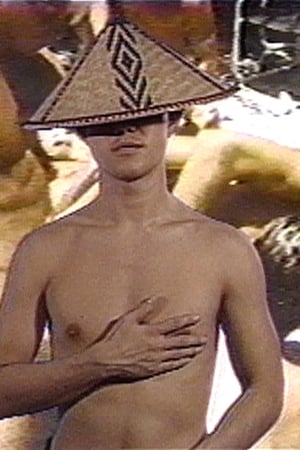
Chinese Characters
Best known for his work in video, Richard Fung has made the politics of gender, ethnicity, and sexual orientation his central focus. Chinese Characters (1986) examines the ambiguous relationship of gay Asian men with white gay porn.
1986
Voice Windows
With Voice Windows (1986), Steina renews her efforts to generate a complex sound-image interface
1986
Instinct
A woman strolls through nature, embraces trees, and enjoys stunning views. She dances around a large tree, then suddenly falls into darkness, wakes up in a completely different setting, and wonders if she was dreaming or if this is her dream.

Douglas Gordon sings the best of Lou Reed & The Velvet Underground (For Bas Jan Ader)
In the present work, the artists appears lying on his back, his eyes mostly closed, dreamingly listening to a walkman that plays, a recording of 'The Best of Lou Reed and the Velvet Underground'. The artist can hear the music through his earphones, but as viewers we are only privy to the sound of his voice that whispers the melody. As we listen to the hypnotic interpretion of the familiar songs - as emblematic for pop music history as 'Psycho' is for film - we are forced to mentally 'reconstruct' the remaining orchestration, instrumentation and vocals. We must attempt to reassemble something we already know to be a fact by negotiating the sticky mess of interpretation, meaning, and memory.
1993
Continuum: Parts 1 & 2
Abstract video art with music composed by Philip Glass. Music by the Kronos String Quartet.
1989
Arbitrary Logic
Arbitrary Logic, an interactive audio-visual synthesiser was first presented under the working title Osnabruk at the Osnabruk festival of 1987 and later as part of an improvised and computer music performance with Keith Rowe at the London Filmmakers Cooperative, December 1989.
1987
ACT III
Abstract video art set to the music of Philip Glass.
1983
Voyage
An NTSC space opera.
1981