Watch The RAF at War: Part Three (2004) Online Free
Three part documentary of the history of the Royal Air Force during World War Two. They combine actual Air Ministry films and period newsreel footage with interviews of surviving members of the air force. This final part covers the the years 1941-1945 from the campaigns to attack German military targets to mass night bombing, primarily from the viewpont of Bomber Command, and associated Air-Sea rescue. It ends with the food aid flights to the Netherlands immediatly prior to Victory in Europe. Featured aircraft include the Bristol Blenheim, the Vickers Wellington, and the heavy bombers Short Stirling, Handley Page Halifax and Avro Lancaster.
Cast
Edward Woodward, Jack McKenzie, Ian Swann
More Like This
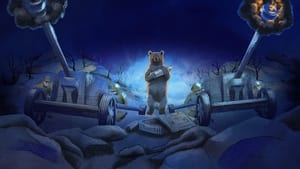
A Bear Named Wojtek
Displaced by the Second World War, a troop of Polish soldiers form an inseparable bond through an orphaned bear they name Wojtek.
2023

Digging The Great Escape
The classic movie "The Great Escape" was based on a real life escape attempt during the second world war. This documentary follows Archaeologists who are trying to find the original tunnels dug by the real prisoners of war who escaped. Some of the surviving prisoners also join the team to assist with the tunnel locations and to describe what it was really like to live that situation. In an effort to understand the technical details of how this feet of ingenuity was achieved, the team recreate some of the equipment used by the prisoners.
2011
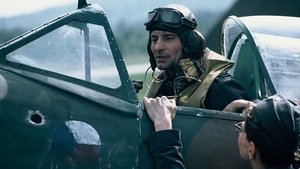
Dark Blue World
Lt. Franta Slama is a top pilot in the Czech Air Force who is assigned to train a promising young flier, Karel Vojtisek, and they soon become friends. When Nazi Germany invades Czechoslovakia in 1939, they both reject the authority of their new leaders and escape to England where they join other Czech exiles in the RAF. While flying a mission over England, Karel crash lands and happens upon the farmhouse of Susan, a young woman whose husband is in the Navy. Karel soon falls head over heels for Susan but, while they enjoy a brief fling, in time Susan decides she prefers the company of the older and more worldly Franta. As Franta and Karel struggle to maintain their friendship despite their romantic rivalry.
2001

Germans
A story about a German family during World War II with every family member having a different approach to Jews, raging from hatred to compassion.
1997
SS-3: The Assassination of Reinhard Heydrich
Reinhard Heydrich was considered the most dangerous man in Nazi Germany after Hitler himself. The plot to kill him masterminded in England and carried through to finality in Prague in 1942, is told in this gripping dramatised documentary special. Featuring meticulous reconstructions, coupled with authentic historical film, some of it never shown before the film powerfully presents a vivid account of the only successful assassination of a leading Nazi in World War II. It also chillingly recreates the terrible human cost of SS savagery against the Resistance and the total obliteration of the village of Lidice.
1992
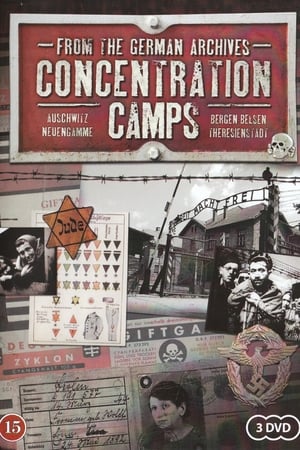
The Liberation of Auschwitz
This chilling, vitally important documentary was produced to mark the 40th anniversary of the liberation of Auschwitz Concentration Camp. The film contains unedited, previously unavailable film footage of Auschwitz shot by the Soviet military forces between January 27 and February 28, 1945 and includes an interview with Alexander Voronsov, the cameraman who shot the footage. The horrifying images include: survivors; camp visit by Soviet investigation commission; criminal experiments; forced laborers; evacuation of ill and weak prisoners with the aid of Russian and Polish volunteers; aerial photos of the IG Farben Works in Monowitz; and pictures of local people cleaning up the camp under Soviet supervision. - Written by National Center for Jewish Film
1986
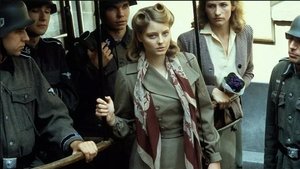
The Blood of Others
In the German-occupied Paris, Helene is torn between the love for her boyfriend Jean, working for the resistance and the German administrator Bergmann, who will do anything to gain her affection.
1984
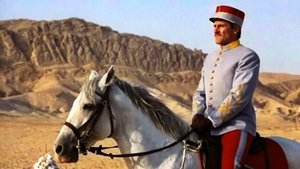
Fort Saganne
In 1911, a willful and determined man from peasant stock named Charles Saganne enlists in the military and is assigned to the Sahara Desert under the aristocratic Colonel Dubreuilh.
1984

Sophie's Choice
Stingo, a young writer, moves to Brooklyn in 1947 to begin work on his first novel. As he becomes friendly with Sophie and her lover Nathan, he learns that she is a Holocaust survivor. Flashbacks reveal her harrowing story, from pre-war prosperity to Auschwitz. In the present, Sophie and Nathan's relationship increasingly unravels as Stingo grows closer to Sophie and Nathan's fragile mental state becomes ever more apparent.
1982
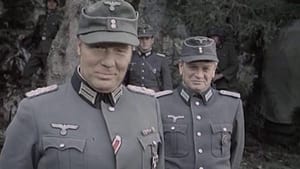
The Peaks of Zelengore
During the Battle of Sutjeska, partisan troops must endure 24 hours of big and heavy attacks on German units Ljubino grave, to the main Partisan units, with the wounded and the Supreme Headquarters, pulled out the ring that is tightened around them.
1976
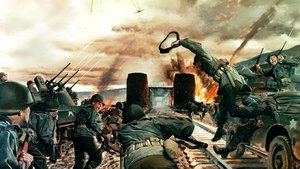
The Bridge at Remagen
In March of 1945, as the War in Europe is coming to a close, fighting erupts between German and American troops at the last remaining bridgehead across the Rhine.
1969

Triple Cross
Safecracker Eddie Chapman is languishing in prison on the island of Jersey when the Nazis arrive. An adept manipulator of situations, Chapman convinces the Germans to use him to spy on the British. And when the would-be traitor arrives home, he convinces the English to use him as a double agent -- in exchange for a full pardon.
1966
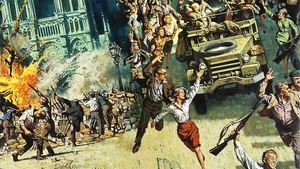
Is Paris Burning?
Near the end of World War II, General Dietrich von Choltitz receives orders to burn down Paris if it becomes clear the Allies are going to invade, or if he's unable to maintain control of the city. After much contemplation, Choltitz ignores orders, enraging the Germans and giving hope to various resistance factions that the city will be liberated. Choltitz, alongside Swedish diplomat Raoul Nordling, helps a leader organise his forces.
1966
Never So Few
A U.S. military troop takes command of a band of Burmese guerillas during World War II.
1959
The Enemy Below
The crew of the American destroyer escort, the USS Haynes, detects a German U-Boat—resulting in a prolonged, deadly battle of wits.
1957
Decision Before Dawn
WWII is entering its last phase: Germany is in ruins, but does not yield. The US army lacks crucial knowledge about the German units operating on the opposite side of the Rhine, and decides to send two German prisoners to gather information. The scheme is risky: the Gestapo retains a terribly efficient network to identify and capture spies and deserters. Moreover, it is not clear that "Tiger", who does not mind any dirty work as long as the price is right, and war-weary "Happy", who might be easily betrayed by his feelings, are dependable agents. After Tiger and another American agent are successfully infiltrated, Happy is parachuted in Bavaria. His duty: find out the whereabouts of a powerful German armored unit moving towards the western front.
1951

The Black Parachute
A paratrooper drops behind enemy lines to rescue the deposed king of a mythical Balkan nation.
1944
Air Force
The crew of an Air Force bomber arrives in Pearl Harbor in the aftermath of the Japanese attack and is sent on to Manila to help with the defense of the Philippines.
1943
Keep 'Em Slugging
A gang of tough street kids decide to go straight and get jobs in order to free draft-age men for the war effort. However, because of their past tangles with the law, they can't find anybody who'll hire them. Finally one of them gets a job at the department store where his sister works, but runs afoul of a store executive who is in league with a ring of hijackers.
1943
Aikamme amatsooneja
Women's civil defense activities, especially in case of gas attacks.
1939