Watch The Metropolitan Opera: Samson et Dalila (2018) Online Free
A towering biblical epic, Saint-Saëns’s operatic take on the story of Samson and Delilah has many of the hallmarks of grand opera—show-stopping vocal displays, thrilling choruses, and an engrossing plot set against a sweeping, pseudo-historical backdrop. It’s fitting, then, that Samson et Dalila has been chosen to celebrate the opening of the Met’s season four times in the company’s history, including when Darko Tresnjak’s bold new production premiered on the first night of the 2018–19 season. A few weeks later, the opera was shown as part of the Met’s series of live cinema transmissions, featuring an exceptional cast. Tenor Roberto Alagna was the heroic Samson, who ultimately falls victim to the seductive power of Dalila—the captivating mezzo-soprano Elīna Garanča. Bass-baritone Laurent Naouri sang the sinister High Priest of Dagon, with conductor Sir Mark Elder on the podium.
Cast
Roberto Alagna, Elīna Garanča, Laurent Naouri, Elchin Azizov, Dmitry Belosselskiy, Tony Stevenson, Bradley Garvin, Mark Schowalter, Susan Graham, Mark Elder, MET Orchestra
More Like This
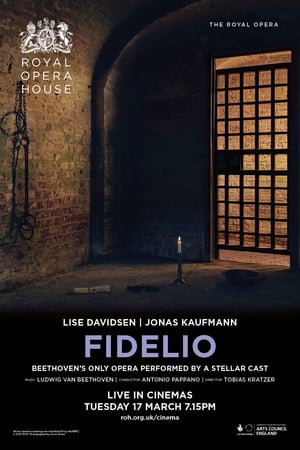
Royal Opera House: Fidelio
Beethoven’s only opera is a masterpiece, an uplifting story of risk and triumph. In this new production, conducted by Antonio Pappano, Jonas Kaufmann plays the political prisoner Florestan, and Lise Davidsen his wife Leonore (disguised as ‘Fidelio’) who daringly sets out to rescue him. Set in strong counterpoint are the ingredients of domestic intrigue, determined love and the cruelty of an oppressive regime. The music is transcendent throughout and includes the famous Act I Quartet, the Prisoners’ Chorus and Florestan’s impassioned Act II cry in the darkness and vision of hope. Tobias Kratzer’s new staging brings together the dark reality of the French Revolutionary ‘Terror’ and our own time to illuminate Fidelio’s inspiring message of shared humanity.
2020
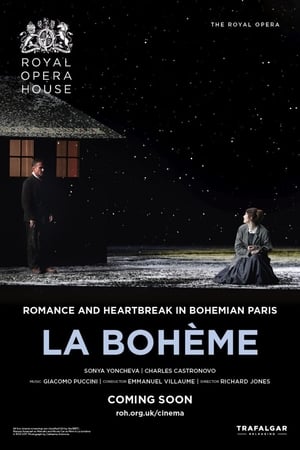
Royal Opera House: La Bohème
Richard Jones’ “La bohème” is an important weapon in the Royal Opera’s commercial arsenal. This is its second revival since Jones’ production hit the stage in autumn 2017, replacing John Copley’s beloved 40-year old staging, resplendent with period detail and resolutely naturalist. Jones brings a considerable break with the past in his approach, pointing the way towards thought-provoking possibilities for the work, though it is a clearly a show that defers to the need for regular revival and breadth of appeal.
2020
Jenůfa
When a beautiful young woman in rural Moravia becomes unexpectedly pregnant, she learns that love is sometimes only skin-deep. Janáček took Gabriela Preissová's grim tale of infanticide and redemption, and condensed it into a masterful, spine-chilling drama. The tragic plight of the protagonists is presented with unsentimental realism that cannot help but trigger a response of deep compassion. Premiered at the National Theatre in the composer's hometown of Brno 115 years ago, the opera took him nine years to complete and is the first in which his distinctive voice can clearly be heard.
2019
Sternenhoch
Trapped in an abusive marriage, a wealthy German prince desperately seeks a way out. But what appears to be the road to salvation soon turns into a highway to hell. The universal language of music meets the international language of Esperanto in this debut opera by Ivan Acher. The carpenter, forest worker, designer and composer has cleverly blended electro-acoustic and contemporary music to breathe life into Ladislav Klíma’s expressionist novel, The Sufferings of Prince Sternenhoch.
2019
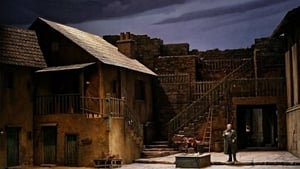
The Metropolitan Opera: Luisa Miller
Premiered immediately before the enduring masterpieces Rigoletto, Il Trovatore, and La Traviata, Luisa Miller incorporates the youthful vitality that had made Verdi an international sensation while also looking forward to the dramaturgical discipline and sophistication of those later works. In this Live in HD performance, soprano Sonya Yoncheva takes on the riveting title role, capping off a season in which she starred in three cinema transmissions. As her father, Miller, the legendary Plácido Domingo adds another baritone role to his extensive repertoire. Tenor Piotr Beczała as Rodolfo, Alexander Vinogradov as Count Walter, and Dmitry Belosselskiy as Wurm round out the illustrious cast, and Bertrand de Billy conducts.
2018
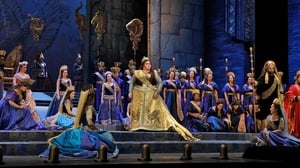
Rossini: Semiramide
A rarely performed bel canto gem, Rossini’s Semiramide returned to the Met for the first time in nearly 25 years during the 2017–18 season. Set in ancient Babylon under the reign of the mythic Queen Semiramis, the opera features political scheming, mistaken identity, divine intervention, and bloodthirsty revenge—not to mention one virtuosic vocal display after another. Soprano Angela Meade is the fierce title monarch, whose quest for power comes to a halt with the discovery that the object of her affection, the warrior Arsace—sung by mezzo-soprano Elizabeth DeShong—may actually be her long-lost son. Together, the two square off in a pair of dazzling duets and deliver some of the opera’s most challenging arias. Bel canto specialist Maurizio Benini takes the podium to lead a cast that also stars tenor Javier Camarena as the ardent prince Idreno, bass Ildar Abdrazakov as the scheming Assur, and bass Ryan Speedo Green as the stern high priest Oroe.
2018
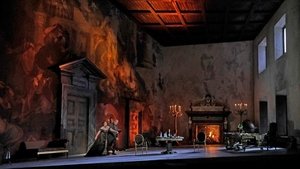
The Metropolitan Opera: Tosca
Sir David McVicar’s bold new staging of Tosca, Puccini’s operatic thriller of Napoleonic Rome, thrilled Met audiences when it rang in the New Year in 2018. Only weeks later, the production was seen by opera lovers worldwide as part of the Met’s Live in HD series of cinema presentations. In this performance, Bulgarian soprano Sonya Yoncheva is the passionate title diva, opposite charismatic tenor Vittorio Grigolo as her lover, the idealistic painter Mario Cavaradossi. Baritone Željko Lučić is the menacing Baron Scarpia, the evil chief of police who employs brutal tactics to ensnare both criminals and sexual conquests. On the podium, Emmanuel Villaume conducts the electrifying score, which features some of Puccini’s most memorable melodies.
2018

The Metropolitan Opera: The Exterminating Angel
After the acclaimed Met premiere of Thomas Adès's "The Tempest" in 2012, the composer returned with another masterpiece, this time inspired by filmmaker Luis Buñuel's seminal surrealist classic "El Ángel Exterminador", during the 2017–18 season. As the opera opens, a group of elegant socialites gather for a lavish dinner party, but when it is time to leave for the night, no one is able to escape. Soon, their behavior becomes increasingly erratic and savage. The large ensemble cast tackles both the vocal and dramatic demands of Adès's opera with one riveting performance after another. Tom Cairns, who also penned the work's libretto, directs an engrossing and inventive production, using a towering wooden archway to trap the characters onstage. And Adès himself takes the podium to conduct the frenzied score, which features a host of unconventional instruments, including the eerie electronic ondes Martenot.
2017
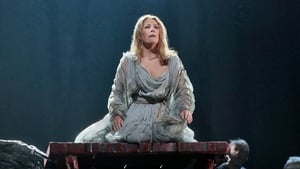
The Metropolitan Opera: Norma
Deep in a forest where druids and warriors seek revenge against the conquering Romans, Norma is scorned by the Roman proconsul Pollione, with whom she has two children. Her kindness turns to fury when she discovers that Pollione has taken Adalgisa, a novice priestess, as his new lover. When Pollione loses his high rank in the army and is offered as a sacrifice, Norma promises him freedom under one condition.
2017

Il trionfo del Tempo e del Disinganno (Staatsoper Berlin 2016)
Bellezza (Beauty) admires herself in the mirror, but knows that her beauty will one day pass. Piacere (Pleasure) tries to cheer her up, promising her eternal beauty if she remains only faithful to pleasure. Bellezza promises never to leave her, or else to accept severe punishment. Piacere warns of the destructive power of useless worry, but now Tempo (Time) and Disinganno (Disillusion) get involved in the conversation. Together they seek to explain the ephemeral nature of beauty, which quickly wilts like a blossom.
2016
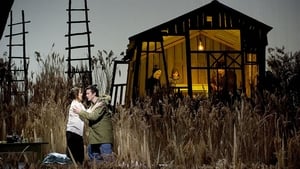
The Legend of the Invisible City of Kitezh
Opera lies at the heart of Rimsky-Korsakov's colourful idiom, but performances are few and far between; this realisation of his penultimate and grandest stage work is a very rare and special experience. Kitezh is known as "the Russian Parsifal", which encapsulates its mystical flavour and steady unfolding of a legend of redemption
2012
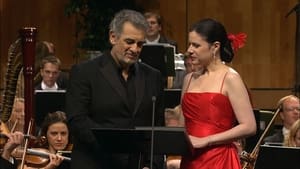
Amor, vida de mi vida: Zarzuelas
The many passionate, fiery or lyrical vocal pieces of Spanish zarzuela have continued to thrive in concert and recitals all over the world. One of the most renowned and ardent supporters of zarzuela melodies is Plácido Domingo. Belying his 66 years, the world-famous tenor sings these rousing, seductive melodies with the beguiling sweetness of a much younger man and tranports the enraptured listener to the calles and plazas of Madrid and Seville, Domingo is accompanied by Mozarteum Orchestra underJesús López Cobos and, above all, by his partner for the evening, sprano Ana Maria Martínez, "a beautiful woman with a fascinating voice, full of velvety mezzoish half-tints in the middle and bottom ranges, with a gleaming top." (London Times) Martínez and Domingo serve up an evening of infectious good spirits and exquisite vocal treats."The dazzle of genuine stars shone brightly over Salzburg!" (Die Welt)
2009
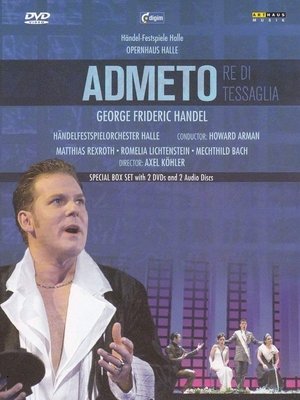
Handel: Admeto
Axel Kohler, the internationally renowned countertenor has brought Admeto into the modern era in timeless style by the skillful application of imaginative theatrical digressions. Köhler's production at the Halle Opernhaus revisits a work that encompasses comedy, tragedy and almost absurd grotesqueness, couching it in the convincing metaphor of a modern hospital.
2006
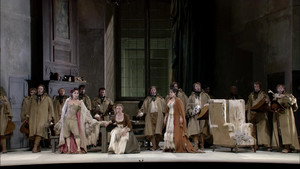
Rossini: La cenerentola
In late 18th-century Italy, in the mansion of Don Magnifico, the young and pretty Angelina works as a maid. Teased by her two frivolous half-sisters, Clorinda and Tisby, Angelina believes she is in love with a young valet and goes to the ball. Dressed in her finest finery, she meets the man who is in fact the Prince and flees from him after giving him a bracelet that will allow him to recognise her a little later. The masks come off, and kindness and love triumph! ‘La Cenerentola’ is the last opera buffa composed by Gioachino Rossini for an Italian audience. A dramma giocoso in two acts, with a libretto by Jacopo Ferretti, freely adapted from Charles Perrault’s fairy tale ‘Cinderella’ (1697), omitting the magic in favour of a realism tinged with humour and social criticism. Premiered for the Rome Carnival at the Teatro Valle in Rome on 28 January 1817. Recorded live at Glyndebourne Opera, Lewes, East Sussex, on 2 and 4 June 2005.
2005
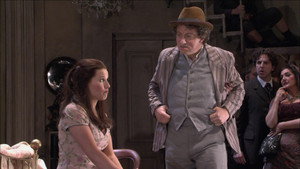
Giacomo Puccini: Gianni Schicchi
In the mid-20th century, in Fucecchio, near Florence, Buoso Donati, an elderly collector and wealthy antique dealer, has just passed away. He lies in his bed, surrounded by relatives feigning grief. They are all worried, as the deceased has bequeathed his entire fortune to a monastery. They search frantically for the will. The young Riniccio, Donati’s nephew, finds it but agrees to show it to the family only if they promise to let him marry Lauretta, the daughter of Gianni Schicchi, a local figure of dubious reputation. Everyone accepts the condition and discovers to their horror that the rumour was true: the monks are set to inherit the fortune. Riniccio suggests calling on Schicchi for help, much to the family’s disgust. Summoned, Riniccio arrives at the house accompanied by his daughter. He proposes keeping the death a secret, taking his place, and instructing a doctor and a notary to alter ‘his’ testamentary dispositions. But has the hunter become the hunted? Not so sure...
2004
Der Goggolori
1987

Hannah and Her Sisters
Between two Thanksgivings, Hannah's husband falls in love with her sister Lee, while her hypochondriac ex-husband rekindles his relationship with her sister Holly.
1986

Louis Riel
Opera by Harry Somers portraying Metis leader Louis Riel and his Northwest Rebellion. 1969 CBC-TV production based on the original 1967 opera.
1969
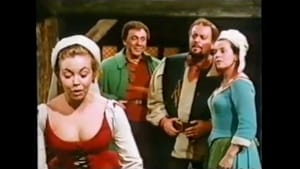
Die lustigen Weiber von Windsor
When Sir John Falstaff decides that he wants to have a little fun he writes two letters to a pair of Window wives: Mistress Ford and Mistress Page. When they put their heads together and compare missives, they plan a practical joke or two to teach the knight a lesson. But Mistress Ford's husband is a very jealous man and is pumping Falstaff for information of the affair. Meanwhile the Pages' daughter Anne is besieged by suitors.
1965
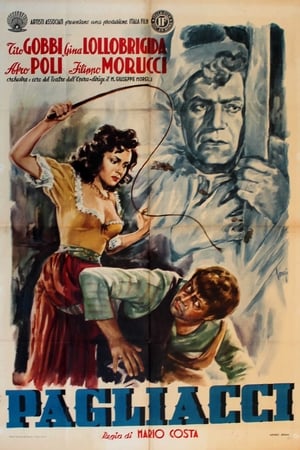
Pagliacci
Based on Ruggero Leoncavallo's opera Pagliacci. The film recounts the tragedy of Canio, the lead clown (or pagliaccio in Italian) in a commedia dell'arte troupe, his wife Nedda, and her lover, Silvio. When Nedda spurns the advances of Tonio, another player in the troupe, he tells Canio about Nedda's betrayal. In a jealous rage Canio murders both Nedda and Silvio. The only actor in the cast who also sang his role was the celebrated Italian baritone, Tito Gobbi, but the film is largely very faithful to its source material, presenting the opera nearly complete.
1948