Watch The Marvellous Spiral (2022) Online Free
Spain, early 20th century. As a child, Leocadia Cantalapiedra was dazzled by a new art: cinema; but she lives in a society where directing films is something only men can do.
Cast
Isabel Medarde, Daniela Benito, Olivia Benito, Lourdes Oliden, Marisa Oliden, Óscar Pereda, Cova Villegas, Xirou Xiao, Raquel de la Varga, Lorena de Paz, Emma Delgado, Daniel L. Ferrero
More Like This

The Promised End
A documentation of artist JP Meldrum as he prepares for an experimental gig with noise-rock drummer Maxwell Paterson. A concert film, a rehearsal, and an exploration of Victoria outlets and ways-of-creating beyond the traditional spaces.
2024

Kathryn Bigelow: Hollywood Adrenaline
For more than 40 years Kathryn Bigelow has been making films that explore male violence. With movies like Blue Steel, Point Break, The Hurt Locker and Zero Dark Thirty, the Oscar winning American filmmaker has impressed with hard-hitting moviemaking that holds a mirror up to contemporary America and the world.
2023

Yeti Massacre
In the winter of 1959, the mutilated bodies of nine hikers were found in the Ural Mountains of Russia. Were they slaughtered in cold blood by a yeti? If so, what drove this legendary beast to kill? Shocking evidence sheds terrifying new light on the Dyatlov Pass incident.
2023

My Other Name Is Luiza
A film director falls in love for the person interviewing and becomes obsessed with the idea of playing her as a character. This documentary/ficction film is an ode to the actor's spirit and a detailed document of the processes of his art.
2023

In Search of Tomorrow
A nostalgic journey through ’80s Sci-Fi-films, exploring their impact and relevance today, told by the artists who made them and by those who were inspired to turn their visions into reality.
2022

Crashland
CRASHLAND is a docufiction. A blend of documentary and narrative vignettes that tell the story of a crash test dummy as it attempts to find purpose in a small, college town, in the summer of 2016.
2018

La Cicciolina: Godmother of Scandal
The personal and professional story of Ilona Staller, known as Cicciolina, is probably unique: she left communist Hungary and moved to Italy, where she found a fertile environment for a life dedicated to scandal.
2017

Hitler's Hollywood
Film journalist and critic Rüdiger Suchsland examines German cinema from 1933, when the Nazis came into power, until 1945, when the Third Reich collapsed. (A sequel to From Caligari to Hitler, 2015.)
2017

Pseudo Secular
They are frozen in place, stagnating without any direction. Around them, things change rapidly.
2016
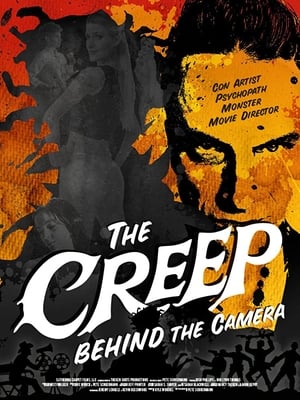
The Creep Behind the Camera
An exploration of the making of b-movie sci-fi cult classic "The Creeping Terror" and its con-man director Art "A.J." Nelson/Vic Savage.
2014

This Is Not a Dream
The video revolution of the 1970s offered unprecedented access to the moving image for artists and performers. This Is Not a Dream explores the legacies of this revolution and its continued impact on contemporary art and performance. Charting a path across four decades of avant-garde experiment and radical escapism, This Is Not a Dream traces the influences of Andy Warhol, John Waters and Jack Smith to the perverted frontiers of YouTube and Chatroulette, taking in subverted talk shows and soap operas, streetwalker fashions and glittery magic penises along the way.
2012

A Brief History of Slasher Films
Writer Adam Rockoff provides a basic overview of the slasher movie genre.
2011
Inside the Keystone Project
Documentary short regarding the preservation and restoration of the worldwide remains of the Keystone films.
2010

Yakuza Eiga, une histoire du cinéma yakuza
The history of the Yakuza Eiga at the TOEI studio is roughly outlined. Real Yakuza and also their connections to the movie business are discussed, and many important actors and directors of the genres are interviewed. Former real yakuza boss turned actor Noboru Ando, Takashi Miike, Sonny Chiba and many more get a chance to speak.
2009
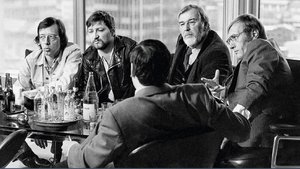
Counter Shot: Departure of the Filmmakers
Documentary about filmmakers of the New German Cinema who were members of the legendary Filmverlag für Autoren (Film Publishing House for Authors). Among them are Werner Herzog, Rainer Werner Fassbinder, and Wim Wenders.
2008
Drama, Tanz und Beine
2007
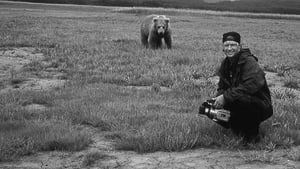
Grizzly Man
Follows the story of "Grizzly Man" Timothy Treadwell and what the thirteen summers in a National Park in Alaska were like in his attempt to protect the grizzly bears. The film is full of unique images and a look into the spirit of a man who sacrificed himself for nature.
2005

What the #$*! Do We (K)now!?
Amanda is a divorced woman who makes a living as a photographer. During the Fall of the year Amanda begins to see the world in new and different ways when she begins to question her role in life, her relationships with her career and men and what it all means. As the layers to her everyday experiences fall away insertions in the story with scientists, and philosophers and religious leaders impart information directly to an off-screen interviewer about academic issues, and Amanda begins to understand the basis to the quantum world beneath. During her epiphany as she considers the Great Questions raised by the host of inserted thinkers, she slowly comprehends the various inspirations and begins to see the world in a new way.
2004
Time in the Sun
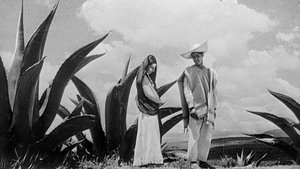
Second attempt to create a feature film out of the 200,000-plus feet of film which Soviet film-maker Sergei Eisenstein shot during 1931-32 in Mexico for American socialist author Upton Sinclair, his wife and a small company of investors. The projected film, to be called "Que Viva Mexico", was never completed due to exhaustion of funds and Stalin's demand that Eisenstein return to the USSR (he had been absent since 1929). The first attempt at editing the footage, in the USA, resulted in "Thunder Over Mexico", released in 1934. In 1940, Marie Seton, from the UK, acquired some of the footage from the Sinclairs in an attempt to make a better cutting according to Eisenstein's skeletal outline for the proposed film. This film has apparently been lost.
1940
The Arrival of a Train at La Ciotat
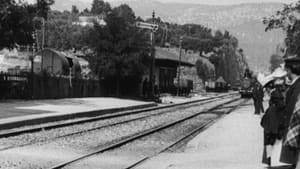
A group of people are standing along the platform of a railway station in La Ciotat, waiting for a train. One is seen coming, at some distance, and eventually stops at the platform. Doors of the railway-cars open and attendants help passengers off and on. Popular legend has it that, when this film was shown, the first-night audience fled the café in terror, fearing being run over by the "approaching" train. This legend has since been identified as promotional embellishment, though there is evidence to suggest that people were astounded at the capabilities of the Lumières' cinématographe.
1896