Watch The Life That Will Come (2026) Online Free
This documentary, made entirely of archival footage shot mainly by amateurs, revisits 50 years of Chilean history. A fascinating lesson in memory, this personal montage adopts a popular, even fringe, perspective to help write a more complete national memory. As the filmmaker asserts in her narration, there’s the history we’re told, the history we live, and the history we tell ourselves. Between the coup d’état of September 11, 1973, and the recent double failure of the new constitution project, this film shows that the people of Chile have long oscillated between excitement and disappointment, accumulating shattered hopes. Rejecting the pessimism that would trap us in collective immobility, Karin Cuyul instead draws on the past to ask how we can continue to dream of the necessary social and political changes.
More Like This
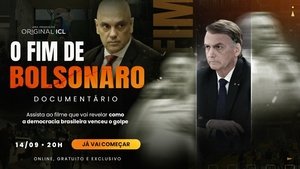
The End of Bolsonaro
"The End of Bolsonaro" follows the historic trial at the Supreme Federal Court (STF) that led to the conviction of Jair Bolsonaro for attempted coup d'état, portraying the end of an authoritarian era and the victory of Brazilian democracy.
2025
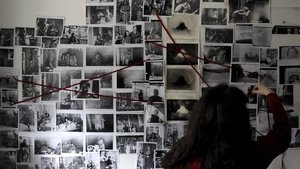
Father, Developed
After she discovers canisters of undeveloped film shot by her late father, Elene sets out on a journey to collaborate with him on a special project. Between the earth and the land of the dead, a darkroom becomes the only dimension where the paths of a father and a daughter can cross.
2024

Lumière, Le Cinéma!
In one of those wonderful coincidences of history, lumière, the French word for “light,” was also the last name of brothers Auguste and Louis, whose brilliant invention, the cinematograph, helped to inaugurate the most beloved art form of the last 130 years. Institute Lumière director Thierry Frémaux uses Lumière, Le Cinema! to guide the viewer through over a hundred shorts—some famous, some forgotten, some never before seen—directed by Lumière and company. In the process, Frémaux illuminates how the brothers employed the camera as a creative instrument as they (and their operators) mastered framing, staging, and subject selection for quotidian and exotic microdocumentaries as well as the first ever fictional motion pictures. The result is not only a glorious re(telling) of the genesis of cinema but a profound meditation on the beautiful world captured—and the mysterious world imagined—by the Lumières.
2024

Skip Liberty: Shooting in Vietnam
Skip Liberty enlisted in the Army in 1968. During his tour in Vietnam he shot 3,100 feet of Super 8 film, over 3 hours worth. Upon returning to the states the film was placed in storage, Skip had never seen the footage he shot. Until now.
2024

Kathryn Bigelow: Hollywood Adrenaline
For more than 40 years Kathryn Bigelow has been making films that explore male violence. With movies like Blue Steel, Point Break, The Hurt Locker and Zero Dark Thirty, the Oscar winning American filmmaker has impressed with hard-hitting moviemaking that holds a mirror up to contemporary America and the world.
2023

The Barbie Story
She's been around for so many decades but hasn't aged a day. She's had more than 180 different jobs; she's been president, she's been to the moon, and she's done all the things that women aspire to do. She has a massive closet, and thousands of different outfits. Barbie is way more than just a 12-inches long piece of plastic, she is way more than a toy. The legendary blond bombshell has grown into a phenomenon and a children's sensation. Wildly revolutionary, Barbie broke barriers, shattered glass ceilings, and has inspired countless dreams, wonder and imagination, with her signature color: Pink. The history of the doll is a testament to its enduring appeal and impact. Things have changed for her the same way things changed for women. Whatever we may think about Barbie - love or loathe her - it is impossible to ignore her worldwide impact. Let's step into the beautiful world of Barbie and take a look at her cultural revolution through the decades.
2023

Jane by Charlotte
Charlotte Gainsbourg looks at her mother Jane Birkin in a way she never did, overcoming a sense of reserve. Using a camera lens, they expose themselves to each other, begin to step back, leaving space for a mother-daughter relationship.
2022

Jodie Foster: Hollywood Under the Skin
From her precocious status as a sex symbol to her consecration as a filmmaker, Jodie Foster's story is about a feminist struggle, albeit atypical, fought on and off the screen. This film sets out to retrace her remarkable journey within the Hollywood industry.
2021
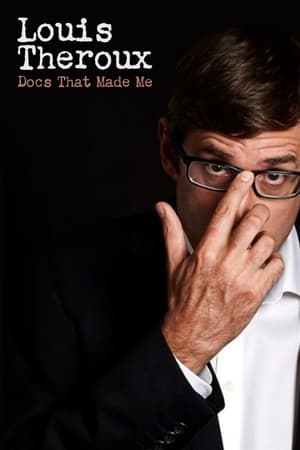
Louis Theroux: Docs That Made Me
Renowned documentarian Louis Theroux dived into the BBC Archives and selected his favourite documentaries. Each of them had an impact on Louis and explains why he chose the documentaries and how they have inspired his work.. Covering a range of styles - some vérité-driven, others told more through interview - but in all of them you see life at its most raw, its most strange and therefore its most human.
2018

Résistants, Collabos - Une lutte à mort
2013
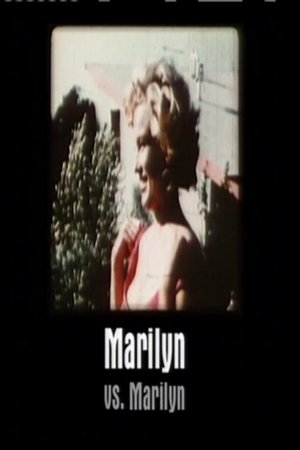
Marilyn vs Marilyn
“Marilyn vs. Marilyn” tells the story of a little-known period of Marilyn’s life – the years she spent in New York, trying to became a ‘serious”’ actress, taking lessons with Lee Strasberg and setting up a production company with her photographer and trusted friend, Milton Green. Based on hitherto unpublished – and magical - photos from the Greene archives, the film focuses on the photographic image of a woman who remains one of the greatest legends in the history of cinema… and an enduring enigma.
2002
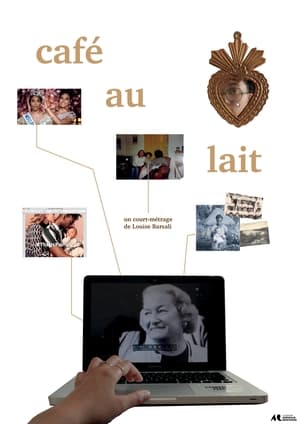
Café au Lait
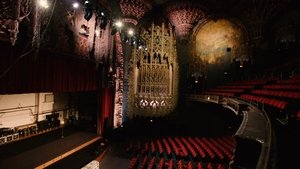
Going Attractions: The Definitive Story of the Movie Palace
Celebrating the splendor and grandeur of the great cinemas of the United States, built when movies were the acme of entertainment and the stories were larger than life, as were the venues designed to show them. The film also tracks the eventual decline of the palaces, through to today’s current preservation efforts. A tribute to America’s great art form and the great monuments created for audiences to enjoy them in.
2019

Maria by Callas
Told through performances, TV interviews, home movies, family photographs, private letters and unpublished memoirs, the film reveals the essence of an extraordinary woman who rose from humble beginnings in New York City to become a glamorous international superstar and one of the greatest artists of all time.
2017
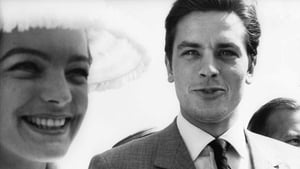
Alain Delon, a unique portrait
Biography of a star and figure study : This fascinating portrait is for anyone who wants to know more about the man behind the mask. By the end of the film, you will view this famous French icon in a totally different light. Delon speaks in a series of surprising interviews, spanning nearly 50 years.
2015
Cao Bang, les soldats sacrifiés d'Indochine
2014
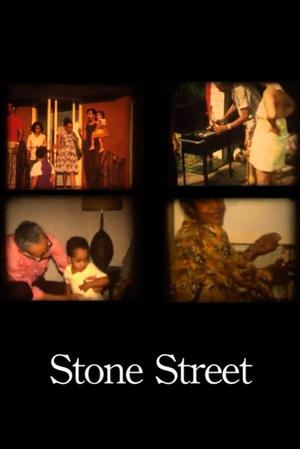
Stone Street
Stone Street documents the life and experiences of a Trinidadian diaspora family and their enduring connection to the long standing family home in Port of Spain. Through the intersecting journeys of this extended and extensive family, the filmmaker explores themes of home, belonging and identity in a life defined by the fragmentary nature of a migratory Caribbean culture. This experimental documentary combines a lyrical first person voice with a family archive of home made audio visual artifacts, interviews and events. As the documentary explores the fragmentary nature of Caribbean identity, it simultaneously celebrates the fragments of domestic memorializing found in home movies, videos and photographs. Stone Street uses these various forms to evoke the experience of a complex and diverse Caribbean and Caribbean diaspora identity.
2012
J’ai quitté l’Aquitaine
A filmmaker confined to a psychiatric institution tries to find healing by bringing together all the members of his family for a collective experiment: using a construction game set, they must try to recreate as precisely as possible the happiness that once filled their family home, which disappeared 25 years ago. If even one family member managed to restore everything perfectly, the patient would be cured - that much is certain. But nothing was ever going to go as planned.
2006
Boom! Hollywood's Greatest Disaster Movies
Narrated by Bill Mumy (Will Robinson from TV's "Lost in Space"), this documentary spotlights some of the most thrilling scenes the disaster genre has ever produced. From 1970s classics such as Airport and The Towering Inferno to James Cameron's Oscar-winning epic Titanic, no celluloid disaster flick is omitted. Interviews with directors and actors (including Will Smith) and newsreels of real historical disasters are also included.
2000
Our Inflammable Film Heritage
Introduction to an extensive training program for everyone professionally involved in the process of film conservation and film restoration. The realization of this training program was initiated and coordinated by ECIPAR (Bologna-Italy) and the Cineteca del Comune di Bologna. It was produced in co-operation with eleven European film archives and film laboratories and co-financed by the FILM project - FORCE program of the European Community.
1994