Watch The Land Above The Trees (1988) Online Free
More Like This
Traces of Home – A Story from Congo
This short film tells the deeply personal and emotional journey of a father who made the life-altering decision to immigrate to Canada from Congo with his family. Narrated from his perspective, it dives into the challenges and obstacles he faced while fleeing his home country.
2025
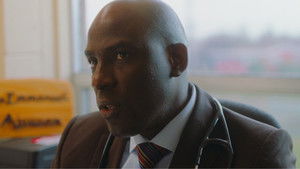
Relentless Hurdles, Resilient Hearts
A compassionate Black immigrant physician shares his personal experience of systemic barriers and resilience required to overcome racial disparities and address critical gaps. The documentary highlights the intersectional challenges of race, immigration, and inequities in Canada's healthcare landscape and how this impacts his mental wellbeing.
2025
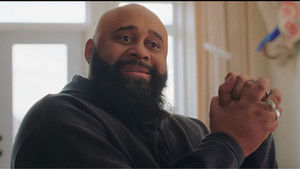
Under Pressure
“Under Pressure” examines the unique struggles of African Nova Scotian men through the perspective of Dennis Adams Jr., a bald, bearded Black man. With raw honesty, the film weaves themes of identity, mental health, and personal growth, offering an intimate look at life in modern-day New Scotland (Nova Scotia).
2025
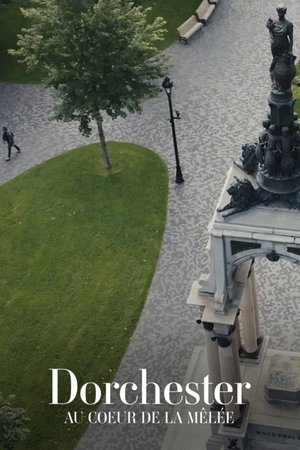
Dorchester: au coeur de la mêlée
Under Dorchester Square in Montreal lies the cemetery where 55,000 people were buried in the 19th century. The square is still at the heart of social conflicts in Quebec, 150 years later.
2025
b.longing
A dialogue and home video about belonging, from young people living in modern colonial society.
2024

In a Film by Allan King
In 1968, Billy and Antoinette Edwards participated in a landmark documentary that would intimately observe their turbulent relationship. Over 50 years later, their son Bogart sat down to view and discuss the resulting film, A Married Couple.
2024

A Return to Memory
When Canada entered World War II, the National Film Board suddenly had an urgent new mission—and hundreds of women stepped forward, helping to create Canadian cinema as we now know it.
2024
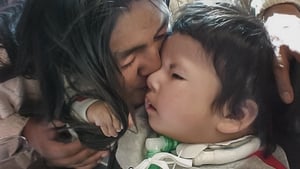
Jordan River Anderson, The Messenger
The story of a young boy forced to spend all five years of his short life in hospital while the federal and provincial governments argued over which was responsible for his care, as well as the long struggle of Indigenous activists to force the Canadian government to enforce “Jordan’s Principle” — the promise that no First Nations children would experience inequitable access to government-funded services again.
2019
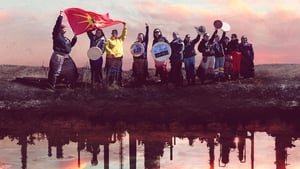
There's Something in the Water
Elliot Page brings attention to the injustices and injuries caused by environmental racism in his home province, in this urgent documentary on Indigenous and African Nova Scotian women fighting to protect their communities, their land, and their futures.
2019
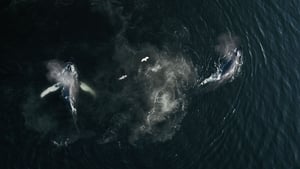
The Whale and the Raven
Director Mirjam Leuze’s The Whale and The Raven illuminates the many issues that have drawn whale researchers, the Gitga’at First Nation, and the Government of British Columbia into a complex conflict. As the people in the Great Bear Rainforest struggle to protect their territory against the pressure and promise of the gas industry, caught in between are the countless beings that call this place home.
2019
In the Name of All Canadians
Hot Docs will commemorate Canada's 150th anniversary of Confederation with the commissioning of In the Name of All Canadians, a compilation of six short documentaries inspired by Canada’s Charter of Rights and Freedoms. From Indigenous rights to multiculturalism to the controversial ‘notwithstanding clause,’ participating filmmakers have each selected a specific aspect of the Charter to explore, looking at how it resonates in the stories of their fellow Canadians.
2017
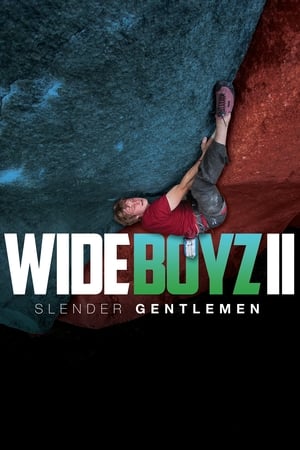
Wide Boyz II – Slender Gentlemen
After their success climbing the world’s hardest offwidth, the Wide Boyz, Pete Whittaker and Tom Randall, embark on their next crack climbing mission. This time their sights are set on the thinner end of the crack climbing spectrum. Their goal is the mighty Cobra Crack in Squamish BC, considered to be the hardest finger crack in the world. First climbed by Canadian ‘rock star’ Sonnie Trotter after battling it out with Didier Berthod, the route hit the media spotlight in the film First Ascent. With no local hard cracks to train on, the Wide Boyz refit their underground training dungeon and commit to a year of torturous finger training. With only a short trip to Canada planned, the Boyz face their biggest challenge yet against the sharp granite bite of the mighty Cobra Crack!
2014
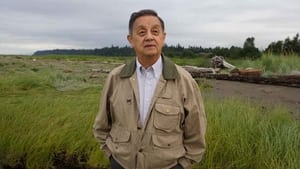
Writing the Land
In this short documentary, a Musqueam elder rediscovers his Native language and traditions in the city of Vancouver, in the vicinity of which the Musqueam people have lived for thousands of years. Writing the Land captures the ever-changing nature of a modern city - the glass and steel towers cut against the sky, grass, trees and a sudden flash of birds in flight and the enduring power of language to shape perception and create memory.
2007
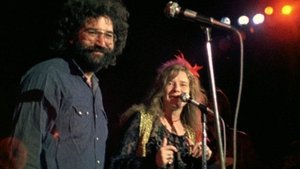
Festival Express
The filmed account of a large Canadian rock festival train tour boasting major acts. In the summer of 1970, a chartered train crossed Canada carrying some of the world's greatest rock bands. The Grateful Dead, Janis Joplin, The Band, Buddy Guy, and others lived (and partied) together for five days, stopping in major cities along the way to play live concerts. Their journey was filmed.
2003
The Tall Ships in Canada
Captures the highlights of the weekend in July of 2000 when 80 of the world's tall ships arrived in Halifax Harbour before the start of the race back across the Atlantic Ocean for a trans-Atlantic race.
2000
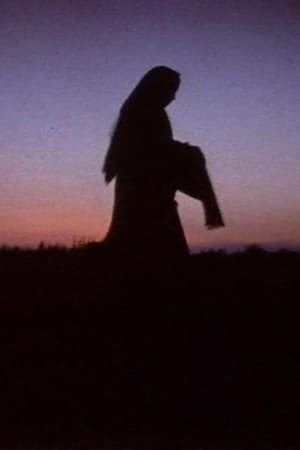
Women in the Shadows
Filmed on location in Saskatchewan from the Qu'Appelle Valley to Hudson Bay, the documentary traces the filmmaker's quest for her Native foremothers in spite of the reluctance to speak about Native roots on the part of her relatives. The film articulates Métis women's experience with racism in both current and historical context, and examines the forces that pushed them into the shadows.
1991
Portraits of Canada
A Circle-Vision 360 degree film capturing the sites, sounds, and people of Canada.
1987
Foster Child
Gil Cardinal searches for his natural family and an understanding of the circumstances that led to his becoming a foster child. An important figure in the history of Canadian Indigenous filmmaking, Gil Cardinal was born to a Métis mother but raised by a non-Indigenous foster family, and with this auto-biographical documentary he charts his efforts to find his biological mother and to understand why he was removed from her. Considered a milestone in documentary cinema, it addressed the country’s internal colonialism in a profoundly personal manner, winning a Special Jury Prize at Banff and multiple international awards.
1987
Propaganda Message
A cartoon film about the whole heterogeneous mixture of Canada and Canadians, and the way the invisible adhesive called federalism makes it all cling together. That the dissenting voices are many is made amply evident, in English and French. But this animated message also shows that Canadians can laugh at themselves and work out their problems objectively.
1974
Home Front
This short documentary is part of the Canada Carries On series of morale-boosting wartime propaganda films. In Home Front, the various WWII-era social contributions of women are highlighted. From medicine to industrial labour to hospitality, education and domesticity, the service these women provided to their country is lauded.
1940