Watch The Great Pyramids (1997) Online Free
Who built the Pyramids? Were they designed only as royal tombs? How were they built to such precise measurements? The Great Pyramids of Giza remain the world's most perplexing enigma. For over 4,000 years they have withstood the sands of time, casting a spell that even science cannot break. Through stunning film, interviews with experts and vivid reenactments, you'll witness the actual step-by-step process Egyptian embalmers used in the preparation of mummies to ensure immortality. You'll discover the journey of the Pharaohs into the afterlife and probe the obsessions that led the greatest kings of this powerful ancient civilization to build monuments designed to last for eternity.
Cast
Leonard Nimoy
More Like This
The Lord’s Prayer
More than a familiar recitation, the Lord’s Prayer is revealed as the very heartbeat of the Gospel: a bold, revolutionary call to live God’s Kingdom here and now. Each line opens a doorway into the world of Scripture, unveiling the cultural, historical, and spiritual depth behind Jesus’s teaching. Through captivating visuals, exceptional scholarship, and powerful storytelling, viewers will rediscover the prayer’s transformative power. It challenges us not merely to say the words, but to embody them—to shape our lives around trust, surrender, forgiveness, and the pursuit of God’s justice and peace.
2025

Raml Station
Raml Station is one of the most famous places in all of Alexandria. This documentary captures the beauty of Raml Station.
2024
Il était une fois... « La Conspiration du Caire »
2024

Tutankhamon: Titkok a sírból
Tutankhamun: Secrets of the Tomb (2022) In 1922, the tomb of Egyptian boy king Tutankhamun was unearthed. Now the extraordinary scientific truth of the 'Pharaoh's Curse' is revealed.
2022

Omm Sety
This documentary explores the life of Dorothy Eady, also known as Omm Sety, who believed she was a reincarnated ancient Egyptian priestess. It features re-enactments at the archaeological site of the Temple of Seti I in Abydos, highlighting her unique story and contributions to Egyptology in which she became a notable figure.
2021
Le pouvoir des prêtresses égyptiennes
2019

In Our Hands: The Battle for Jerusalem
Produced by CBN Documentaries and Biblical Productions, "In Our Hands" tells the story of the Battle of Jerusalem in the Six-Day War through the eyes of the IDF's 55th Paratrooper Brigade
2017
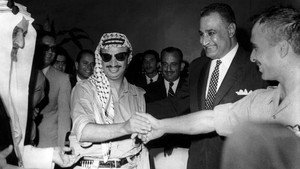
Nasser: From Dream to Disaster
Through eyewitness accounts and archival footage, viewers are taken on a journey through the great battles that defined President Gamal Abdel Nasser's life—from dramatic economic development initiatives to his ambitions for creating a unified Arab nation. The film chronicles his inspiring success and tragic failures while also exploring how he inspired generations of global leaders in both politics and activism.
2016

Nefertiti's Daughters
Nefertiti's Daughters is a story of women, art and revolution. Told by prominent Egyptian artists, this documentary witnesses the critical role revolutionary street art played during the Egyptian uprisings. Focused on the role of women artists in the struggle for social and political change, it spotlights how the iconic graffiti of Queen Nefertiti placed her on the front lines in the ongoing fight for women's rights and freedom in Egypt today.
2015
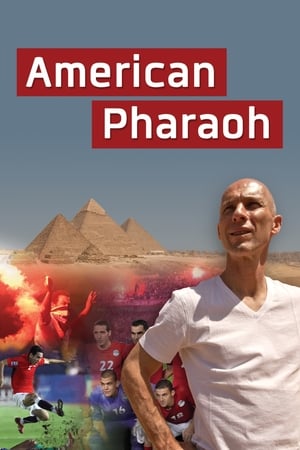
American Pharaoh
Follows Bradley - only the third American coach to manage a foreign team - his wife, Lindsay, his staff and his players. In gaining access to the training camps and providing in-depth coverage of the Pharaohs' games in Africa, the filmmakers document the team's personal and professional struggles to keep their eyes on the prize of getting to the World Cup while living in and representing a country in turmoil.
2014

Cairo from 5 to 7
A short documentary film that captures the city (Cairo) in its most tranquil and calm state, from 5 am to 7 am.
2013
We Are Egypt
In the 14 months prior to the revolution, filmmaker Lillie Paquette follows key opposition figures and young activists as they struggle against the odds and at great personal risk to remove an uncompromising US-backed regime.
2012
The Scorpion King
The Scorpion King: The King before Pharaohs. Learn more about the king who likely united ancient Egypt, organized the world’s earliest phonetic writing system, and inspired the creation of the pyramids. Mace heads, a stone mounted on a wooden shaft, were an early weapon of war. They were used like a club to strike enemies on the head. The scorpion mace head was too large to have been used as a weapon, and was clearly reserved for ceremonial purposes. Archaeologists believe they have found the tomb of the Scorpion King at the ancient burial site of Abydos. He was buried with 700 wine jars, several of which had come from as far away as ancient Palestine. The Scorpion King may have presided over the birth of phonetic writing earlier than any other civilization in the world—200 years before the first pharaohs.
2009
Sex in the Ancient World
In the beginning was sex. To the ancient cultures, sexuality, love and sex were inextricably connected with the creation of the earth, the heavens and the underworld. To the citizens of the ancient civilizations that gave birth to ours, sensuality and sexuality were an integral part of society. This series exploration of Egyptian and Roman sexual practice allows viewers the opportunity to see how attitudes and beliefs about sexuality functioned in the early civilizations, and how those attitudes reveal the unspoken rules that defined public and private behavior. Episodes cover human sex and sexuality from a historical perspective, and examines in detail different texts and images which provide us with evidence about sexual practices, beliefs and ideologies in the ancient world – from erotica on pots to legal texts, phallic votive objects, fertility ceremonies, prostitution, female and hermaphroditic creator deities, from religious rituals to sex manuals.
2009
The Pharaoh's Lost City
2008
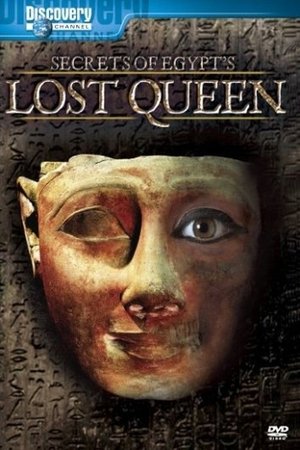
Secrets of Egypt's Lost Queen
Move over, King Tut: There's a new pharaoh on the scene. A team of top archaeologists and forensics experts revisits the story of Hatshepsut, the woman who snatched the throne dressed as a man and declared herself ruler. Despite her long and prosperous reign, her record was all but eradicated from Egyptian history in a mystery that has long puzzled scholars. But with the latest research effort captured in this program, history is about to change.
2007

Egypt: Rediscovering a Lost World
Dramatization of the great discoveries of ancient Egypt, from the exploration of tombs in the early 1800s, to the unraveling of the Rosetta Stone to translate the ancient language on the tombs, to the discovery of Tutankhamun's tomb.
2005
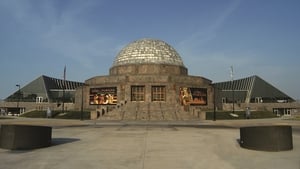
Stars of the Pharaohs
Travel to ancient Egypt to see how science was used to tell time, make a workable calendar, and align huge buildings. You'll learn about the connection the ancient Egyptians felt with the stars and various astronomical phenomena, and experience some of the most spectacular temples and tombs of the ancient world recreated in all of their original splendor. Telly Award winner. Narrated by John Rhys-Davies, of the Indiana Jones films and The Lord of the Rings films.
2004
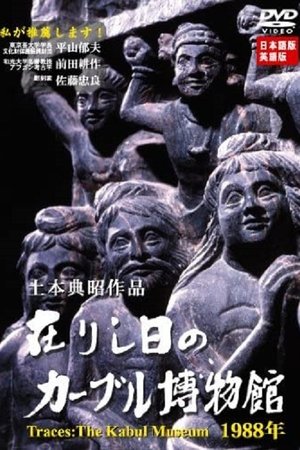
Traces: The Kabul Museum 1988
The Kabul National Museum, once known as the "face of Afghanistan," was destroyed in 1993. We filmed the most important cultural treasures of the still-intact museum in 1988: ancient Greco-Roman art and antiquitied of Hellenistic civilization, as well as Buddhist sculpture that was said to have mythology--the art of Gandhara, Bamiyan, and Shotorak among them. After the fall of the Democratic Republic of Afghanistan in 1992, some seventy percent of the contents of the museum was destroyed, stolen, or smuggled overseas to Japan and other countries. The movement to return these items is also touched upon. The footage in this video represents that only film documentation of the Kabul Museum ever made.
2003
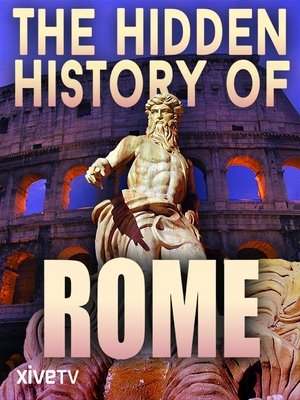
The Hidden History of Rome
Rome was famed for the decadence of its ruling class, however, what about the ordinary citizens of these ancient cultures? How did they lead their day to day lives in an age when the average life expectancy was little more than forty? Did they believe in the Pagan Gods? What were their sex lives like? What did they do for entertainment? How ordinary Romans lived is, for the most part ...
2002