Watch The Golden Age (2020) Online Free
Titou will soon be forty. He lives high up in a sheep shed in the Corbières mountains. With Soledad, who lives in a nearby caravan, they make their own wine, compose their music, live their love in step with the seasons – much as you might cultivate resistance.
Cast
Titou Picard, Soledad Zarka
More Like This
Livret A, assurance vie : Où va notre argent ?
2025
Alliances Terrestres
2024

The Elimination
2023

Miyama, Kyōto Prefecture
The follow-up film to “Barstow, California” takes us to the mountains of Miyama, a remote forest and tourist area north of Kyoto. Uwe Walter, a shakuhachi player from Germany, lives there with his wife Mitsuyo for 30 years. Together with the villagers he prepares the annual Gion Festival. On the eve of the festival, the village representatives tell him that his self-built studio is to be demolished. This brings back memories for him of earlier times and his first steps as a Nō actor. In the manner of a fresco, the film interweaves rural depictions of everyday life with the story of its German protagonist. In the village community with its togetherness of generations, Uwe shares life with his neighbours, with farmers, hunters, woodsmen, poultry farmers and anglers, tills his kitchen garden, and like other tradition-conscious villagers, he also grows his rice. The film shows them in a harsh mountain landscape between the rainy season and the first snow.
2023
¡ La Macha!
2022
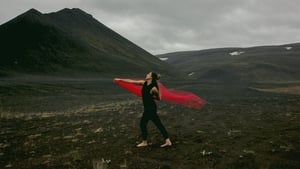
Hidden Eden
Exploring the concept of the Ecology of Emotions, this musical film portrays an inner journey through the secret garden of creativity put into frame by the nature of Iceland. Hidden Eden is a metaphor for our inner secret garden of creativity. This project bloomed during an art residency in Iceland, sparked by conversations around our shared philosophies on voice and emotional connection. The nature of Iceland inspired us to make the connection on how the landscape reflects the emotional states of creativity and how it helps manage the homeostasis of our inner emotional landscapes. This exchange between emotion and the landscape opens a space for healing. Creativity provides us with the tools to access a garden of our authentic being, nourishing and balancing us. Allowing ourselves to explore the spectrum of our emotions through the lens of our relationship with the Earth invites others to do the same. The creative process can affect our well being and is a key to human evolution.
2021
WWF : à quoi joue le panda ?
2021
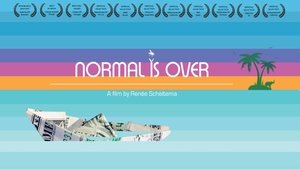
Normal Is Over
Documentary about human impact on the world.
2015
The Reaper
Efrain, known as the Reaper, has worked at a slaughterhouse for 25 years. We will discover his deep relationship with death and his struggle to live.
2013
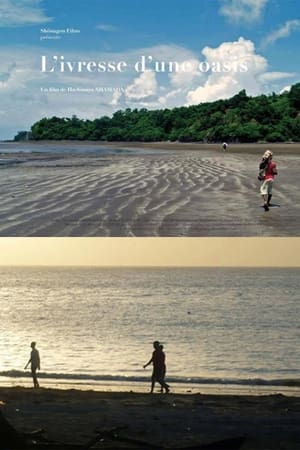
Intoxication of an Oasis
On an island in the Indian Ocean, the Comoros archipelago, unoccupied houses await the arrival of their owners. These places without souls and half built abound across the landscape. The myth of eternal return is repeated in the Comorian diaspora.
2011

Plastic Planet
Werner Boote presents an up-close and personal view of the controversial and fascinating material that has found its way into every facet of our daily lives: plastic. He takes us on a journey around the globe, showing that plastics have become a threat for both environment and human health.
2009
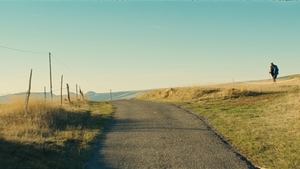
Modern Life
For ten years, Raymond Depardon has followed the lives of farmer living in the mountain ranges. He allows us to enter their farms with astounding naturalness. This moving film speaks, with great serenity, of our roots and of the future of the people who work on the land. This the last part of Depardon's triptych "Profils paysans" about what it is like to be a farmer today in an isolated highland area in France. "La vie moderne" examines what has become of the persons he has followed for ten years, while featuring younger people who try to farm or raise cattle or poultry, come hell or high water.
2008

When The Landscape Is Quiet Again
Former governor Arthur A. Link has become virtually a mythic figure in the North Dakota consciousness. Art Link was governor of North Dakota during the first great energy crisis in the 1970s. On October 11, 1973, Governor Link delivered what is widely regarded as North Dakota's "Gettysburg address". His credo, written in the margins of his prepared speech moments before he was introduced, is known by its opening phrase: "When the landscape is quiet again." This is the story of that man, that speech, and the landscape that inspired it.
2008
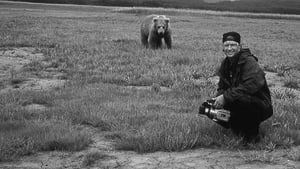
Grizzly Man
Follows the story of "Grizzly Man" Timothy Treadwell and what the thirteen summers in a National Park in Alaska were like in his attempt to protect the grizzly bears. The film is full of unique images and a look into the spirit of a man who sacrificed himself for nature.
2005
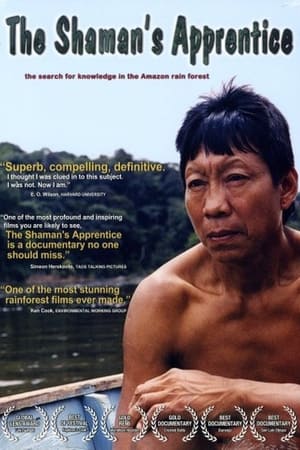
The Shaman's Apprentice
Scientist Mark Plotkin races against time to save the ancient healing knowledge of Indian tribes from extinction.
2001
The Call of the Mountain
On 1500 metres above sea level, on the slope of the mountain Hallingskarvet, stands "Tvergastein', the cabin of Norwegian philosopher Arne Naess. In his life he has spent nearly 12 years in this hut, where he wrote several books and essays on philosophy and ecology. In this film, Naess tells about the concept of 'deep ecology', which was first introduced by him in 1973. One of the basic tenets of deep ecology is that nature has a value in itself, apart from its possible use value to humans. Next to being a famous mountaineer, Naess has been a longtime activist in the environmental movement. He gives an inspiring account of his participation in blockades to prevent the Alta river in northern Norway (the area of the Sami, an indigenous people) from being dammed.
1997
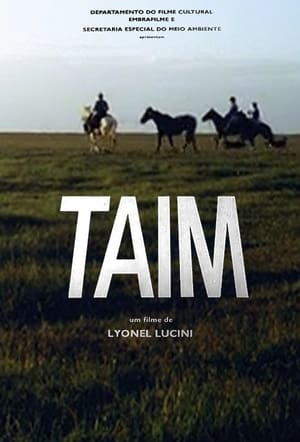
Taim
Ecology - the eco system, a nature reserve in the south of the country - RS (between the Mirim lagoons) shows the harmony between nature and animals.
1979
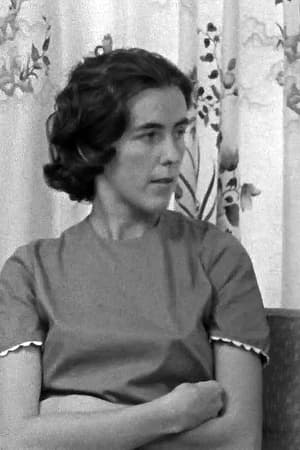
A Woman's Place
Two women discuss the roles and problems of women, education, and shopping on Fogo Island.
1967
Alexis Tremblay: Habitant
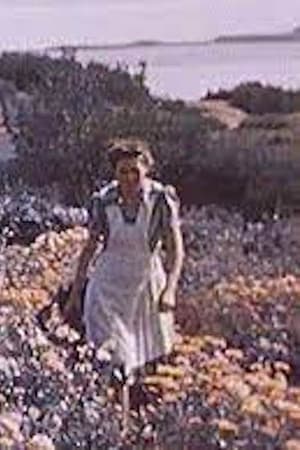
This short documentary illustrates rural French Canadian life in the early 1940s. The film follows Alexis Tremblay and his family through the busy autumn days as they bring in the harvest and help with bread baking and soap making. Winter sees the children revelling in outdoor sports while the women are busy with their weaving, and, with the coming of spring young and old alike repair to the fields once more to plough the earth in preparation for another season of varied crops. One of the first NFB films to be produced, directed, written and shot by women.
1943
La ruta de don Quijote
A poetic journey through the paths and places of old Castile that were traveled and visited by the melancholic knight Don Quixote of La Mancha and his judicious squire Sancho Panza, the immortal characters of Miguel de Cervantes, which offers a candid depiction of rural life in Spain in the early 1930s and illustrates the first sentence of the first article of the Spanish Constitution of 1931, which proclaims that Spain is a democratic republic of workers of all kind.
1934