Watch The Four Devils (1920) Online Free
One out of three silent adaptations of the novella "Les quatre diables" written by Danish author Herman Bang. The most famous one, although unfortunately lost, is without any doubt F.W. Murnau's "4 Devils". This German version, by Danish director A.W. Sandberg, was done eight years prior to Murnau's American one, and was a big success at the time.
Cast
Ernst Winar, Margarete Schlegel, Adolphe Engers, Victor Colani, Heidi Ford, Martin Herzberg, Clementine Plessner, Emil Rameau, Ferdinand Robert
More Like This
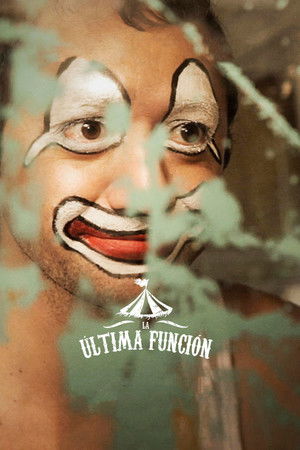
La última función
A small circus has announced they are selling due to low concurrence now Jorge a clown that growed in the circus will fight so his home isn't closed down.
2015
Wings of Desire
Two angels, Damiel and Cassiel, glide through the streets of Berlin, observing the bustling population, providing invisible rays of hope to the distressed but never interacting with them. When Damiel falls in love with lonely trapeze artist Marion, the angel longs to experience life in the physical world, and finds — with some words of wisdom from actor Peter Falk — that it might be possible for him to take human form.
1987

Out of Africa
Tells the life story of Danish author Karen Blixen, who at the beginning of the 20th century moved to Africa to build a new life for herself. The film is based on her 1937 autobiographical novel.
1985

The Tin Drum
In 1924, Oskar Matzerath is born in the Free City of Danzig. At age three, he falls down a flight of stairs and stops growing. In 1939, World War II breaks out.
1979
Korkein voitto
The heavily indebted baron Henrik von Hagen, who loves women and partying, learns that his former lover, Russian ballerina Madame Vera Vasiljevna, will be visiting Finland. They are reunited and sparks fly. But Vasiljevna's new hobby casts a shadow over their romance.
1929
October (Ten Days that Shook the World)
Sergei M. Eisenstein's docu-drama about the 1917 October Revolution in Russia. Made ten years after the events and edited in Eisenstein's 'Soviet Montage' style, it re-enacts in celebratory terms several key scenes from the revolution.
1928

Sunrise: A Song of Two Humans
A married farmer falls under the spell of a slatternly woman from the city, who tries to convince him to drown his wife.
1927

The Stolen Bride
The daughter of a count and the son of a shoemaker, both Hungarian, fall in love in America. As they're about to marry, the young woman is called back to Europe. When her betrothed goes after her, difficulties ensue.
1927

Metropolis
In a futuristic city sharply divided between the rich and the poor, the son of the city's mastermind meets a prophet who predicts the coming of a savior to mediate their differences.
1927
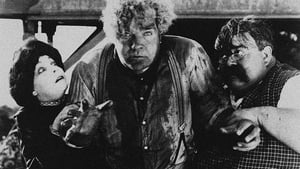
Greed
When housewife Trina wins the lottery, her comfortable life with her dentist husband John slowly deteriorates, in part by her own increasing paranoia and partly by the machinations of villainous acquaintance Marcus.
1924
Women and Diamonds
In Africa a typist is framed for killing a diamond smuggler who betrayed her father.
1924

The Bright Shawl
Charles Abbott is implicated in the death of his friend Escobar, brother to the woman he loves.
1923
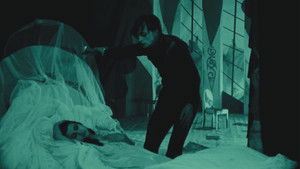
The Cabinet of Dr. Caligari
Francis, a young man, recalls in his memory the horrible experiences he and his fiancée Jane recently went through. Francis and his friend Alan visit The Cabinet of Dr. Caligari, an exhibit where the mysterious doctor shows the somnambulist Cesare, and awakens him for some moments from his death-like sleep.
1920
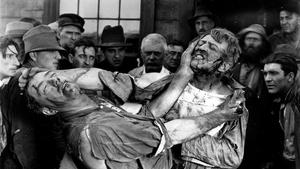
Behind the Door
Oscar Krug is looked upon with suspicion by his neighbors because of his German name. When the US is drawn into the war with Germany, he enlists and travels the seas with his wife, Alice Morse. During a submarine attack Alice is snatched from Krug's side by a German officer. Krug now lives to have his revenge, and when the opportunity presents itself, he will have it.
1919
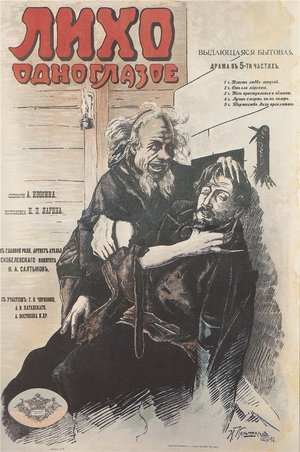
One-Eyed Likho
The plot is the embodiment of everyday belief about the impact of a certain evil force on a person. The action develops in a peasant environment.
1916
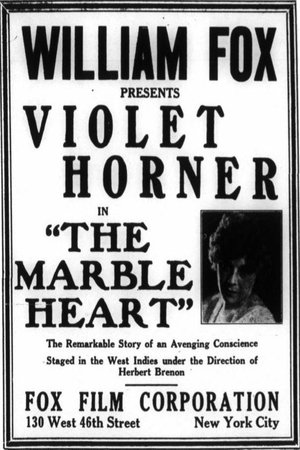
The Marble Heart
Therese Roger, daughter of a West Indian planter, whose parents are murdered while she is a baby, becomes the adopted daughter of her aunt, Madame Roger, keeper of a haberdashery shop in one of the smaller villages in southern France. She grows up with Camille, Madame Roger's son, a sickly, sexless creature, whom she ultimately marries in deference to her aunt's wishes.
1916
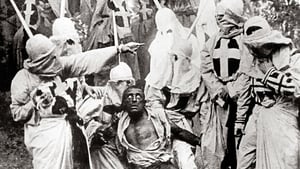
The Birth of a Nation
Two families, abolitionist Northerners the Stonemans and Southern landowners the Camerons, intertwine. When Confederate colonel Ben Cameron is captured in battle, nurse Elsie Stoneman petitions for his pardon. In Reconstruction-era South Carolina, Cameron founds the Ku Klux Klan, battling Elsie's congressman father and his African-American protégé, Silas Lynch.
1915
An Old Man's Love Story
Ethel, whose financially distressed parents depend on her marrying into wealth, may be forced to abandon the man she loves for her father's rich friend.
1913
When Love Kills
After a harsh argument between her and her father, a young girl with artistic talent leaves home for a new life.
1913
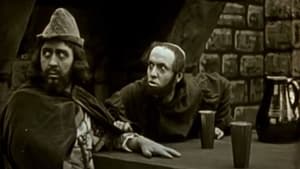
Robin Hood
Robin Hood is a 1912 film made by Eclair Studios when it and many other early film studios in America's first motion picture industry were based in Fort Lee, New Jersey at the beginning of the 20th century. The movie's costumes feature enormous versions of the familiar hats of Robin and his merry men, and uses the unusual effect of momentarily superimposing images different animals over each character to emphasize their good or evil qualities. The film was directed by Étienne Arnaud and Herbert Blaché, and written by Eustace Hale Ball. A restored copy of the 30-minute film exists and was exhibited in 2006 at the Museum of Modern Art in New York City.
1912