Watch The Forgotten Force (1994) Online Free
After the atomic obliteration of Hiroshima and Nagasaki, over 36,000 Australian men and women, part of the British Commonwealth Occupation Force (BCOF), marched onto Japanese soil. They were assigned the toughest and most dangerous area of Japan: Hiroshima Prefecture, which included the atom-bombed city. The Forgotten Force tells for the first time the story of Australia's role in Japan. Rare archival and private footage, photographs and eyewitness accounts from both sides vividly recreate the atmosphere of post-war Japan - the horror of Hiroshima and its aftermath; the struggle to build a new "democratic" society while under the heel of military rule; the growth from suspicion and fear to friendship and trust between foes.
Cast
Hugo Weaving
More Like This
Japan (2026)
Experience Japan in 2026 through this casual documentary.
2026
Shadow of Fire
In the black market, a war orphan is confronted with the struggles of people living in the immediate aftermath of WWII.
2023

Unto Midnight
An anti-war exploration of the filmmaker's experience with recurring nightmares about a potential nuclear apocalypse, through the lens of the bombings of Hiroshima and Nagasaki.
2023
The Dawn of Kaiju Eiga
Japan, 1954. A legend emerges from the ashes of Hiroshima and Nagasaki, devastated by atomic bombs in 1945. The creature's name is Godzilla. The film that tells its story is the first of kaiju eiga, the giant monster movies.
2019
Tokyo Phoenix
In 150 years, twice marked by total destruction —a terrible earthquake in 1923 and incendiary bombings in 1945— followed by a spectacular rebirth, Tokyo, the old city of Edo, has become the largest and most futuristic capital in the world in a transformation process fueled by the exceptional resilience of its inhabitants, and nourished by a unique phenomenon of cultural hybridization.
2017

In This Corner of the World
Japan, 1943, during World War II. Young Suzu leaves her village near Hiroshima to marry and live with her in-laws in Kure, a military harbor. Her creativity to overcome deprivation quickly makes her indispensable at home. Inhabited by an ancestral wisdom, Suzu impregnates the simple gestures of everyday life with poetry and beauty. The many hardships, the loss of loved ones, the frequent air raids of the enemy, nothing alters her enthusiasm…
2016
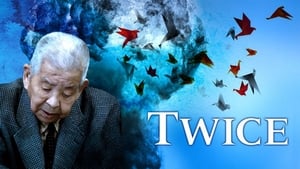
Twice: The Extraordinary Life of Tsutomu Yamaguchi
Tsutomu Yamaguchi is a hibakusha. A survivor of both atomic bomb blasts in 1945. First at Hiroshima, then again at Nagasaki. Now nearing 90, Yamaguchi finally speaks out. Breaking taboos of shame and sorrow, he responds to a call to fight for a world without nuclear weapons by telling his story, so that no one else will ever have to tell one like it again. Twice reconstructs Yamaguchi’s experiences in 1945 Japan, interviews him on the after-effects of exposure and documents the last five years of the late-blooming activist’s life.
2010
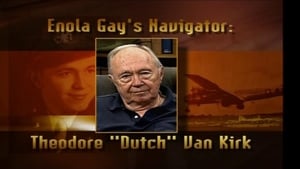
Enola Gay's Navigator: Theodore (Dutch) Van Kirk
Theodore "Dutch" Van Kirk navigated the first atomic bombing mission in Hiroshima, Japan, and later participated in the first Bikini Atoll atomic bomb tests.
2007

Atomic Wounds
At 89, Doctor Hida, a survivor of the 1945 atomic bomb at Hiroshima, continues to care for some of the other quarter of a million survivors. Atomic Wounds retraces his dedicated journey and highlights how the terrible danger of radiation was concealed by successive American administrations in the 50's - 70's so that nuclear power could be freely developed, with no concern for public health.
2006
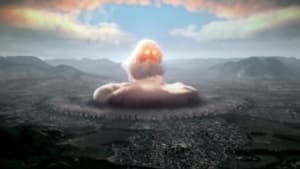
Hiroshima
The documentary recounts the world's first nuclear attack and examines the alarming repercussions. Covering a three-week period from the Trinity test to the atomic bombing of Hiroshima, the program chronicles America's political gamble and the planning for the momentous event. Archival film, dramatizations, and special effects feature what occurred aboard the Enola Gay (the aircraft that dropped the bomb) and inside the exploding bomb.
2005
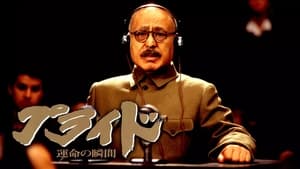
Pride
Based on the International Military Tribunal for the Far East of 1946–48, depicts Japanese prime minister Hideki Tojo as a family man who fought to defend Japan and Asia from western colonialism but was ultimately hanged by a vengeful United States.
1998
Girls in Summer Dresses: Hiroshima, August 6, 1945
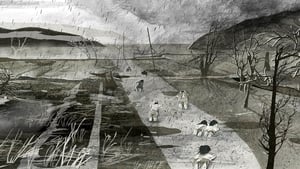
In 1945, the second- and third-year students of a Hiroshima girls' school are taken away to work in war factories. The remaining 220 girls of the first year try to make the best of their new-found status as the only teenagers in an almost deserted town, even amid the deprivations of wartime. On the seventh of August, an American bomber changes their lives forever. Broadcast on the 43rd anniversary of Hiroshima in memory of "the girls who lost their lives to the atom bomb." (Source: Anime Encyclopedia)
1988
Barefoot Gen 2
Three years after the Hiroshima bombing, a teenager helps a group of orphans to survive and find their new life.
1986
Barefoot Gen
A story about the effect of the atomic bombing of Hiroshima on a boy's life and the lives of the Japanese people.
1983
History of Postwar Japan as Told by a Bar Hostess
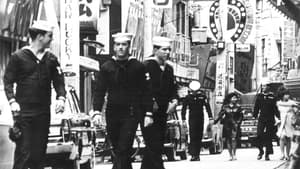
Postwar Japan as it is described by Etsuko, the manager of a bar catering to foreigners in Yokosuka. The way of life of a woman brimming with vitality, who skipped the countryside right after the war and, with her womanhood as a weapon, lived through atomic bombings, black markets, prostitution aimed at American soldiers and the Korean War. Inserting newsreels, Shohei Imamura depicts the history of twenty-five years in the Japanese postwar by way of the female body. (doclisboa)
1970
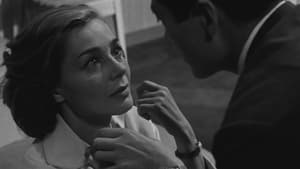
Hiroshima Mon Amour
The deep conversation between a Japanese architect and a French actress forms the basis of this celebrated French film, considered one of the vanguard productions of the French New Wave. Set in Hiroshima after the end of World War II, the couple -- lovers turned friends -- recount, over many hours, previous romances and life experiences. The two intertwine their stories about the past with pondering the devastation wrought by the atomic bomb dropped on the city.
1959

Pure-Hearted Unit
A story of young people in the immediate aftermath of World War II, their post-war careers, sorrows, and triumphs.
1957
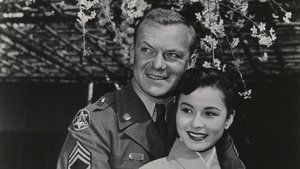
Three Stripes in the Sun
A racist sergeant stationed in post-war Japan finds himself softening towards the children and falling for a local woman.
1955
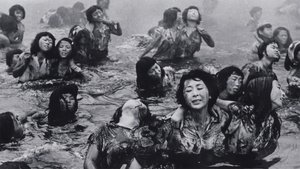
Hiroshima
Historical fiction about the aftermath of the atomic bombing of Hiroshima, Japan, on 6 August 1945, and its effects on various civilians, especially children, of that city.
1953

The Beginning or the End
The research, development, and deployment of the first atomic bomb, as well as the bombing of Hiroshima, are detailed in this docudrama.
1947