Watch The Feminist Library (2016) Online Free
The Feminist Library: A Short Film was made in support of the Save the Feminist Library Campaign, documenting a crucial moment in the library's herstory as it fights for its very survival. Shortlisted for the Women's History Network Community Prize, the film revisits the story of the library's inception and emphasises why feminism remains essential today.
Cast
Jalna Hanmer
More Like This

Looking for Simone
In 1949, philosopher and novelist Simone de Beauvoir wrote the groundbreaking The Second Sex, launching a disruptive discourse on women’s oppression and second-class citizenship. This film dissects the origins and relevance of this bible of feminism, charting de Beauvoir’s fact-finding journey across the US to research her book. The timely and fascinating film honors de Beauvoir’s brilliance and limitations, connecting her revolutionary ideas to the pressing issues women face today.
2024

Show Her the Money
This is a story that’s never been told. SHOW HER THE MONEY addresses how women are getting less than 2% of venture capital funding and demystifies what venture capital is. Featuring rock-star female investors who invest in diverse women entrepreneurs with innovations that will change the world, Show Her The Money reminds us that money is power and women need it to achieve true equality.
2023

Handbook of Movie Theaters' History
Handbook of Movie Theaters' History is a documentary about the history, the development in the present days and the future of movie theaters in the city of Turin, Italy. It mixes the documentary language with comedy and fiction, and is enriched by interviews to some of the most important voices of Turin cinematography. The film follows the evolution of movie theaters by enlightening its main milestones: the pre-cinema experiences in the late 19th Century, the colossals and the movie cathedrals of the silent era, the arthouse theaters, the National Museum of Cinema, the Torino Film Festival, the movie theaters system today and the main hypothesis about its future. The mission of Handbook of Movie Theaters' History is to explore and give back to the audience a deep reflection about the identity and the value of movie theater, in its social and anthropological role and as a mass media, and to analyze the experience of the viewer.
2021
out of frame
Six professionals in the audiovisual field share their experiences through a visual and sound sensory journey
2020
Cultura de la Delgadez
Personal stories taken from a survey on how women's lives are affected by a culture obsessed with body image and thinness.
2019
The MovieLand Movie
I go to Movieland at least once a week, every week, for the last five years to sink some quarters into the games and the Movieland movie is an accumulation of the friends, lights, textures, and narratives that I have experienced in that time. I love Movieland!
2017
Madrepérola
In a tide oblivious to diversity, pearl oysters live under attack for not fitting into the standards and sizes. This is the story of how their pearls are born.
2015

Regarding Susan Sontag
An intimate study of one of the most influential and provocative thinkers of the 20th century tracking feminist icon Susan Sontag’s seminal, life-changing moments through archival materials, accounts from friends, family, colleagues, and lovers, as well as her own words, as read by Patricia Clarkson.
2014
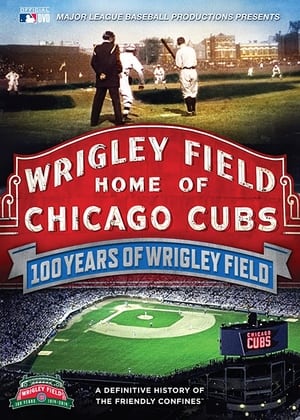
100 Years of Wrigley Field
100 Years of Wrigley Field celebrates a century of the greatest moments and best personalities of the ballpark on Chicago's North Side.
2014
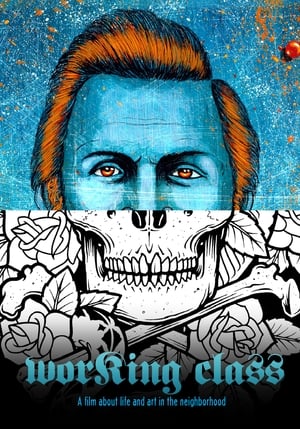
Working Class
Loosely based on Charles Dicken’s book “A Tale of Two Cities”, Working Class tells the tale of underground street artists Mike Giant and Mike Maxwell and their decade long friendship that started with a tattoo. The story is told through the cities they call home by, cutting back and forth between the neighborhoods of San Francisco and San Diego, as the artists talk about their life philosophies and the work they create.
2011
Swing con Son
Music documentary about Billo Frómeta by director Rafael Marziano Tinoco from Venezuela.
2009

Dead Gay Men and Living Lesbians
As a result of the Holocaust and later, AIDS, the male homosexual community has sustained bitter losses and, according to Praunheim, lesbian women have now placed themselves at the head of the so-called queer movement. The female protagonists in the film represent two different generations; they also incorporate the past and present status of homosexuals in society.
2008
Dance for All
2007

Enola Gay's Navigator: Theodore (Dutch) Van Kirk
Theodore "Dutch" Van Kirk navigated the first atomic bombing mission in Hiroshima, Japan, and later participated in the first Bikini Atoll atomic bomb tests.
2007

Living Inside the Speaker
Documentation of the Bristol dubstep scene circa 2006 capturing the musical genre in its infancy. Outside of London, Bristol is the UK's largest dubstep city and is a major player in the scene, with a network of local DJs, promoters, and producers pushing the sound. Features footage from Bristol's premiere dubstep nights and interviews with key individuals, providing a thrilling snapshot of the newest music scene to develop in Bristol.
2006

Dixie Chicks: Shut Up and Sing
Shut Up and Sing is a documentary about the country band from Texas called the Dixie Chicks and how one tiny comment against President Bush dropped their number one hit off the charts and caused fans to hate them, destroy their CD’s, and protest at their concerts. A film about freedom of speech gone out of control and the three girls lives that were forever changed by a small anti-Bush comment
2006
O que pode uma mulher que borda?

Ottoman Empire: The War Machine
This History Channel documentary traces the Ottoman Empire from its beginnings in the 14th century to its incarnation as one of the largest empires in history, spanning three continents.
2006
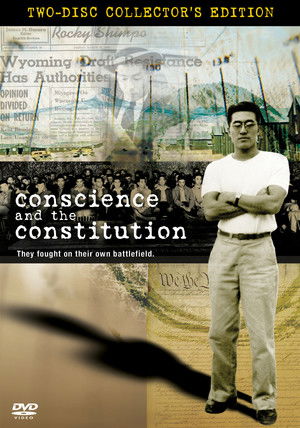
Conscience and the Constitution
Americans refused to be drafted from the concentration camp at Heart Mountain, Wyoming. Ready to fight, but not before their rights as U.S. citizens were restored and families released.
2000
Twenty Years After
This short celebrates the 20th anniversary of MGM. Segments are shown from several early hits, then from a number of 1944 releases.
1944